
- 1,000,000 vehicles now operate with QCraft’s Navigate on Autopilot (NOA) system, up from 500,000 eight months prior.
- 2.5 billion kilometers driven collectively by QCraft’s fleet, providing real-world data for AI training.
- QCraft’s virtual driving school uses reinforcement learning to simulate and optimize dangerous scenarios millions of times.
Experts would likely conclude that QCraft’s approach to developing 'physical AI' through autonomous vehicles represents a significant step toward advancing AI’s ability to operate in complex real-world environments, with potential applications beyond transportation.
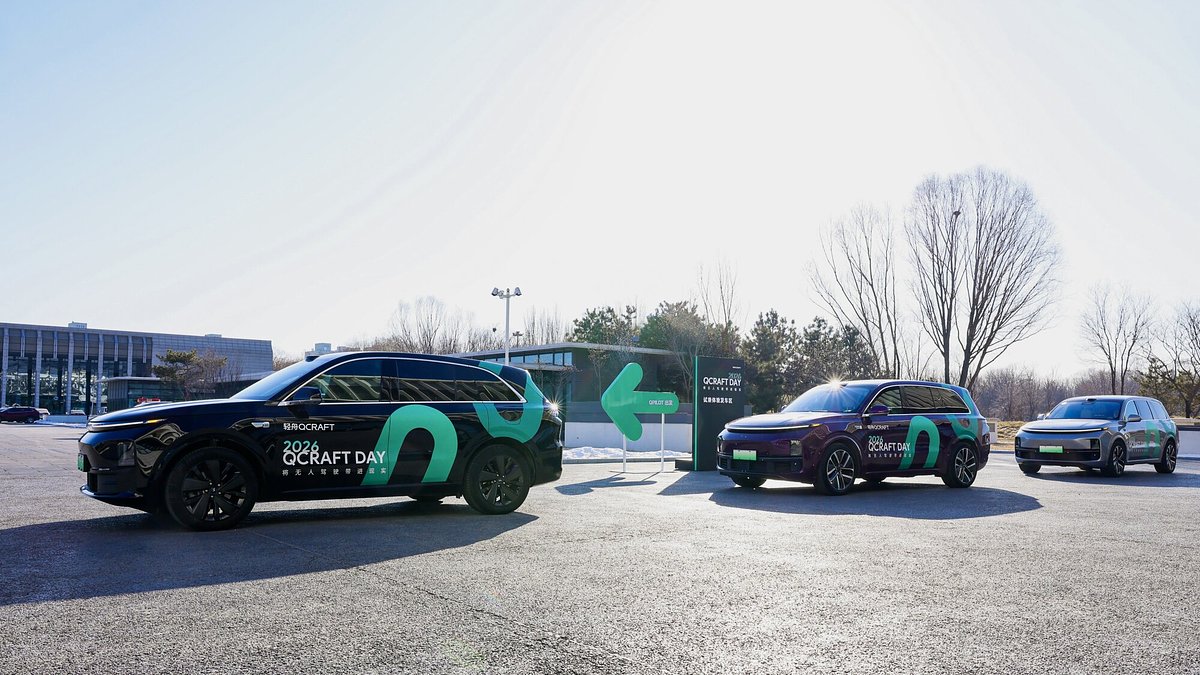
Beyond the Car: How QCraft Is Building a 'Physical AI' for the Real World
MUNICH, Germany – March 20, 2026 – In a room filled with senior leaders from automotive giants like Mercedes-Benz, Audi, and Bosch, the head of a new-generation technology firm made a bold proclamation. The future of artificial intelligence, he argued, is not in the digital cloud but on the physical streets. Dr. James Yu, CEO of autonomous vehicle leader QCraft, asserted that the self-driving car is the most commercially viable and powerful pathway to creating “physical AI”—a class of intelligence that truly understands and operates in the complexities of the real world.
Speaking at the prestigious Intelligent Vehicles & Production 2026 conference, Dr. Yu framed autonomous driving not merely as a transportation solution, but as the crucible for the next great leap in AI. “In the digital world, AI has already approached the level of general intelligence,” he stated. “But the next great breakthrough will come from the physical world. When AI begins to understand gravity, friction, and human intention, that is where the biggest impact will be felt.”
The Dawn of Physical Intelligence
Dr. Yu traced the evolution of autonomous driving through three distinct phases. The first, he explained, involved modular systems where perception and planning were separate. The second phase saw the rise of end-to-end AI that mimicked human drivers. Now, he contends, the industry is entering a third era: “superhuman intelligence.” This new phase is driven by advanced technologies like VLA (Vision-Language-Action) large models, world models, and reinforcement learning, which allow the AI to move beyond imitation and begin to genuinely comprehend its environment.
This is the core of physical AI: systems that can perceive, reason, and act within a dynamic material environment. Unlike software-based AI that processes data, physical AI must grapple with physics, latency, and the unpredictable nature of human behavior in real time. For QCraft, the primary tool for developing this intelligence is its rapidly expanding fleet.
Dr. Yu revealed a major milestone: over one million vehicles are now operating with QCraft’s Navigate on Autopilot (NOA) system. This figure, up from 500,000 just eight months ago, represents a massive data-gathering operation. Each of these vehicles, which have collectively driven over 2.5 billion kilometers, acts as a “robot on four wheels,” constantly feeding real-world data from complex driving scenarios back to QCraft’s development platform. This growing fleet forms an unmatched training ground, exposing the AI to a scale and diversity of events that would be impossible to replicate in controlled tests alone.
The Virtual Proving Ground
The central challenge for all autonomous driving developers is the immense difficulty and cost of physical testing. Ensuring a system is safe requires validating its performance across an astronomical number of edge cases and critical scenarios—a process that is both time-consuming and potentially dangerous.
To overcome this bottleneck, QCraft has constructed what Dr. Yu calls a “virtual driving school.” This is not a simple simulator but a sophisticated digital twin of the world powered by world models. These models allow the AI to build an internal representation of its environment, enabling it to predict future states and outcomes. Within this virtual world, QCraft uses reinforcement learning to let its AI test, fail, and optimize its decisions millions of times over.
This approach allows the system to learn how to handle dangerous situations—like a child chasing a ball into the street or a sudden lane change from an adjacent car—in a completely safe and controlled environment. By simulating and solving these safety-critical scenarios virtually, the AI is far more prepared and robust before its software is ever deployed to a physical vehicle on a public road.
Bridging East and West in the Race for Autonomy
QCraft's technical strategy is matched by an ambitious global business plan. The company’s decision to open its European headquarters in Munich in September 2025 was a deliberate strategic move. Dr. Yu described the location as a crossroads where QCraft aims to bridge two worlds: the fast-moving, data-intensive AI ecosystem forged on China's dense and unpredictable roads, and Germany's century-long tradition of automotive engineering excellence.
This global play is already taking shape through key alliances. QCraft has partnered with U.S. tech giant Qualcomm to build its next-generation systems on the Snapdragon Ride platform, a collaboration aimed at reducing costs and accelerating deployment for global automakers. Simultaneously, a partnership with Germany’s TÜV Rheinland underscores a commitment to meeting Europe’s stringent safety and certification standards.
This strategy positions QCraft in a fiercely competitive landscape that includes Alphabet's Waymo, GM's Cruise, and Intel's Mobileye. While some competitors focus on L4 robotaxis, QCraft's approach emphasizes mass-market deployment of L2++ systems, embedding its technology directly into consumer vehicles from partners like Li Auto and GAC Group. This provides a data advantage and a more immediate path to revenue and scale.
A Platform for the Future of Robotics
Perhaps the most telling part of Dr. Yu’s presentation was his vision for what comes next. What QCraft is building, he insisted, is not simply a smarter car but a foundational “physical intelligence platform.”
Today, that intelligence drives passenger cars. But tomorrow, he suggested, the same underlying AI could be adapted to power a vast array of other machines that must perceive, reason, and act in the physical world. The company has already taken steps in this direction with a strategic partnership to develop L4 autonomous logistics vehicles.
In this telling, the autonomous vehicle is just the first chapter in a much larger story. It is the most complex and data-rich application of physical AI today, serving as the perfect development platform for an intelligence that could one day power everything from warehouse robots to automated construction equipment. The car is not the end product; it is the ultimate school for an AI that is learning to master the physical world.