
- 1 trillion exosomes injected into burn tissue, marking the first human trial for severe burns.
- Faster, more complete healing observed compared to traditional skin grafting.
- Health Canada's Special Access Programme granted approval for compassionate use, enabling the treatment.
Experts would likely conclude that while exosome therapy shows remarkable promise for burn healing, its transition from a compassionate-use case to a widely approved treatment requires rigorous clinical trials, regulatory formalization, and scalable biomanufacturing.
Beyond the Burn: How Cellular Messengers Are Redefining Healing
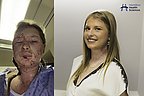
HAMILTON, ON – June 15, 2026 – For 18-year-old Kaitlin Jeffrey, the reflection in the mirror is not just a face, but a testament to a decision made at the precipice of medical possibility. Last December, a house fire left the Western University student with severe burns to her face and neck, injuries that typically destine a patient to a future of skin grafts—a process that saves lives but often leaves behind a permanent, patch-like reminder of the trauma.
But in a Hamilton hospital, a team of burn experts dared to envision a different outcome. Led by Dr. Marc Jeschke, a global authority on burn care, they proposed a treatment that had been confined to labs and theory, never before attempted on a human burn patient. It involved injecting one trillion microscopic particles, called exosomes, into the damaged tissue. The results, in the hospital's own words, were "absolutely remarkable."
Jeffrey's recovery has been faster and more complete than could have been imagined with conventional methods. "It's honestly a miracle," she says, her words underscoring the profound personal stakes of medical innovation. Her journey marks a pivotal moment, not just for her, but for the entire field of regenerative medicine. It forces us to look beyond the immediate breakthrough and ask a more complex question: What does it take to turn a one-time miracle into a new standard of care for all?
A Cellular Symphony Over Surgical Scars
The traditional cornerstone of severe burn treatment, skin grafting, is a brutal but effective tool. It involves harvesting healthy skin from one part of the body and transplanting it to the burned area. While life-saving, its limitations are significant. The grafted skin never fully matches the original in color, texture, or function. For a young person, the psychological and social burden can be immense. "You can do the best graft on the planet, but you won't return the skin to normal," explains Dr. Jeschke, who is also the vice president of research and innovation at Hamilton Health Sciences (HHS). "And, for a young person, a skin graft to the face and neck can be absolutely devastating."
His vision was to avoid that outcome for Kaitlin Jeffrey at any cost. The alternative lay in the burgeoning science of exosomes. These are not cells, but nanoscale messengers released by cells, carrying intricate instructions in the form of proteins and RNA. When sourced from regenerative cells, like mesenchymal stem cells, they become potent coordinators of healing. They orchestrate a multi-front campaign: dialing down inflammation, recruiting the body’s own repair crews, stimulating the growth of new blood vessels, and rebuilding the tissue matrix from the inside out. In essence, instead of patching the damage, they coax the body into regenerating itself more completely.
This cell-free approach offers critical advantages over transplanting live stem cells, mitigating risks of immune rejection and tumor formation. While exosomes have shown promise in clinical trials for other types of wound healing, applying them to the complex, inflammatory environment of a severe burn was uncharted territory. Jeffrey’s case, involving two treatments several days apart, served as the first crucial proof of concept in a human burn patient, demonstrating a healing trajectory that outpaced even that of another student whose burns from the same fire were less severe.
The Path of Compassion
Venturing into such novel medical territory is not merely a scientific decision; it is a complex regulatory and ethical navigation. To proceed, Dr. Jeschke's team sent an urgent application to Health Canada under its Special Access Programme (SAP). This is a critical but often misunderstood pathway, designed for life-threatening situations where conventional therapies have failed or are unsuitable. It allows physicians to request access to non-marketed drugs on compassionate grounds, placing the onus on the practitioner to justify the need and on the regulator to weigh the potential benefit against the unknown risks.
Health Canada's response—granting access with "no objection"—was a pivotal moment. It represented a system working as intended, balancing stringent safety protocols with the flexibility to respond to an urgent human need. The SAP is not a shortcut for widespread approval; it is a case-by-case lifeline. It doesn’t cover the cost of the drug, which in this case involved sourcing the one trillion exosomes from a specialized lab in the United States, but it does provide the legal and ethical framework for a physician to use an unapproved therapy when the stakes are highest.
This decision highlights a growing tension in modern medicine. As the pace of innovation accelerates, how do our regulatory systems keep up? The compassionate use model provides one answer, allowing for carefully controlled pioneering efforts that can generate crucial real-world data. Kaitlin Jeffrey's successful outcome will now become a cornerstone of the evidence needed to move exosome therapy from a compassionate exception to a formally approved clinical trial, and eventually, a widely available treatment.
From Breakthrough to Bedside
The journey from a single successful case to a new global standard of care is long and fraught with challenges. The primary hurdles are scalability, cost, and regulatory formalization. Producing trillions of clinical-grade exosomes is a complex biomanufacturing process that must be standardized to ensure safety and efficacy. The cost, while not disclosed, is undoubtedly high for such a novel biologic, raising questions of accessibility and how public health systems would fund it.
Just this past April, Health Canada clarified its position, classifying topical products containing human-derived exosomes with therapeutic claims as drugs. This means any company wishing to market an exosome therapy must navigate the rigorous and expensive process of clinical trials to gain a Drug Identification Number (DIN)—a multi-year endeavor. Dr. Jeschke and his team at HHS's Centre for Burn Research, a hub for regenerative medicine, are well-positioned to lead this charge, but it will require significant funding and institutional will.
For Kaitlin Jeffrey, the impact is already life-changing. While she continues to navigate the deep mental health impacts of her ordeal, the physical outcome has provided a crucial foundation for her recovery. "Having such good results, particularly to my face, is helping me move forward," she shares. Her hope, and that of her family, is now fixed on the future. "My family and I would love to see exosome therapy become the standard of care for patients like myself in Canada," she says, "so that when horrific things happen, it doesn't change people's lives forever."