
- 57% of surveyed households had at least one member go to sleep hungry in the preceding four weeks.
- Children in households facing aid cuts are 2.3 times more likely to be forced into child marriage and 2.1 times more likely to be separated from their families.
- Households with higher self-reliance saw 33% lower odds of child marriage and 38% lower odds of children leaving school to work.
Experts agree that while emergency aid remains critical, long-term solutions must prioritize refugee self-reliance through economic inclusion and policy reforms to prevent catastrophic outcomes for children.
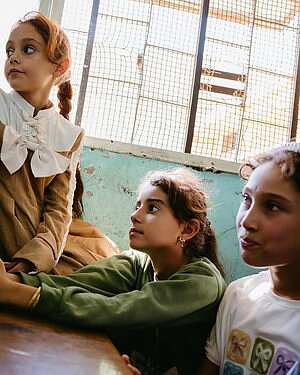
Beyond the Breadline: Aid Cuts & The Case for Refugee Self-Reliance
MISSISSAUGA, ON – June 17, 2026 – As the world prepares to mark World Refugee Day on June 20th, a new report delivers a sobering message: shrinking humanitarian aid is creating a shadow pandemic of hunger, exploitation, and lost futures for the world's most vulnerable children. A landmark study by World Vision Canada, in partnership with the World Food Programme (WFP), provides stark, data-driven evidence that when assistance is cut, families are forced into impossible choices, directly fueling a rise in child labor, early marriage, and family separation.
The report, titled In the Shadow of Hunger: The Power of Self-Reliance to Protect Children and Restore Hope, moves beyond anecdote to quantify the human cost of budget shortfalls. But it also illuminates a strategic path forward, arguing that the antidote to this crisis lies not only in restoring aid, but in fundamentally rethinking our approach—shifting from a model of dependency to one that empowers displaced people with the tools for self-reliance.
The Anatomy of a Crisis
The findings from the report are a gut punch. Drawing on nearly 3,500 household surveys across eight countries including Bangladesh, Colombia, and South Sudan, the data paints a grim picture. Fifty-seven percent of surveyed households had at least one member go to sleep hungry in the preceding four weeks. For children, the consequences of this food insecurity, compounded by aid cuts, are catastrophic.
According to the study, children in households that have faced cuts in assistance are 2.3 times more likely to be forced into child marriage and 2.1 times more likely to be separated from their families. The pressure to survive pushes them out of the classroom and into peril, with these children being 64 percent more likely to leave school to work or beg.
"When assistance is cut, families are forced into impossible choices, and children are pushed closer to hunger, school dropout and early marriage," stated Allison Alley, President and CEO of World Vision Canada. Her words underscore a grim reality: these are not isolated incidents but a predictable, systemic outcome of dwindling international support. The crisis is particularly acute for children returning to communities where infrastructure—homes, schools, and water systems—has been obliterated by conflict, leaving no foundation upon which to rebuild.
The Great Aid Recession
The World Vision report lands amidst what humanitarian analysts are calling a “great aid recession.” The crisis it describes is a direct consequence of an unprecedented global funding gap. In 2024, international humanitarian assistance saw its largest-ever drop, declining by nearly $5 billion. By mid-2025, United Nations appeals for $46 billion in global needs were less than 17% funded, leaving a staggering 72% of needs unmet.
This is not an abstract financial problem. In the Rohingya refugee camps in Bangladesh, funding cuts have forced the closure of thousands of schools, with UNICEF shutting down over 4,500 learning centers in June 2025 alone, impacting a quarter-million children and fueling a documented rise in child marriage and labor. In Uganda, which hosts nearly two million refugees, drastic reductions in US funding for education threaten to shutter classrooms for over 140,000 students. In Yemen, the WFP projects it will reach 16 million fewer people with emergency food this year.
Major donor nations, including the United States, the UK, and several European countries, have scaled back their contributions, creating a domino effect that is crippling the aid infrastructure on the ground. The result is life-saving medicines sitting in warehouses, health clinics closing, and millions of people being cut off from essential support.
The Self-Reliance Imperative
Amidst this bleak landscape, the In the Shadow of Hunger report identifies a powerful counter-force: self-reliance. The study reveals a direct correlation between a household's ability to generate its own income and the safety of its children. Households with higher self-reliance saw 33 percent lower odds of child marriage, 38 percent lower odds of children leaving school to work, and 56 percent lower odds of children having to beg for food.
This is the strategic crossroads facing the international community. The report makes a compelling business case that investing in livelihoods, safe access to work, and economic inclusion is not just a 'nice-to-have' development goal, but an essential component of child protection and crisis stabilization.
"Emergency assistance saves lives, but if we want to build a better future, families also need livelihoods, safe access to work and other ways to rebuild self-reliance," Alley explained. This sentiment is echoed by those with lived experience. Aldouma Abaker, a refugee from Sudan and member of the Refugee Education Council, noted, "Families need more than emergency food - they need the chance to rebuild stability, earn an income, and give children a future."
From Policy to Practice: The Hurdles to Dignity
Translating the principle of self-reliance into practice is the next great challenge. Experts warn that simply promoting self-reliance as an excuse to further cut traditional aid can be dangerous, pushing families into deeper precarity. The success of this model hinges on dismantling the structural barriers that prevent refugees from achieving economic independence.
These barriers are significant and often political. They include host country laws that restrict refugees' right to work, lack of access to financial services, and bureaucratic delays in providing documentation necessary for formal employment or starting a business. The Global Compact on Refugees (GCR), affirmed by the UN in 2018, explicitly calls for enhancing refugee self-reliance, but implementation has been uneven.
Success requires a coordinated, multi-sector approach where governments, the private sector, and NGOs work in concert. It means policy reforms like those in Kenya, whose 2021 Refugee Act aims to improve access to work and financial services. It also means long-term, predictable funding for programs that provide business training, seed capital, and market linkages, moving beyond the short-term grant cycles that dominate humanitarian finance.
As World Refugee Day approaches, the message from the frontlines is clear. The choice is not between providing a food parcel or a business loan. An effective strategy must do both. It must meet immediate, life-saving needs while simultaneously investing in the dignity of work and the promise of a self-determined future. The data shows that when we fail to provide these opportunities, it is children who pay the highest price.