
- 5kWp photovoltaic array integrated into each foldable solar-plus-storage container system.
- Over 200 patents held by Highjoule, reflecting its deep technical expertise.
- 120+ countries where Highjoule's projects have been deployed, demonstrating global experience.
Experts would likely conclude that Highjoule's U.S. entry marks a strategic shift in the energy sector, leveraging vertical integration and rapid-deployment technology to meet growing demands for resilience and mobility in power solutions.
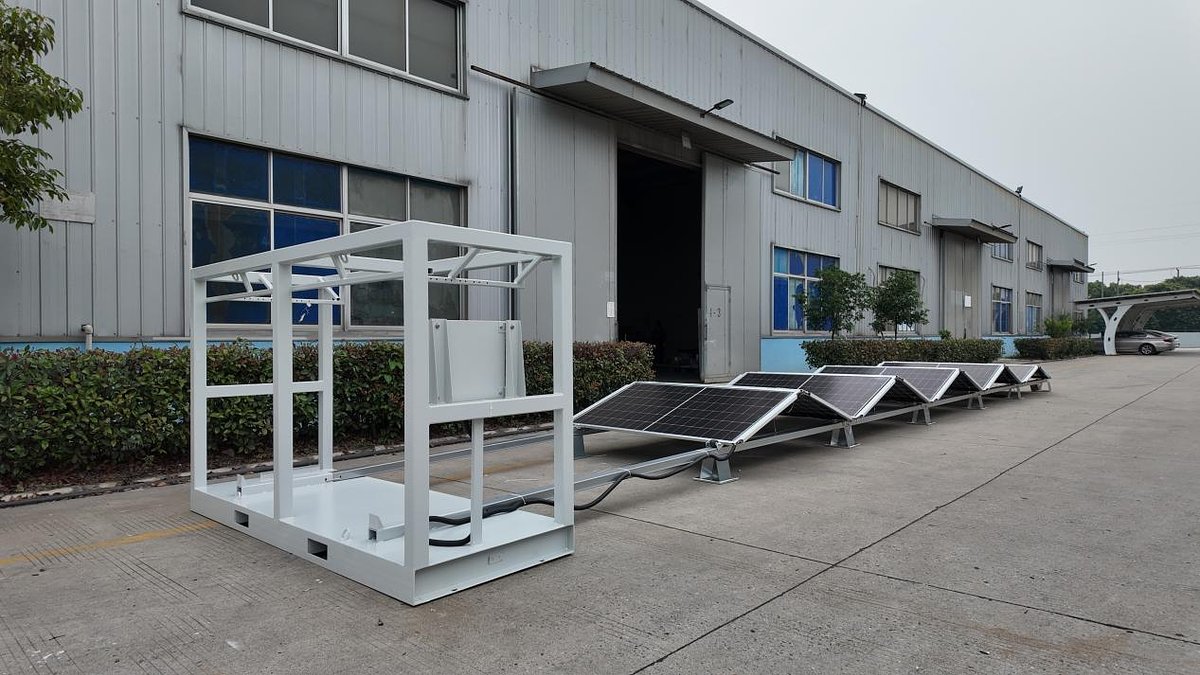
Beyond the Box: Highjoule's U.S. Entry Signals a New Power Play
SHANGHAI, CN – June 12, 2026 – A shipment of neatly packed shipping containers is preparing to leave a Shanghai port for the United States. Inside, however, is not standard cargo, but a technology poised to reframe a critical aspect of the American energy landscape. Highjoule, a company with dual roots in California and China, has secured its first major order in the U.S. for its foldable solar-plus-storage container system, a milestone that speaks volumes about the shifting currents of innovation and strategic sourcing in the global energy sector.
While the press release highlights a successful product entry, the underlying story is one of strategic leverage. An unnamed U.S. buyer, after months of "stringent due diligence" across global suppliers, selected Highjoule not merely for its hardware, but for the vertically integrated machine that produces it. This isn't just about selling a solar panel; it's about delivering a fully-formed, rapidly deployable power solution that meets a growing American demand for resilience, mobility, and energy independence.
Power Where It's Needed, When It's Needed
At its core, the Highjoule system is a self-contained power station. Each unit integrates a 5kWp photovoltaic array that unfolds from a standard shipping container, a modular lithium battery system for energy storage, and an intelligent management system. The company claims the entire apparatus can be deployed and generating power in under an hour by a small team, with no heavy machinery or extensive civil engineering required.
This "power-in-a-box" concept directly targets the vulnerabilities of traditional energy infrastructure. Its applications extend far beyond simple off-grid power. In the U.S., the demand for such solutions is acute and multifaceted. Federal agencies like FEMA have long grappled with the challenge of restoring power to disaster-stricken areas, where damaged grids can hamper recovery for weeks. A rapidly deployable, self-sufficient solar generator provides a clean, quiet, and logistically simpler alternative to fleets of diesel generators.
Furthermore, the system is engineered for the diverse and often harsh American landscape. Incorporating a ground-anchor fixation system and subjected to rigorous wind-resistance testing, it’s designed to operate in the high winds of the Great Plains or the challenging terrain of remote construction and mining sites. For industries that operate on the frontier—be it resource extraction, infrastructure development, or military logistics—the ability to establish a reliable, on-demand microgrid is a significant operational advantage.
The Strategic Rationale: A Vertically Integrated Victory
The most telling aspect of Highjoule's success is not what it sold, but how it won the contract. The U.S. customer's selection process underscores a crucial shift in global procurement strategy. In an era of supply chain disruptions and geopolitical tensions, buyers of critical infrastructure are increasingly prioritizing reliability, quality control, and end-to-end accountability over rock-bottom costs.
This is where Highjoule’s strategic rationale shines. The company, part of the larger Huijue Group, has cultivated a vertically integrated model over two decades. With four factories in China, over 200 patents, and a dedicated R&D division comprising over a fifth of its workforce, it controls nearly every stage of its product's life—from initial structural design and electrical system integration to final assembly and testing. This model provides a level of transparency and control that is difficult for competitors who rely on fragmented, multi-vendor supply chains to match.
The U.S. customer’s on-site factory inspections confirmed this capability, noting that this end-to-end control translates directly into greater quality assurance, more competitive lead times, and cost efficiency. It’s a powerful value proposition that mitigates risk for the buyer. By demonstrating compliance with stringent U.S. certifications for product safety (UL), electromagnetic compatibility (EMC), and international transport, Highjoule proved it could navigate the complex regulatory landscape, further de-risking the partnership.
A New Current in a Competitive Market
Highjoule enters a dynamic and increasingly crowded U.S. market for mobile power. It will compete with established American players like BoxPower, known for its containerized microgrids, and innovators like Pvilion, which specializes in flexible, fabric-based solar structures. However, Highjoule’s key differentiator is the elegant fusion of robust containerization with a rapid-deployment foldable array. This design optimizes for both transport and setup speed, a critical edge in emergency or temporary-use scenarios.
"This foldable solar-storage system destined for the United States embodies our vision of making green energy more accessible," said Mr. Xu, a Project Manager at the company. "By integrating power generation, energy storage, and power distribution into a standard shipping container, the system offers exceptional mobility, ease of deployment, and environmental adaptability."
The company's success is not an overnight phenomenon. With projects already deployed in over 120 countries and a history of contributing to the drafting of national energy standards in China, Highjoule arrives in the U.S. not as a startup, but as a seasoned global player. Its ability to scale from single-kilowatt residential systems to multi-megawatt container farms gives it the flexibility to address a wide spectrum of the market, from a single construction site to a community-scale microgrid. This deal is more than a commercial transaction; it is a validation of a long-term strategy built on deep technical expertise and manufacturing control, now successfully leveraged to penetrate one of the world's most demanding energy markets.