
- 40% of European trips in 2025 taken during shoulder seasons (spring/fall), down from 47% in 2023
- 10,000 U.S.-based guests surveyed in The State of Luxury Experiential Travel 2026 report
- Frontier elegance trend: 70% of luxury travelers now prioritize remote, culturally rich destinations over traditional hotspots
Experts agree that modern luxury travel is shifting from material opulence to emotionally meaningful, sustainable experiences prioritizing privacy, cultural immersion, and off-peak exploration.
Beyond the Bling: Luxury Travel Redefined by Emotional ROI
DENVER, CO – February 11, 2026 – The definition of luxury travel is undergoing a profound transformation. Once measured by opulent suites and exclusive postcodes, a new report indicates that for today’s affluent traveler, the ultimate status symbols are now time, privacy, and profound emotional connection.
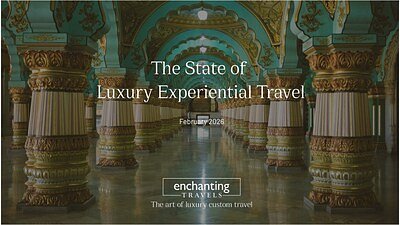
A proprietary 2026 report, The State of Luxury Experiential Travel, released today by global custom travel provider Enchanting Travels, reveals a decisive pivot away from status-driven tourism. Drawing on data from over 10,000 U.S.-based guests, the findings highlight that luxury is no longer what travelers can see, but what they can feel.
"Luxury today isn't about excess—it's about intention," said Parik Laxminarayan, CEO and co-founder of Enchanting Travels, in the report's announcement. "Our guests measure success by emotional return on investment: deeper family bonds, meaningful cultural immersion, and the freedom to be fully present without logistical distractions."
This sentiment is echoed across the industry. Independent research from leading consortia like Virtuoso confirms that discerning travelers are "seeking soul," prioritizing restorative and culturally rich experiences over materialism. The new luxury is less about the thread count of the sheets and more about the quality of the memories made.
Charting New Territory: The Rise of 'Frontier Elegance'
While classic destinations like Italy and France retain their allure, the report identifies a powerful emerging trend dubbed "frontier elegance." This concept describes travel to remote, naturally stunning locations that offer high-end, intentional service without sacrificing a sense of wildness and discovery.
Fast-growing regions embodying this trend include lesser-known areas of Portugal and rugged expeditions in Canada and Alaska. Instead of the bustling Algarve, travelers are seeking the quiet grandeur of Portugal’s Alentejo region, with its sprawling cork forests and medieval hilltop towns. Here, boutique estates like São Lourenço do Barrocal offer rustic authenticity paired with Michelin-recognized dining and deep-rooted local culture. Similarly, the coastal area of Comporta, sometimes called the "Hamptons of Europe," provides understated luxury with pristine beaches and exclusive villas, a world away from crowded resorts.
In North America, this trend translates to "rugged luxury" in the Alaskan wilderness. High-end lodges such as Ultima Thule Lodge and Stillpoint Lodge, often accessible only by bush plane, offer unparalleled privacy and exclusive access to untouched landscapes. Here, luxury is defined by gourmet meals prepared with local ingredients after a day of private heli-skiing or bear-watching, a far cry from a typical five-star hotel experience. This desire for unique, less-traveled paths is a direct response to a world perceived as increasingly homogenous and over-exposed.
A Strategic Shift to Beat the Crowds
The quest for authenticity and privacy is also reshaping when people travel. The Enchanting Travels report highlights a notable shift in European travel habits, with the percentage of trips taken during the peak summer season dropping from 47% in 2023 to 40% in 2025.
This move to the "shoulder seasons" of spring and fall is a strategic choice by savvy travelers to avoid crowds, enjoy more temperate weather, and foster a more genuine connection with a destination. Industry-wide data supports this, with a recent Virtuoso report noting that "Crowd Control" is a defining travel motivation for 2026. This shift allows for a more relaxed pace and spontaneous discovery, whether exploring the Uffizi Gallery with fewer elbows to jostle or securing a reservation at a coveted Parisian bistro without booking months in advance.
This trend is not just about avoiding queues; it's about enhancing the emotional return on investment. By traveling off-peak, visitors can engage more meaningfully with local life, experiencing a city or region as its residents do.
The Indispensable Role of the Expert Curator
As travel goals become more complex and personal, affluent consumers are increasingly turning to experts to design their journeys. The report underscores a growing reliance on trusted travel advisors to manage the seamless logistics required for a truly stress-free experience. This allows travelers to invest their most precious resource—time—in the experience itself, rather than in the minutiae of planning.
This marks a departure from the DIY booking trend of the past decade. The modern luxury traveler understands that true value lies in the deep destination knowledge and access that a specialist provides. Companies like Abercrombie & Kent and Black Tomato have built their reputations on this model, creating bespoke itineraries that grant access to private viewings, expert-led tours, and unique cultural encounters that are simply unavailable to the general public. For these travelers, outsourcing the logistical burden is not an indulgence but a necessity to achieve the desired state of being fully present and engaged.
Sustainability Moves from Buzzword to Bedrock
Underpinning all these trends is a foundational shift towards greater consciousness. The preference for sustainable and unique accommodations is growing, moving beyond a simple line item on a hotel's website to a core component of the luxury value proposition.
Today’s eco-luxury goes far beyond recycling bins and towel reuse programs. Leading properties are integrating sustainability into their very DNA. This includes everything from biophilic design that seamlessly blends architecture with nature to advanced systems for renewable energy and water conservation. Farm-to-table dining is no longer a novelty but an expectation, with resorts cultivating their own organic gardens and sourcing ingredients from local purveyors to support the community and reduce their carbon footprint.
This evolution is driven by a consumer who seeks to align their travel with their values. They are increasingly looking for properties with verifiable green certifications like LEED or BREEAM and are drawn to experiences that contribute positively to the local ecosystem and culture, a concept known as "regenerative travel." From participating in conservation efforts at a Canadian wilderness lodge to supporting indigenous communities, travelers want their presence to be a force for good, ensuring the pristine beauty of the world’s "frontier" destinations can be preserved for generations to come.