
- $90 million investment: Sun Life co-led a $90 million investment to build a state-of-the-art women's shelter in Brooklyn.
- $1.58 trillion in assets: Sun Life manages C$1.58 trillion in assets, deploying capital as a core business strategy.
- 200-bed facility: The HELP Women's Center in Brooklyn is a 200-bed shelter designed around trauma-informed care.
Experts would likely conclude that this initiative represents a significant shift in corporate strategy, blending financial returns with measurable social impact, and setting a new standard for how businesses can address systemic social challenges.
Beyond the Balance Sheet: How Corporate Investment Re-Engines Social Safety Nets
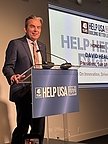
NEW YORK, NY – June 04, 2026 – This week, David Healy, president of Sun Life U.S., accepted a HELP Hero award at a gala in Tribeca. On the surface, it was a familiar scene: a corporate leader recognized by a prominent nonprofit. But to view this event as simple corporate philanthropy is to miss the tectonic shift it represents. The award wasn’t for a one-off donation; it was for Sun Life’s role co-leading a $90 million investment to build a state-of-the-art women's shelter in Brooklyn. This isn't charity. This is the re-engineering of corporate capital as a primary engine for social infrastructure.
For an international financial services giant like Sun Life, with C$1.58 trillion in assets under management, deploying capital is its core business. The decision to channel a significant investment through its asset management arm, SLC Management, into a partnership with HELP USA, a 40-year veteran in the fight against homelessness, signals a profound change in strategy. It suggests a future where the line between generating financial returns and generating public good becomes strategically, and profitably, blurred.
A New Architecture for Dignity
The tangible result of this investment is the HELP Women's Center in East New York, Brooklyn. Opened in March, the 200-bed facility is more than a shelter; it is a statement. Described by NYC Department of Social Services Commissioner Erin Dalton as “what the future of shelter intake should look like,” the center moves decisively away from the outdated, often dehumanizing models of the past.
This is one of two gateway facilities for single women seeking shelter in New York City, serving as a critical intake and assessment point. The entire five-story, 60,000-square-foot building was designed around a trauma-informed care model. This clinical-sounding term has a powerful physical manifestation: an environment built to foster safety, privacy, and stability for women who have often experienced immense trauma. Accommodations include single rooms for those with medical needs, a low-stimulation comfort room for moments of crisis, and communal spaces designed to build community, not just manage populations. Onsite partners provide comprehensive medical care and mental health assessments, while case workers and housing support staff work to create pathways out of homelessness.
Even the aesthetics are part of the strategy. An art mural by Shantell Martin, part of HELP USA’s Art of Resilience initiative, adorns the space. Rooftop garden spaces and healthy cooking classes, supported by an additional $25,000 donation from Sun Life, further underscore a commitment to holistic wellness. This is not just about providing a roof; it's about rebuilding lives from a foundation of dignity.
The Engine of Impact Investing
The most revolutionary aspect of this project is not the building itself, but how it was financed. Sun Life didn't just write a check from a philanthropic foundation. It co-led a complex, $90 million investment, treating the project as a core business activity. This is the essence of impact investing—a model that seeks measurable social or environmental impact alongside a financial return.
Healy himself articulated this vision. "We see our investment portfolio as a way to broaden access to healthcare and support services, particularly in underserved areas," he stated upon receiving the award. This is a direct challenge to the old paradigm where a company's financial arm focuses solely on maximizing profit, while a separate, often minuscule, CSR department handles “giving back.”
By leveraging SLC Management, its institutional asset manager, Sun Life is using its primary expertise—assessing risk and structuring large-scale investments—to tackle a complex social problem. This integrated approach is part of the company's broader “Brighter Futures blueprint,” which aims to embed sustainability and social impact directly into its business operations. It’s a recognition that long-term resilience for the company is tied to the resilience of the communities it operates in.
Dan Lehman, President and CEO of HELP USA, put it succinctly: "Sun Life's investment model demonstrates how strategic commitment translates into real impact for the people we serve." This is the crucial link: the strategy is the impact.
A Systemic Problem Demands a Systemic Solution
The need for such a systemic approach is undeniable. New York City is facing a homelessness crisis of historic proportions. In late 2023, the number of homeless people sleeping in municipal shelters exceeded 92,000—a 76% increase from a decade prior. For single adults, the number has more than doubled. The primary driver is a catastrophic lack of affordable housing, a systemic market failure that cannot be corrected by bake sales and small-scale donations.
Against this backdrop, the partnership between a financial behemoth like Sun Life and a deeply experienced service provider like HELP USA represents a viable, scalable model. HELP USA brings 40 years of on-the-ground expertise, having served nearly 600,000 individuals. They understand the nuances of trauma-informed care, housing support, and the complex web of services needed to break the cycle of homelessness. Sun Life brings the capital and financial engineering necessary to build the physical and programmatic infrastructure at a scale that matters.
This public-private synergy creates a solution that neither entity could build alone. It is a structural response to a structural problem, moving beyond the limitations of both purely governmental programs and purely private charity.
The New Profile of Corporate Leadership
The HELP Hero award recognized not just Healy, but other leaders like Debbie Burkart of the National Equity Fund and Baaba Halm of Enterprise Community Partners, who are advancing solutions in affordable housing and policy. This context is important. It highlights a growing cohort of leaders who understand that their roles have evolved. They are no longer just stewards of shareholder value in a vacuum; they are architects of integrated systems where business success and societal well-being are mutually reinforcing.
As Healy accepted his award, he was representing more than just Sun Life. He was representing a new model of corporate leadership—one that sees a homeless shelter in Brooklyn not as a cost center for charity, but as a strategic investment in the fundamental health of our economy and society. It’s a model that understands that the most valuable infrastructure we can build is human infrastructure that supports human potential.