
- 73% of enterprise digital transformation projects in insurance fail to deliver business value
- Digitally mature insurers saw operational expenses fall by 25% by 2023
- 41% of digital insurance interactions result in a negative outcome (Gartner)
Experts agree that insurance's digital challenges stem from systemic, human-centered issues rather than technological limitations, requiring intentional design and alignment with user needs.
Beyond the App: Why Insurance's Digital Fix Requires a Deeper Strategy
NEW YORK, NY – February 25, 2026 – Despite billions invested in digital transformation, the insurance industry continues to be plagued by digital experiences that are fragmented, confusing, and inefficient for customers, agents, and employees alike. While other sectors have mastered seamless online interactions, insurance often feels stuck in the past, a problem that a new industry report argues is far deeper than mere user interface design.
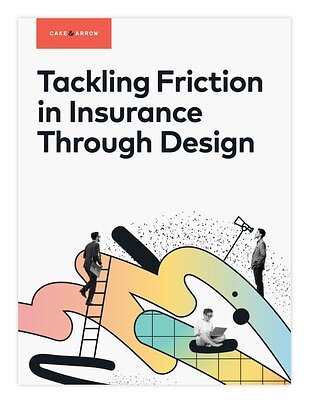
Cake & Arrow, an experience design agency specializing in insurance, today released “Tackling Friction in Insurance Through Design,” a report that diagnoses the systemic issues creating digital roadblocks. The findings suggest that the industry’s struggle is not for a lack of technology, but a failure to address foundational, human-centered problems. This disconnect has a steep price, with industry research indicating that as many as 73% of enterprise digital transformation projects fail to deliver any business value, often due to a disconnect between technology and the people it is meant to serve.
The Anatomy of Digital Friction
The report moves beyond blaming legacy systems and instead identifies three recurring patterns of friction that arise from organizational and strategic misalignment.
First is Role Friction, which occurs when a single digital platform must serve multiple user types—such as customers, agents, brokers, and underwriters—without clearly defined roles, permissions, and workflows. The result is a one-size-fits-none system where no user feels the experience is tailored to their specific needs, leading to confusion and inefficiency.
Next, the report identifies Offering Friction. This emerges when related insurance products and services are delivered through disconnected digital systems. For a customer, this means a bundled home and auto policy might feel like two separate, siloed purchases rather than a cohesive package, creating a disjointed and frustrating journey.
Finally, Mission Friction arises when a digital platform lacks a clear, singular purpose because it is being pulled in competing directions by different internal priorities. This leaves users uncertain about what the system is designed to help them accomplish, turning what should be a straightforward task into a guessing game.
“In insurance, friction doesn't just slow people down, it compounds,” said Josh Levine, CEO and Founder of Cake & Arrow, in the press release. “When platforms don't reflect how people actually work, collaborate, or make decisions, users create workarounds. Email threads replace workflows. Spreadsheets replace systems. And complexity keeps growing.” This ad-hoc approach not only undermines the investment in digital platforms but also increases operational costs and risks.
The High Cost of a Clunky Experience
The consequences of this systemic friction extend far beyond user frustration, inflicting tangible damage on an insurer's bottom line. The operational inefficiencies created by poor digital design lead to bloated overhead as employees spend valuable time on manual workarounds. Industry data shows that digitally mature insurers saw operational expenses fall by 25% by 2023, a benefit their lagging competitors are missing.
More critically, a clunky digital experience directly impacts customer acquisition and retention. With 81% of consumers preferring to handle routine tasks online, a difficult-to-navigate website or app can easily drive them to a competitor. This digital churn is compounded by a loss of trust. According to Gartner, a staggering 41% of digital insurance interactions result in a negative outcome, actively diminishing the customer's relationship with the provider.
Furthermore, the complexity creates security vulnerabilities. The reliance on external tools like spreadsheets and email to bridge gaps in formal systems increases the risk of data breaches, which cost digital insurers an average of $4.5 million per incident in 2023. These costs, combined with budget overruns and the high failure rate of digital projects, paint a stark picture: ignoring the root causes of friction is a multi-billion-dollar liability.
Intentional Design in a Regulated World
While the tech world often chases the ideal of a completely “frictionless” experience, the Cake & Arrow report argues this is the wrong goal for insurance. In a highly regulated industry, certain safeguards—or “good friction”—are essential for protecting consumers, ensuring transparency, and building trust. The challenge is not to eliminate friction blindly, but to design it intentionally.
This means building in checkpoints that provide clarity on policy coverage, ensuring digital consent is obtained legally, and making complex terms understandable. These elements may slow a user down, but they do so to increase comprehension and confidence. The key is to distinguish this necessary, value-adding friction from the unnecessary, frustrating friction caused by poor design.
Designing intentionally also requires navigating a complex web of regulations, from data privacy laws like GDPR and CCPA to state-level insurance mandates and emerging rules around the ethical use of AI. AI-driven underwriting, for example, holds immense promise for efficiency—reducing decision times from days to hours—but it also carries the risk of algorithmic bias, which has led regulators to reject biased models. Thoughtful design embeds compliance and ethics into the user experience from the start, rather than treating them as an afterthought.
A Human-Centered Path Forward
To untangle this knot of complexity, the report advocates for a return to fundamentals. Before layering on more features or adopting the latest technology like AI-powered chatbots, insurers must first align their internal teams and anchor their platforms around clear, end-to-end user workflows.
“What we've seen in our design work is that meaningful progress comes from stepping back and understanding the people behind the process: clarifying roles, aligning around real workflows, and designing with intention instead of just digitizing what already exists,” Levine noted.
This human-centered approach complements, rather than competes with, technological innovation. An AI chatbot can only be effective if it understands the user’s mission. A consolidated agent portal can only succeed if the roles and permissions are clearly defined. By solving the systemic issues of Role, Offering, and Mission friction first, insurers can build a stable foundation upon which new technologies can deliver their promised value. Ultimately, the path to true digital maturity in insurance may not be paved with more technology, but with a deeper understanding of the people it is meant to serve.