
- 3,500 systems deployed in nearly 20 countries, showcasing Teledyne FLIR's global reach.
- Dual 1280p sensors in SA90-HD and DV55-HD systems, enabling high-definition thermal and color imagery fusion.
- 360-degree field of view with the SA90-HD, eliminating blind spots for armored vehicle crews.
Experts would likely conclude that Teledyne FLIR's new vehicle vision systems represent a significant advancement in battlefield situational awareness, offering critical advantages in threat detection and operational safety for modern armored forces.
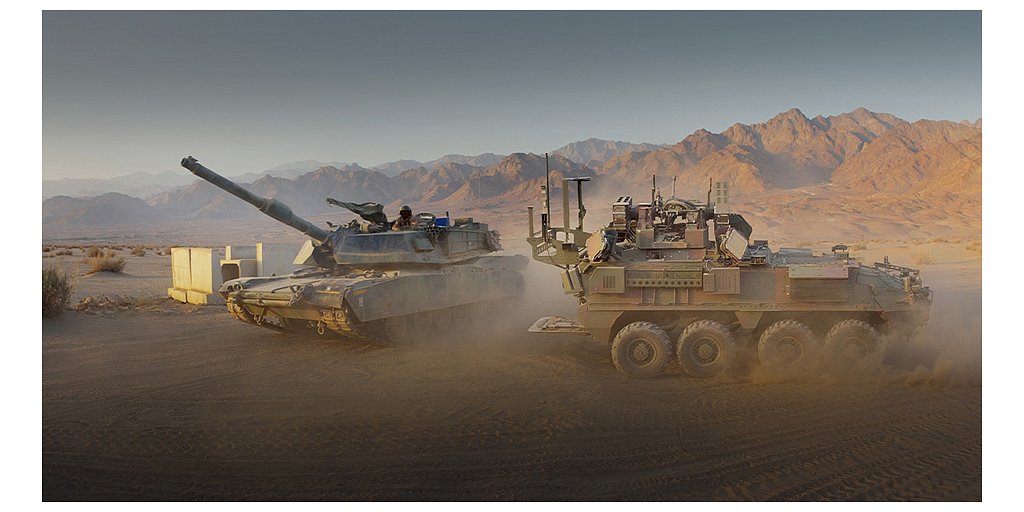
Beyond Sight: Teledyne FLIR's New Systems Give Armor a Decisive Edge
PARIS, FRANCE – June 16, 2026 – The future of ground combat is a contest of perception. In an era defined by faster, smaller, and more elusive threats, the ability to see, identify, and act first is not just an advantage—it is the core of survival and dominance. It is within this high-stakes context that Teledyne FLIR Defense, a pillar of Teledyne Technologies, today unveiled a trio of upgraded vehicle vision systems at the Eurosatory defense expo. The launch of the ThermoVision® SA90-HD, DV55-HD, and MilSight® LIRC III is more than a product announcement; it's a clear statement on the technological imperatives of the 2026 battlefield.
These systems are engineered to provide armored vehicle crews with what amounts to sensory superpowers: enhanced targeting, superior driver vision in all conditions, and a seamless 360-degree field of view. "Our upgraded vehicle vision systems give operators an advantage against faster, smaller, more complex threats with integrated HD solutions designed specifically for military vehicles," said Nicklas Friberg, Vice President of Surveillance Systems at Teledyne FLIR Defense. This launch isn't just about seeing better; it's about fundamentally reshaping the relationship between a vehicle crew and its operational environment.
A Quantum Leap in Battlefield Visibility
At the heart of this evolution are tangible technological advancements that push beyond incremental improvements. The ThermoVision® Situational Awareness HD (SA90-HD) and Driver Vision HD (DV55-HD) systems are not merely cameras; they are sophisticated electro-optical and infrared (EO/IR) sensor suites. Both feature dual 1280p sensors, a critical detail that enables the fusion of high-definition thermal and color imagery. This blending isn't just for a prettier picture—it's for superior feature recognition. The thermal sensor cuts through darkness, smoke, and fog to detect heat signatures, while the HD color sensor provides crucial context and detail, allowing for positive identification of threats versus non-combatants.
The SA90-HD is designed to be mounted around a vehicle, stitching together a complete, panoramic view that eliminates blind spots. For crews operating "buttoned up" inside an armored hull, this technology provides comprehensive awareness without sacrificing protection. The DV55-HD, meanwhile, is optimized as a forward-facing camera, giving the driver unparalleled clarity for navigating treacherous terrain or complex urban environments at speed, day or night.
Complementing these is the MilSight® LIRC III, a compact, vehicle-mounted thermal imager for the gunner. Its enhanced digital imaging and seamless autofocus maintain a crisp, clear target picture without requiring constant manual adjustment, a crucial factor in the high-stress, dynamic environment of a firefight. The ability to acquire and track targets at long ranges, regardless of scene dynamics, shortens the engagement cycle and increases lethality. The design focus on a compact, lightweight form factor and single-cable setup across all three systems speaks volumes about the drive for modularity and ease of integration—a key requirement for upgrading a global fleet of diverse military vehicles.
The Human and Strategic Impact
The "why behind the buy" for this technology transcends technical specifications. Its most profound impact is on the safety and effectiveness of the warfighter. By providing crews with the ability to see through battlefield obscurants and the dark of night, these systems dramatically reduce the risk of ambush and collision. An armored column can now move with greater confidence and speed through environments that would have previously forced it to slow down or halt.
"As battlefield hazards evolve, visibility in complex environments is critical to warfighter safety and success," Friberg noted. This isn't an overstatement. The ability to detect a dismounted anti-tank team hiding in foliage or an IED signature on a dusty road before it becomes a threat is a life-saving capability. It transforms armored vehicles from reactive, heavily protected platforms into proactive, information-dominant nodes on the battlefield.
Furthermore, this enhanced vision empowers new tactical possibilities. Unmanned or optionally manned vehicles, which are becoming central to future combat doctrines, are entirely dependent on the quality of their sensor data. As Friberg added, "By leveraging advanced visual/thermal imaging technology with flexible, more complete coverage, crewed vehicle missions can become safer for operators, while unmanned missions become more effective." These systems provide the high-fidelity perception necessary for remote or autonomous navigation and targeting, serving as a foundational technology for the next generation of ground warfare.
Navigating a Crowded and Evolving Market
Teledyne FLIR is not operating in a vacuum. The military EO/IR market, projected to grow substantially over the next decade, is a fiercely competitive space. Competitors like Elbit Systems, with its "see-through armor" IronVision helmet-mounted display, and BAE Systems, with its AI-enabled 360 MVP Sensor™ system, are also pushing the boundaries of vehicle situational awareness. The industry is rapidly moving towards multi-spectral sensor fusion, AI-driven automatic target recognition, and augmented reality overlays to reduce the cognitive load on crews.
In this landscape, Teledyne FLIR's strategy appears to be one of leveraging its deep expertise and massive installed base. With over 3,500 systems already deployed in nearly 20 countries, the company has a powerful incumbency advantage. The new systems, with their focus on simplified integration, are positioned as a compelling upgrade path for this existing customer base. The fact that they are designed and built in Täby, Sweden, also provides a strategic foothold in the European market, a key battleground for defense contracts.
The launch at Eurosatory is a clear signal to NATO partners and other allied nations that a battle-ready, technologically superior solution is available now. While competitors may showcase advanced concepts, Teledyne FLIR is emphasizing mission-tested, production-ready systems that can be fielded in the near term. This pragmatic approach, combining cutting-edge HD performance with a clear upgrade path, is a potent combination in the world of defense procurement.
The continuous innovation cycle means that today's advanced features will be tomorrow's standard. The integration of artificial intelligence for threat recognition and data processing is the next logical frontier. Teledyne FLIR's new sensor suites provide the high-quality data that future AI algorithms will depend on, positioning this technology not as an endpoint, but as a critical enabler for the intelligent, networked battlefield of the near future. This investment in superior perception is a down payment on maintaining a decisive strategic edge in a world of ever-more-complex threats.