
- 100x speed gain: LightSolver's LPU claims up to 100x speed improvements over GPU-based solvers for certain problems. - €12.5 million funding: LightSolver secured €12.5 million in funding to advance its all-optical supercomputer. - Nanosecond iteration steps: The LPU achieves constant-time iteration steps measured in nanoseconds, independent of problem size.
Experts view optical computing as a promising alternative to quantum computing, particularly for specialized workloads, with LightSolver's LPU demonstrating significant speed and efficiency advantages in solving complex problems.
Beyond Quantum: Is Optical Computing the Next HPC Frontier?
TEL AVIV, Israel – January 21, 2026 – As the global high-performance computing (HPC) community prepares to gather in Osaka, Japan, for the prestigious SCA/HPCAsia 2026 conference, a new class of processor forged from light is poised to capture the spotlight. Dr. Omri Wolf, Director of Technology Innovation at Israeli startup LightSolver, is scheduled to deliver a keynote address that could signal a pivotal moment in the search for next-generation computing power. His presentation will showcase a proprietary Laser Processing Unit (LPU), an all-optical computer that challenges not only traditional supercomputers but also the headline-grabbing field of quantum computing.
The Unseen Limits of Digital Computation
For decades, the engine of progress has been the relentless march of digital computing, governed by Moore's Law. But the industry is now confronting a series of fundamental barriers. As transistors shrink to atomic scales, classical digital architectures are hitting a wall in performance scaling, energy efficiency, and the data-movement bottlenecks inherent in their design. This 'von Neumann bottleneck,' where the separation of processor and memory creates a traffic jam of data, has intensified the search for post-von-Neumann paradigms capable of handling the increasingly complex problems of science and industry.
While quantum computing has long been hailed as the ultimate successor, its path to widespread, practical deployment remains fraught with challenges. The need for extreme operating conditions like near-absolute-zero temperatures and vacuum environments, combined with the immense difficulty of maintaining qubit fidelity and managing error-correction, has kept large-scale quantum systems confined to specialized labs. This reality has opened the door for a diverse ecosystem of alternative architectures to mature, each vying for a role in the future of HPC.
A Solution Forged in Light
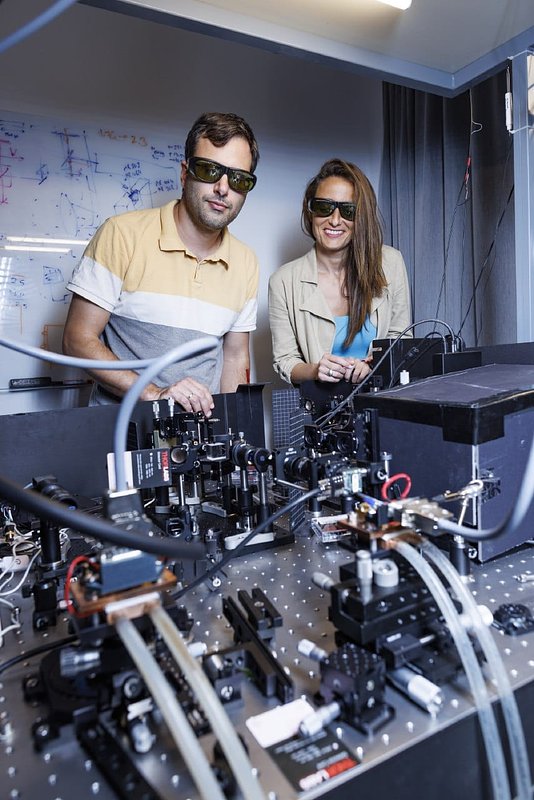
LightSolver has emerged as a formidable contender in this new race with its Laser Processing Unit (LPU). The company has developed an analog, all-optical computer that operates on entirely different principles than its digital or quantum counterparts. Instead of using electrons and transistors, the LPU harnesses the physics of coupled lasers. By manipulating the interference patterns of light, it can represent and solve complex mathematical problems, effectively performing computations at the speed of light.
This approach yields several compelling advantages. Crucially, the LPU operates at room temperature and is designed to fit within a standard data center rack unit, eliminating the immense infrastructure and environmental overhead associated with many quantum computers. By using light for both computation and memory, it sidesteps the data transfer bottlenecks that plague classical systems, as there is no need for costly Optical-to-Electrical-to-Optical (OEO) conversions that can negate speed advantages in hybrid systems.
The technology has already demonstrated remarkable potential on intractable optimization problems. For example, in tackling the Vehicle Routing Problem (VRP)—a notoriously difficult logistical challenge—the LPU has found optimal solutions in fractions of a second, outperforming established industry solvers. More recently, the company announced a breakthrough in mapping Partial Differential Equations (PDEs) directly onto its optical hardware. This allows the LPU to solve complex equations governing heat transfer and electrostatics, with claimed speed gains of up to 100x compared to powerful GPU-based solvers for certain problems. This is achieved through constant-time iteration steps, measured in nanoseconds, that are independent of the problem's size.
The Rise of Heterogeneous Computing
Dr. Wolf's participation in the “Birds of a Feather: Heterogeneous Computing” panel at SCA/HPCAsia 2026 highlights a broader industry trend: the future of computing is not about a single monolithic architecture, but a diverse, hybrid ecosystem. As general-purpose CPUs strain under specialized workloads, the industry is turning to a mix of accelerators, including GPUs, FPGAs, and emerging technologies like neuromorphic and photonic chips.
This heterogeneous approach allows system architects to apply the right tool for the right job. LightSolver’s LPU is positioned as a domain-specific accelerator for a class of iterative, memory-bound problems that are ill-suited for classical machines. The company is not alone in the photonic space; Gartner has recognized a growing field of players, including Lightelligence and Lightmatter, who are also developing light-based processors. However, LightSolver’s all-optical, analog approach offers a unique differentiation in a market exploring various hybrid electro-optical designs.
The panel, led by experts from top European supercomputing centers, will bring together leaders from academia, national labs, and industry to discuss the challenges and opportunities of integrating this diverse hardware. The conversation will span the entire stack, from hardware design to the software frameworks needed to make these disparate systems work together, addressing critical issues like interoperability and performance optimization.
An Israeli Innovator on the Global Stage
Founded in 2020 by physicists Dr. Ruti Ben-Shlomi and Dr. Chene Tradonsky from the world-renowned Weizmann Institute of Science, LightSolver embodies Israel's reputation as a hub of deep-tech innovation. The company has attracted a team dominated by PhDs in physics, math, and computer science and has secured significant financial backing to realize its ambitious vision.
Investors including TAL Ventures, Entree Capital, and IBI Tech Fund have provided strong venture support. Furthermore, the company's potential was validated by the European Innovation Council (EIC), which selected LightSolver for its accelerator program. This provided a €2.5 million grant and a commitment for an additional €10 million in equity, part of a €12.5 million package to advance its all-optical supercomputer and accelerate its commercialization.
This combination of scientific pedigree and robust funding has enabled the company to move quickly. According to one senior analyst at a leading HPC research firm, the availability of LightSolver's platform via the cloud provides a "low barrier to entry" for organizations to explore this "quantum-inspired technology" for their most demanding workloads without needing to procure physical hardware.
As Dr. Wolf prepares to present his keynote, “Exploring the Alternative Computing Landscape: Post-Turing Paradigms for Next-Generation HPC,” the message is clear. The race to define the future of computing is not limited to the quantum realm. Practical, powerful, and accessible technologies are emerging now, and LightSolver’s laser-based approach is demonstrating that the solution to some of tomorrow’s biggest computational challenges may be found not in qubits or silicon, but in the fundamental properties of light itself.