
- 100% farmer-owned: Pachamama Coffee is fully owned and governed by smallholder farmers across Peru, Nicaragua, Guatemala, Mexico, and Ethiopia.
- Regenerative Organic Certified® (ROC): Achieved by Pachamama's Peru and Machu Picchu coffees, setting a new sustainability benchmark.
- Three critical pillars: ROC certification focuses on Soil Health, Animal Welfare, and Social Fairness.
Experts view Pachamama Coffee's Regenerative Organic Certified® status as a significant step toward a more sustainable and ethical coffee industry, validating ancestral farming wisdom with modern certification standards.
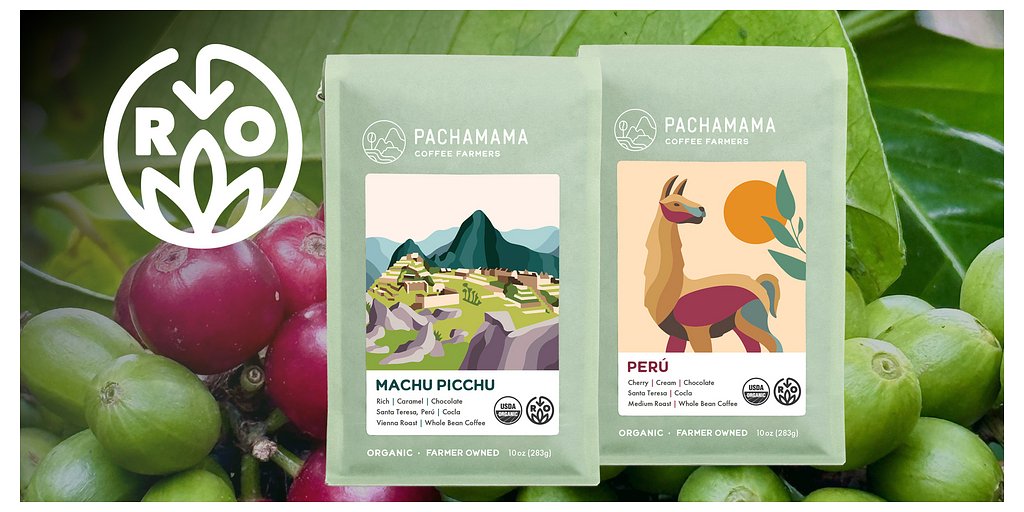
Beyond Organic: Pachamama Coffee Sets a New Gold Standard for a Better Brew
SACRAMENTO, CA – February 04, 2026 – Pachamama Coffee, a brand distinguished by its 100% farmer-owned structure, has announced that its flagship Peru and Machu Picchu coffees have achieved Regenerative Organic Certified® (ROC) status. This achievement not only elevates the brand's commitment to sustainability but also signals a significant shift in the specialty coffee industry toward a more holistic and rigorous standard for ethical production.
The certification, awarded by the nonprofit Regenerative Organic Alliance, applies to coffee sourced from COCLA, a farmer-owned cooperative in Peru's Cusco region and a founding member of the Pachamama cooperative. It marks a pivotal moment where modern certification validates ancestral farming wisdom, creating a new benchmark for what it means to be a truly sustainable and ethical coffee brand.
A New Bar for Sustainability
For years, conscious consumers have looked for labels like USDA Organic and Fair Trade to guide their purchases. The Regenerative Organic Certification® represents the next evolution, building upon these standards to create a more comprehensive framework. It is structured around three critical pillars: Soil Health, Animal Welfare, and Social Fairness.
Unlike standard organic certification, which primarily focuses on prohibiting synthetic pesticides and fertilizers, ROC mandates proactive practices designed to actively rebuild and restore ecosystems. The Soil Health pillar requires farmers to use techniques like cover cropping, crop rotation, and minimal tillage to increase soil organic matter, sequester carbon from the atmosphere, and enhance biodiversity. It shifts the focus from simply not harming the land to actively healing it.
The Social Fairness pillar is another key differentiator. While Fair Trade certification has made significant strides in ensuring better prices for farmers, ROC integrates social equity as a non-negotiable component. It requires farms to provide living wages, safe working conditions, and freedom of association for workers. Critically, an existing social certification is a prerequisite for ROC eligibility in regions like South America, ensuring a robust foundation of worker and farmer rights.
This holistic approach positions ROC as a potential new “gold standard” in a market where consumers are increasingly wary of greenwashing and seek products that align with their values on multiple fronts—environmental, social, and ethical. It offers a clear, verifiable answer to the growing demand for agriculture that not only sustains but regenerates.
Ownership as the Engine of Change
Pachamama Coffee's unique business model is intrinsically linked to its ability to achieve this high-bar certification. As the leading 100% farmer-owned coffee brand in North America, its entire structure is designed to empower the very people who grow the coffee. The cooperative is owned and governed by smallholder farmers across Peru, Nicaragua, Guatemala, Mexico, and Ethiopia, representing a radical departure from the conventional coffee supply chain where farmers are often the most vulnerable and least compensated participants.
This vertical integration ensures that a greater share of the profits flows directly back to the farmers and their communities. This economic empowerment is not just a social good; it is a powerful incentive for long-term environmental stewardship.
“Pachamama’s owners have practiced regenerative farming for generations, guided by indigenous knowledge in reciprocity with nature,” said Thaleon Tremain, co-founder and CEO of Pachamama Coffee. “Regenerative Organic Certified® coffee acknowledges the farmers’ valuable work while Pachamama’s ownership model ensures greater profits and incentives for farmers to fight climate change.”
By placing both ownership and profits in the hands of its farmers, the company creates a direct feedback loop. Better farming practices lead to a higher quality product and a more marketable brand story, which in turn generates more revenue for the farmer-owners to reinvest in their land and communities. This model proves that economic justice for farmers and regenerative environmental practices are not mutually exclusive goals, but are, in fact, deeply intertwined.
Honoring Ancestral Wisdom
For the smallholder farmers of the COCLA cooperative in the Andes, the principles of regenerative agriculture are not a new trend but a continuation of ancestral practices passed down through generations. The term “Pachamama” itself is a Quechua word for Mother Earth, reflecting an indigenous worldview centered on reciprocity—the understanding that the land will provide generously only when it is cared for in return.
Traditional Andean farming techniques, such as building terraces to prevent erosion, practicing agroforestry by growing coffee under a diverse shade canopy, and using organic compost to enrich the soil, are inherently regenerative. These methods have allowed communities to cultivate crops in harmony with their environment for centuries. The ROC certification serves as a formal, global recognition of this deep-seated ecological wisdom.
“Pachamama Coffee represents what Regenerative Organic Certified® is meant to recognize - farmers leading with integrity and a deep commitment to the land,” said Christopher Gergen, CEO of the Regenerative Organic Alliance. “This certification honors generations of regenerative practices while providing recognition and visibility for farmer-owned brands and leaders like Pachamama that are showing what a truly regenerative future can look like.”
This validation bridges the gap between ancient knowledge and modern sustainability science, demonstrating that the solutions to many of today’s agricultural challenges may lie in practices that have been refined over millennia. The result is a coffee that is not only rich in flavor—with complex notes of chocolate and fruit developed slowly under shade—but also rich in cultural heritage.
The Path Forward for Regenerative Coffee
While Pachamama Coffee's achievement is a landmark victory, the path to scaling regenerative organic practices across the global coffee industry is fraught with challenges. The transition requires significant investment in training, time, and resources. For smallholder farmers, who produce the majority of the world's coffee and are often operating on thin margins, the upfront costs and administrative burden of a rigorous, multi-faceted certification like ROC can be prohibitive without strong institutional and market support.
Consumer awareness of the term “regenerative” still lags far behind that of “organic,” meaning the market may not yet provide the price premiums necessary to justify the investment for all farmers. However, as climate change increasingly threatens coffee-growing regions with unpredictable weather, pests, and disease, the resilience offered by regenerative systems is becoming less of a luxury and more of a necessity for survival.
Pachamama has stated its intention to expand the Regenerative Organic Certified® designation to its other founding member cooperatives in Nicaragua, Guatemala, Mexico, and Ethiopia. This forward-looking commitment positions the farmer-owned brand not just as a participant in a new trend, but as a leader paving the way for a more equitable and resilient future for the entire coffee sector.