
- 25% of Los Angeles County households (832,000 total) experience food insecurity, significantly higher than the national average.
- 41% of low-income households in the county struggle to secure enough food.
- 56% of parents with young children in Los Angeles report struggles with food insecurity.
Experts would likely conclude that CHLA's in-hospital SNAP pantry is a groundbreaking model for addressing food insecurity as a critical social determinant of health, particularly for vulnerable families managing childhood illnesses.
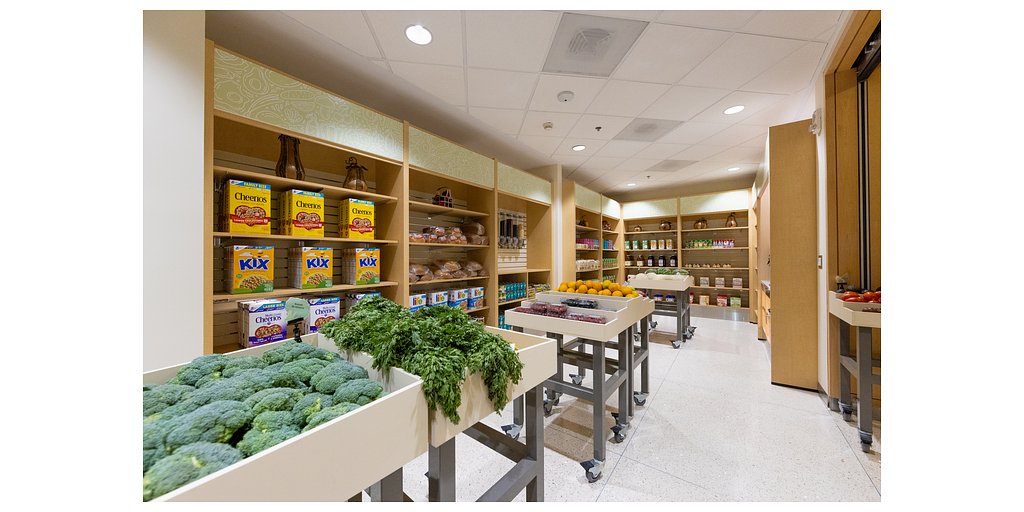
Beyond Medicine: CHLA Fights Hunger with In-Hospital SNAP Pantry
LOS ANGELES, CA – April 21, 2026 – In a pioneering move that redefines the boundaries of patient care, Children’s Hospital Los Angeles (CHLA) has opened an in-hospital Family Pantry that now accepts payments from the Supplemental Nutrition Assistance Program (SNAP) and Electronic Benefits Transfer (EBT) system. The initiative makes CHLA the first pediatric medical institution in California to integrate federal nutrition assistance directly into its campus, offering a critical lifeline to food-insecure patient families and hospital team members.
The Family Pantry, located adjacent to the hospital's HBO Café, provides a convenient place for eligible individuals to use their benefits to purchase fresh produce, pantry staples, and other healthy foods without leaving the hospital grounds. This development addresses a pressing need in a community grappling with significant food access challenges, particularly for families managing the immense stress of a child's serious illness.
A New Front in Healthcare: Confronting Food Insecurity
CHLA's initiative arrives at a critical moment for Los Angeles County, where food insecurity has reached alarming levels. Recent data reveals that a staggering 25% of all households in the county—approximately 832,000 in total—have experienced food insecurity, a rate significantly higher than the national average. The situation is even more dire for low-income households, where 41% struggle to secure enough food, a sharp increase from pre-pandemic figures.
For families with children, the statistics are particularly troubling. Nearly half of all food-insecure households in the county include children, and a recent survey found that 56% of parents with young children in Los Angeles reported struggles with food insecurity. These challenges are often compounded by deep-seated racial and ethnic disparities; rates of food insecurity among Hispanic/Latino and Black/African American residents are more than double those of their white counterparts.
When a child requires prolonged hospitalization, these pre-existing vulnerabilities are magnified. Families often face lost wages, overwhelming medical bills, and the logistical nightmare of spending days or weeks at their child's bedside. Accessing affordable, nutritious food becomes a secondary, though no less vital, concern.
“Compound that with a parent’s job loss, childcare needs, or in our case the need for some families to be at CHLA for long stretches to deal with challenging health complications, and the food insecurity issue drastically worsened,” says Susan Gantan, MPH, Senior Program Manager of Community Affairs at CHLA.
By embedding a SNAP-authorized retailer within its walls, CHLA is directly confronting this social determinant of health. The hospital is moving beyond treating illness to actively mitigating the environmental and economic factors that contribute to poor health outcomes, establishing a new model for how healthcare institutions can serve their communities.
From Pandemic Crisis to Permanent Solution
The concept for the Family Pantry was forged in the crucible of the COVID-19 pandemic, which both exposed and exacerbated food access issues across the county. The initiative began not as a grand strategic plan, but as an emergency response to an immediate crisis.
“All of this work started in the midst of the COVID-19 pandemic,” says Kelie Lam, Director of CHLA’s Food and Nutrition Services. “We began offering pantry items like oats and cereal, as well as produce for our team members and families who couldn’t get to the grocery store.” During the pandemic's peak, long shifts and strict isolation protocols made simple errands like grocery shopping nearly impossible for many frontline healthcare workers.
Simultaneously, the hospital identified an opportunity in its own operations. With fewer visitors due to safety restrictions, the HBO Café had a surplus of food that was at risk of going to waste. This excess food was reclaimed and distributed to team members, patient families, and local community organizations.
Recognizing the persistent need, hospital leaders saw the potential for a more permanent and systemic solution. Gantan approached Lam with the idea of expanding the program by connecting it with SNAP, transforming a temporary relief effort into a sustainable, integrated service. This required a significant collaborative effort, involving extensive work with the U.S. Department of Agriculture (USDA) and the Los Angeles County Department of Public Social Services to gain official approval to operate as a SNAP/EBT retailer.
Community Collaboration in Action
The Family Pantry is more than just a store; it is the physical embodiment of a robust community partnership. Its shelves are stocked through the efforts of CHLA’s Food Access Hub, a coalition of local organizations dedicated to improving food access in the area.
A key partner is Rick’s Produce Market, which supplies the pantry with farm-fresh organic produce. This ensures that families and staff have access not just to calories, but to high-quality, nutritious food. “The Family Pantry offers farm-fresh organic produce from our community partner, Rick’s Produce Market, along with dry pantry staples and essential items,” Lam explains.
The collaboration extends beyond simple supply. Rick and his team are also set to provide farm-to-table education through workshops on seasonal produce, empowering families with knowledge about healthy eating. To add a unique and appealing option, the hospital plans to feature Rick's signature smoothies, made fresh daily.
This network also includes the East Hollywood Community Garden and the East Hollywood Neighborhood Council, which have partnered with CHLA to strengthen local food systems. This multi-sector approach ensures the initiative is deeply rooted in the community it serves, supporting local agriculture and neighborhood organizations while providing a vital service within the hospital. It's a holistic model where the hospital doesn't just receive support, but actively invests in the health of its surrounding neighborhood.
By creating this on-site resource, CHLA effectively removes multiple barriers at once. A parent who has been at their child's bedside for 12 hours no longer needs to worry about finding transportation to a distant grocery store. They can simply walk down the hall to purchase healthy ingredients for a meal using the benefits they are already entitled to, a small but profound convenience in the midst of a family crisis. This integration of services is a powerful example of patient-centered care that acknowledges the whole person, not just the patient. The pantry stands as a testament to the idea that healing involves more than just medicine; it also requires nourishment, support, and a strong community.
Topics & Related
Hospitals & Health Systems
Circular Economy
Related Company Pulse