
- $7 billion: Projected market size of the smart ring industry by the mid-2030s.
- July 2026: Planned Kickstarter launch for KiWear's Smart Ring.
- Snapdragon S7+ Gen 1 Platform: Qualcomm's technology powering KiWear's next-gen prototype.
Experts would likely conclude that KiWear's Smart Ring represents a bold innovation in wearable technology, with its gesture-based control system offering a potential leap forward in human-computer interaction, though its success hinges on flawless execution and consumer adoption.
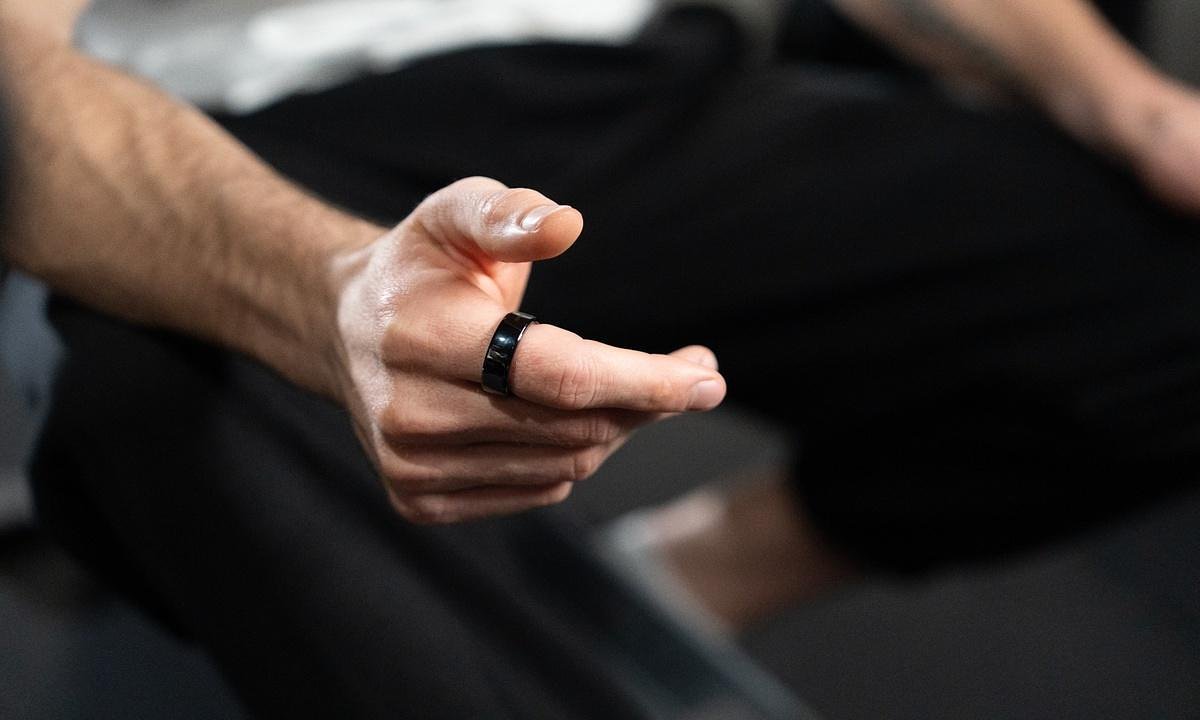
Beyond Health Tracking: KiWear's Ring Aims to Control Your Digital World
WILMINGTON, DE – June 17, 2026 – At the Augmented World Expo (AWE) this week, a familiar form factor promised a radical new function. Amidst a sea of smart rings known for tracking sleep and steps, a company named KiWear debuted a device that does something fundamentally different: it aims to control nearly everything else. With the launch of the KiWear Smart Ring, the company isn't just entering the wearables race; it's trying to change the rules of the game, betting that the next frontier in personal tech is not just monitoring our bodies, but seamlessly commanding our digital environment.
The device, showcased ahead of a planned Kickstarter campaign this July, is billed as the industry’s first touchless smart ring controller. Using subtle hand gestures—a simple pinch or swipe in the air—users can manage music playlists, answer calls, or navigate apps on phones, tablets, and even car infotainment systems without physically touching a screen or the ring itself. It’s a compelling vision of a future with less friction between us and our technology. But in a market already saturated with high-tech jewelry, the question is whether KiWear is offering a genuine leap forward or just a clever solution in search of a problem.
A New Contender in a Crowded Ring
The smart ring market is no longer a niche category. It's a booming industry projected to surpass $7 billion by the mid-2030s, fueled by a societal shift toward proactive health monitoring. The landscape is dominated by titans. Oura, the segment's pioneer and leader, has set the standard for professional-grade sleep and health analytics, recently filing for an IPO on the back of its success. Tech giant Samsung threw its considerable weight into the ring with the 2024 launch of its Galaxy Ring, quickly capturing market share with its subscription-free model and deep integration into the Android ecosystem. Other players like RingConn and Ultrahuman have carved out loyal followings by offering robust health tracking without recurring fees.
What unites these devices is their core focus: they are passive health monitors. They excel at collecting biometric data—heart rate, blood oxygen, skin temperature—and translating it into actionable insights about our well-being. Their utility is in the data they provide, not the control they offer. This is the space where KiWear is making its audacious play. While the KiWear ring does include the health-tracking functions consumers now expect, its primary value proposition lies elsewhere. It’s an active device, a controller. KiWear is betting that consumers are ready for a wearable that does more than just listen to their body; they want one that listens to their commands.
The Gesture is the Command
The tangible difference KiWear proposes is rooted in its proprietary technology. The ring combines motion-tracking sensors with real-time decision-making algorithms to interpret micro-gestures with high precision. The company promises an intuitive experience: answering a call with a subtle 'check' motion in the air while driving, or skipping a song during a workout without fumbling for your phone. It’s an elegant concept that addresses real-world interaction pain points, moving control away from distracting screens and into the user's immediate personal space.
This isn't just about convenience; it's about creating a new, more natural layer of human-computer interaction. For years, the industry has chased interfaces that feel less artificial. Voice commands were a step in that direction, but they lack privacy and can be clumsy in public spaces. KiWear's gesture control offers a silent, discreet alternative. “We are entering a new era of interaction,” said Chris Shi, Founder and CEO of KiWear, Inc., in a statement. “We want to be the pioneer that brings the digital world into everyday life more effortlessly.” The success of this vision will depend entirely on execution. For the ring to be more than a novelty, the gesture recognition must be flawless—instant, accurate, and free of false positives. Early hands-on experiences from the AWE show floor will be the first test of that promise.
Bridging Realities: The Spatial Computing Play
Perhaps the most significant indicator of KiWear's potential lies not in the device itself, but in its strategic partnerships. The company's technology is the engine inside Qualcomm's own reference design smart rings. At AWE, a next-generation prototype powered by the formidable Snapdragon S7+ Gen 1 Platform was on display at Qualcomm's booth, signaling a deep and ongoing collaboration. This isn't just a component supply deal; it's a co-development relationship with the company building the foundation for the next wave of mobile and spatial computing.
Ziad Asghar, a senior vice president at Qualcomm Technologies, Inc., validated this, stating, “KiWear’s smart ring controller represents an important step forward in making XR more natural and intuitive. As spatial computing evolves, new ways of interacting with devices will be critical to unlocking more experiences.” This context elevates the KiWear ring from a simple gadget to a key piece of a much larger puzzle. As augmented and extended reality (XR) move from headsets to more subtle form factors like glasses, the need for a discreet, powerful, and intuitive controller becomes paramount. A smart ring that can seamlessly translate hand movements into digital commands is a leading candidate for that role, potentially becoming the 'mouse' for the augmented world.
KiWear's history as KineticsXR, a B2B firm that developed interaction solutions for giants like Sony and Lenovo, provides further credibility. This is not a typical startup emerging from a garage; it's a company with a deep legacy in the complex engineering of human-machine synergy. Their transition to a consumer-facing brand is a calculated risk, but one built on a foundation of proven technical expertise. The upcoming Kickstarter campaign will be the ultimate test, revealing whether consumers are ready to invest in a device that asks them not just to track their lives, but to control them with a wave of the hand.