
- 20+ vehicle models from 15+ manufacturers now integrate Raytron's thermal cameras.
- Thermal cameras detect obstacles at 300+ meters, doubling the range of standard headlights.
- L3 assisted driving systems now use thermal-based Automatic Emergency Braking (AEB) in models like the Zeekr 9X.
Experts agree that thermal cameras are becoming indispensable for automotive safety, offering superior nighttime and adverse-weather detection, and are critical for advancing autonomous driving technology.
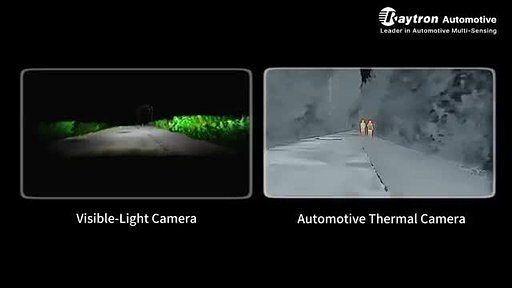
Beyond Headlights: Thermal Cameras Redefine Automotive Safety
LAS VEGAS, NV – January 30, 2026 – A significant shift is underway in automotive safety, moving beyond the visible spectrum to conquer one of driving's most persistent dangers: the dark. Raytron Technology, a leader in infrared imaging, has announced its automotive thermal cameras are now integrated into more than 20 vehicle models from over 15 leading manufacturers. This milestone signals the technology's transition from a niche feature to a critical component for enhancing driver perception, preventing nighttime collisions, and enabling the next generation of autonomous vehicles.
For decades, drivers have been limited by the reach of their headlights, which typically illuminate the road for only 100 to 150 meters. Raytron's thermal cameras more than double this range, detecting the heat signatures of pedestrians, animals, and other obstacles at distances exceeding 300 meters. This provides drivers—and the vehicle's advanced driver-assistance systems (ADAS)—with crucial extra seconds to react, a difference that can mean life or death.
A New Standard for Passenger Vehicle Safety
The most immediate impact of this technology is being felt in the passenger car market, where nighttime accidents involving pedestrians and animals remain a stubborn problem. Unlike standard cameras that rely on visible light, thermal imagers are immune to darkness and the blinding glare from oncoming headlights. They create a high-contrast image by detecting temperature differences, making a warm body stand out clearly against a cooler background, regardless of lighting conditions or dark clothing.
This capability is showcased in the new Zeekr 9X flagship SUV, which features the world's first thermal-based Automatic Emergency Braking (AEB) system. Powered by Raytron's Horus 640D thermal module, the system can identify a hazard far beyond the reach of headlights and autonomously apply the brakes if the driver fails to react. This integration into the vehicle's L3 assisted driving system represents a paradigm shift, turning passive night vision displays into active, life-saving safety interventions.
The widespread adoption includes major automotive groups like BYD, Geely, and Great Wall Motors (GWM), whose Tank 500 model incorporates the thermal camera into its latest-generation ADAS. The partnerships with over a dozen other automakers, including Yangwang, Fangchengbao, and DENZA, underscore a growing industry consensus: for true all-condition safety, vehicles need to see more than just light.
Powering Commercial Fleets in Extreme Environments
While passenger safety is a primary driver, the technology's benefits are equally transformative for commercial and industrial vehicles. Heavy-duty trucks, mining haulers, and logistics vehicles frequently operate around the clock in environments that cripple conventional sensors. Dust, heavy fog, sandstorms, and driving rain can render visible-light cameras and even LiDAR ineffective.
This is where Long-Wave Infrared (LWIR) technology, operating in the 8-14μm wavelength, provides a decisive advantage. Its superior ability to penetrate these atmospheric obscurants ensures that perception systems remain operational. For a fully loaded heavy-duty truck with a long braking distance, this early and reliable detection is not a luxury but a fundamental safety requirement.
Companies like Kargobot, an autonomous trucking firm incubated by DiDi, have integrated Raytron's thermal modules into the 360-degree perception systems of their L4 autonomous trucks. The cameras provide a vital data stream for navigating complex logistics hubs and highways in all weather. Similarly, specialized vehicles from Breton and Zhizi Automobile, operating in mining and industrial transport, rely on thermal imaging for safe navigation in hazardous, low-visibility settings, preventing costly accidents and improving operational efficiency.
The Unsung Hero of Full Autonomy
The ultimate goal for many in the automotive industry is Level 4 autonomous driving, where a vehicle can operate without human intervention under specific conditions. Achieving this level of reliability requires a sophisticated sensor fusion architecture, where data from multiple sensor types is combined to create a robust and comprehensive model of the world.
Within this architecture, thermal imaging has emerged as an unsung hero. While LiDAR is excellent at mapping environments with high precision and radar excels at tracking object velocity, both have known weaknesses. LiDAR performance degrades significantly in fog, dust, and snow, while radar can struggle to classify objects accurately. Thermal imaging fills these critical gaps.
DiDi Autonomous Driving's latest Robotaxi, built on its Gemini hardware platform, exemplifies this state-of-the-art approach. Its sensor suite of nearly 50 sensors includes a thermal imager specifically to enhance pedestrian detection in low light and ensure robust performance in adverse weather. By providing a perception layer that is completely independent of light and resilient to weather, the thermal camera acts as a crucial failsafe. It ensures the autonomous system can reliably detect vulnerable road users and other living things when other sensors might be compromised, making it an indispensable component for building public trust and achieving true all-condition self-driving.
Raytron's ability to provide this technology at scale, thanks to a vertically integrated supply chain that includes in-house chip design and module assembly, is accelerating this trend. As regulatory bodies worldwide push for more effective AEB and VRU protection systems, the case for thermal imaging as a standard feature continues to grow. By providing the ability to see through darkness and foul weather, this technology is no longer just enhancing vision; it is fundamentally redefining what it means for a vehicle to be safe.
Topics & Related
Artificial Intelligence
Machine Learning
Digital Transformation
Software & SaaS
AI & Machine Learning
Related Company Pulse