
- 20 years old: Paul Quassa began his political journey, later becoming a key architect of Nunavut.
- 2022: Federal government rejected Baffinland’s Phase 2 expansion due to unaddressed environmental concerns.
- Inuit leadership development program: Initiated by Quassa to build pathways for Inuit employees to reach senior management.
Experts would likely conclude that Paul Quassa’s role at Baffinland Iron Mines represents a pivotal shift toward authentic Indigenous partnership in Arctic resource development, emphasizing long-term sustainability over short-term gains.
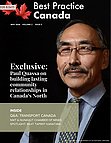
Beyond Consultation: Paul Quassa and the New Rules of Arctic Partnership
TORONTO, ON – June 05, 2026
In the stark, resource-rich landscapes of the Canadian Arctic, the hum of industry has long been accompanied by a dissonant chord of community concern. For decades, the model was simple: corporations arrived with capital and machinery, while local and Indigenous communities were often left to negotiate their place from the margins. That era is definitively over. The new currency of corporate success in the North is not just iron ore or precious minerals, but authentic partnership. And few embody this seismic shift more clearly than Paul Quassa.
The recent feature on Quassa—a former Nunavut Premier and a key architect of the territory itself—in the magazine Best Practice Canada is more than just a profile. It’s a signal. By accepting a role as Senior Advisor to Baffinland Iron Mines, one of the region's largest industrial players, Quassa is not merely lending his name; he is field-testing a new thesis for resource development. This thesis holds that the long-term viability of a multi-billion-dollar enterprise depends less on its technical prowess and more on its ability to integrate deeply and respectfully with the communities it impacts. It's a pragmatic pivot from consultation as a checkbox to collaboration as a cornerstone.
The Architect of Partnership
To understand the significance of Paul Quassa’s role at Baffinland, one must look beyond his brief premiership. His true legacy is etched in the very fabric of Nunavut. At just 20 years old, he began a political journey that would see him become a key negotiator and signatory of the Nunavut Land Claims Agreement (NLCA), the foundational document that created the territory in 1999. He has been a journalist, a cabinet minister, and a fierce advocate for Inuit culture and language. His career is a testament to a lifelong commitment to Inuit self-determination.
This background makes his position at a major mining corporation both surprising and profoundly logical. As Senior Advisor, Quassa is tasked with a delicate and critical mission: to serve as the primary conduit between Baffinland's executive team and the five Baffin Island communities impacted by its Mary River Mine. He communicates directly with residents in Inuktitut, demystifying complex operational plans and, crucially, listening to concerns about environmental and wildlife impacts. His perspective, as described by those familiar with his work, is that this role is the modern-day fulfillment of the vision behind the NLCA: achieving self-sufficiency for Nunavut through responsible development.
His work goes beyond simple communication. Quassa is spearheading an Inuit leadership development program within Baffinland, a concrete initiative designed to dismantle cultural barriers and build pathways for Inuit employees to reach senior management. It’s a strategic move to transform the company from the inside, harmonizing the corporate environment with local culture rather than demanding assimilation. This isn't just good optics; it's about building a sustainable, locally-staffed operation.
From Mandate to Mutualism: The Evolution of IIBAs
The formal framework for corporate-community relations in Nunavut is the Inuit Impact and Benefit Agreement (IIBA). Mandated by the NLCA for any major project, these legally binding contracts are designed to ensure benefits like jobs, training, and royalties flow to Inuit communities. Baffinland’s Mary River Mine operates under such an agreement with the Qikiqtani Inuit Association (QIA), which includes provisions for everything from procurement quotas to wellness funds.
But as the industry has learned, a signed IIBA is the beginning of the conversation, not the end. The most telling lesson came in 2022, when the federal government rejected Baffinland’s proposed Phase 2 expansion of the Mary River Mine. Despite a multimillion-dollar “Inuit Certainty Agreement” signed with the QIA to enhance community benefits and oversight, the project was halted by significant, unaddressed environmental concerns raised by communities and review boards. The message was unequivocal: a legal agreement cannot override the power of community consent and environmental stewardship.
The rejection was a costly but clarifying moment for the entire Arctic resource sector. It proved that the old model—where benefits were seen as a simple trade-off for impacts—was broken. The new model, which leaders like Quassa are now building, demands a more dynamic and mutualistic relationship. It requires that companies not only mitigate harm but actively integrate community knowledge—Inuit Qaujimajatuqangit—into their core operational and environmental planning.
The New Corporate Imperative: Listening as a Strategy
What does this new model look like in practice? It means moving beyond public meetings and into a state of constant dialogue. Baffinland's strategy now leans heavily on a network of Baffinland Community Liaison Officers (BCLOs) who serve as permanent points of contact in the communities. It means co-hosting annual review forums with the QIA where performance against the IIBA is scrutinized by community representatives. It means treating community feedback not as a public relations challenge to be managed, but as critical operational data to be acted upon.
Quassa’s role is the personification of this strategy. He is the internal mechanism ensuring that the voices from community tours and information sessions reach the CEO's office not as filtered summaries, but as essential guidance. When community members raise persistent concerns about caribou migration or the effects of shipping on marine mammals, his presence ensures those concerns are woven into the company’s risk management and strategic planning. This isn't altruism; it's advanced business strategy. In a world of heightened ESG (Environmental, Social, and Governance) expectations, a company’s social license to operate is its most valuable and fragile asset.
Amplifying the Arctic Dialogue
The decision by a publication like Best Practice Canada to place this story front and center speaks volumes. With its stated mission to amplify leaders advancing environmental stewardship and inclusive workplaces, the magazine is reflecting a broader shift in the business world. The conversation about Indigenous partnership is no longer confined to CSR reports or academic journals; it is now a mainstream topic for business leaders, investors, and strategists.
By featuring Quassa alongside interviews with the NWT & Nunavut Chamber of Mines and Transport Canada, the magazine paints a picture of an entire ecosystem in transition. It recognizes that the path to sustainable development in sensitive regions like the Arctic is not forged by companies alone, but through a complex interplay between industry, Indigenous leadership, government, and regulatory bodies. The work of leaders like Paul Quassa, amplified by media willing to explore these nuanced issues, is slowly but surely writing the new playbook for creating shared value in the 21st century.