
- Trinary Architecture: Neuraxon 2.0 introduces a trinary neural computation system with three states (+1, 0, -1), moving beyond traditional binary logic.
- Continuous Learning: The framework enables real-time adaptation without catastrophic forgetting, a critical limitation of current AI models.
- Open-Source Release: Qubic has made Neuraxon 2.0's source code publicly available on GitHub, fostering community-driven innovation.
Experts in AI research view Qubic's trinary architecture and continuous learning framework as a groundbreaking step toward more adaptive, brain-like intelligence, though significant challenges in scalability and practical implementation remain.
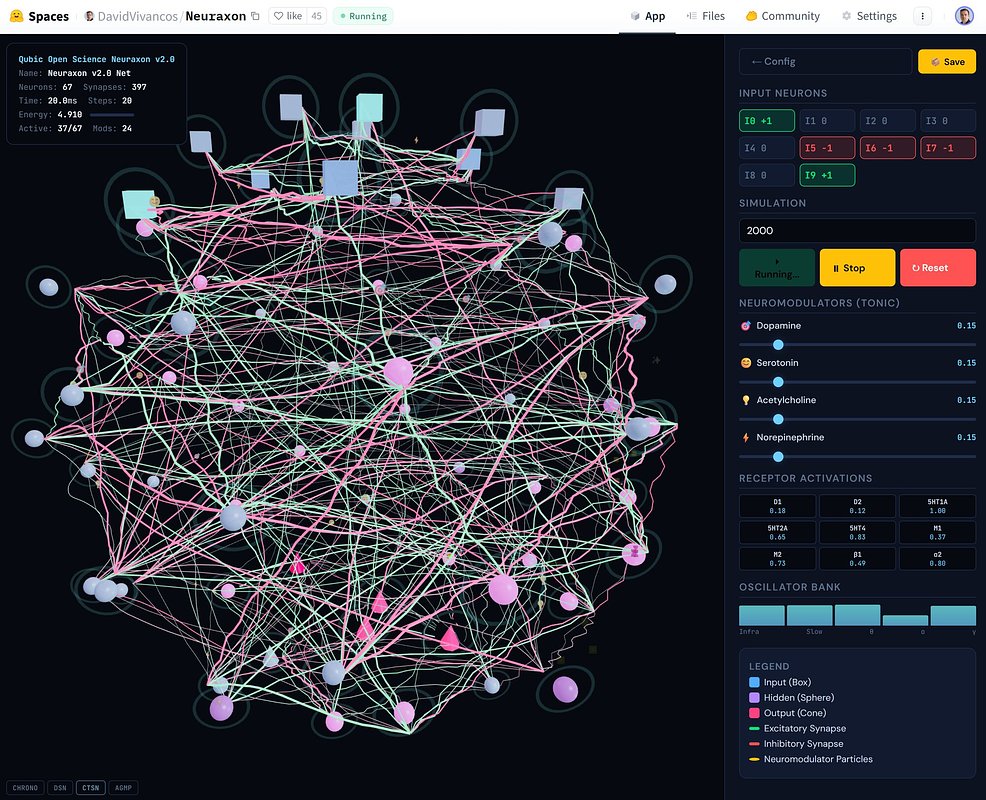
Beyond Binary: Qubic's Trinary AI Aims for 'Live' Intelligence
FORT LAUDERDALE, FL – March 02, 2026 – In a move that challenges the foundational principles of modern artificial intelligence, research initiative Qubic has unveiled Neuraxon 2.0, a neural computation framework built not on the binary logic of ones and zeros, but on a more complex, bio-inspired trinary architecture. The project, detailed in a new research paper, proposes a radical shift toward AI systems that can learn and adapt continuously, aiming to create what Qubic calls "LiveAIs" in contrast to the static nature of today's dominant models.
A New Blueprint for Neural Computation
At its core, Neuraxon 2.0 abandons the binary perceptron model that has been the bedrock of AI for decades. Instead, it introduces neural units that operate in three states: excitatory (+1), neutral (0), and inhibitory (-1). This trinary system is designed to more closely mirror the nuanced dynamics of the biological brain, where neurons don't just fire or remain silent but can exist in modulated states of readiness.
The framework’s innovation goes beyond its three-state logic. It is built for continuous-time processing, allowing it to handle uninterrupted streams of data. Unlike conventional AI models that operate in discrete training and inference cycles, Neuraxon’s neural states evolve dynamically over time. This eliminates the need to reset the system between learning events, enabling a form of real-time adaptation that is fundamental to biological intelligence.
“Neuraxon 2.0 represents our effort to rethink neural computation from first principles,” stated David Vivancos & José Sánchez, members of the Qubic scientific team, in the official announcement. “By introducing trinary state processing and continuous dynamics, we are exploring how adaptive systems can evolve in real time, rather than operate within fixed training boundaries.”
The architecture integrates several other advanced, brain-inspired mechanisms. It features multi-timescale synaptic dynamics, where the connections between neurons can form, collapse, or strengthen over different time horizons. It also simulates neuromodulation, the process by which chemicals like dopamine and serotonin regulate brain-wide activity, allowing the network to be intrinsically adaptive. Further, the model incorporates structural plasticity, giving it the ability to grow or prune its own connections and even eliminate underutilized neurons, introducing an evolutionary dimension to its development.
From 'DeadLLMs' to 'LiveAIs'
Qubic is positioning Neuraxon 2.0 as a direct response to the limitations of current AI, particularly Large Language Models (LLMs). The initiative draws a sharp distinction between what it calls "DeadLLMs"—powerful but static models frozen at the end of their training—and its vision for "LiveAIs."
Today's state-of-the-art LLMs, while incredibly proficient at tasks related to the vast datasets they were trained on, are fundamentally brittle. Updating them with new information requires costly and time-consuming retraining from scratch. They are susceptible to a phenomenon known as "catastrophic forgetting," where learning new information can erase previous knowledge. Their static nature makes them ill-suited for dynamic, unpredictable environments where continuous adaptation is paramount.
Neuraxon 2.0 aims to solve these problems at an architectural level. By processing data continuously and adapting its structure in real-time, the framework is designed to learn from an unending stream of experience without forgetting. This capacity for lifelong learning is considered a holy grail in AI research and is essential for applications in robotics and autonomous systems.
To demonstrate this concept, Qubic has created a physical application called NeuraxonMini. This project integrates Neuraxon 2.0 as the "brain" of a Sphero Mini, a small, spherical robot. The goal is to showcase an embodied AI that can learn and adapt its behavior through direct interaction with the physical world, a stark contrast to the disembodied, text-based existence of an LLM.
An Open-Source Push for Foundational Research
Despite its ambitious goals, Qubic is clear that Neuraxon 2.0 is not a commercial product. Instead, it is being released as part of the organization's open-science initiative. The complete source code has been made available on GitHub, and an interactive demonstration is accessible on the Hugging Face platform, allowing developers, researchers, and enthusiasts to experiment with the technology directly.
This open approach is central to Qubic's broader mission to build a decentralized and transparent digital infrastructure. By making its foundational AI research public, the initiative aims to foster community-driven innovation and accelerate progress in the field. The project's documentation emphasizes transparency, peer-accessible research, and reproducible experiments as core tenets.
This strategy places Neuraxon 2.0 within Qubic's larger ecosystem, which is focused on developing decentralized computation, novel consensus mechanisms, and scalable network performance. The long-term vision suggests a future where adaptive AI systems like those powered by Neuraxon could run on a distributed network, creating a resilient and globally accessible intelligence layer.
The Road Ahead in a Competitive Landscape
Qubic's work does not exist in a vacuum. The pursuit of more brain-like AI is a vibrant and competitive field. Researchers have long explored Spiking Neural Networks (SNNs), which mimic the event-driven, energy-efficient communication of biological neurons. Tech giants like Intel, with its Loihi neuromorphic chip, and IBM have invested heavily in creating specialized hardware designed to run these brain-inspired models.
However, Qubic’s Neuraxon 2.0 distinguishes itself by holistically integrating multiple advanced biological concepts: a trinary state, continuous-time processing, multi-timescale plasticity, and simulated neuromodulation. While some academic research has explored ternary neural networks for their efficiency, Qubic's framework represents one of the most comprehensive attempts to build a complex, bio-plausible system from the ground up and release it openly.
The potential applications for such an adaptive AI are vast, extending far beyond the Sphero robot demo. They include advanced robotics capable of navigating unstructured environments, edge AI devices that can learn on-site with limited resources, and financial or scientific systems that must recognize complex patterns in real-time data streams.
Still, significant challenges remain. The computational complexity of simulating such intricate biological dynamics on conventional binary hardware could be a major hurdle to scalability. Furthermore, developing methods to effectively train, debug, and interpret these continuously evolving systems will require new theoretical and practical tools. Qubic's bet is that by rethinking the fundamental architecture first, the path to overcoming these challenges will become clearer, potentially paving the way for a new generation of truly adaptive and intelligent machines.