
- 64,000 children orphaned in Gaza since October 2023
- 20,000 children currently supported by Taawon’s Noor Program
- Strategic partnerships with Indonesia’s Islamic philanthropic sector (Dompet Dhuafa, Rumah Zakat, Human Initiative)
Experts would likely conclude that Palestine is strategically diversifying its support base through Southeast Asia, combining urgent humanitarian aid with long-term cultural preservation to ensure generational resilience.
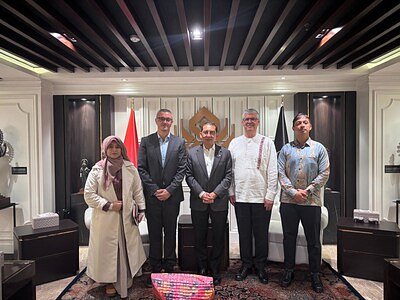
Beyond Aid: Palestine Forges a New Alliance for Its Future in Southeast Asia
RAMALLAH, Palestine – June 03, 2026 – In the quiet, diplomatic corridors of Jakarta, a strategy is unfolding that redefines the intersection of humanitarian aid, cultural preservation, and geopolitical alignment. A high-level Palestinian delegation, representing Taawon (The Welfare Association) and the Palestinian Museum, has concluded a pivotal visit to Indonesia. While the immediate catalyst is a crisis of unimaginable scale—64,000 children orphaned in Gaza since October 2023—the mission signifies something far more profound than a fundraising tour. It marks the deliberate construction of a new, resilient axis of support anchored in Southeast Asia, one that aims to secure both the next generation and the ancient memory of the Palestinian people.
Following a successful campaign launch in Malaysia, the delegation’s engagement in Indonesia is not merely about replicating a model; it's about deepening a strategic shift. This isn't just about soliciting aid; it's about building institutional partnerships that can weather political storms and provide sustained, generational support. By intertwining the urgent needs of Gaza's children with the long-term imperative of cultural preservation, Palestinian civil society is architecting a sophisticated, dual-pronged strategy for survival and sustainability.
A Generational Crisis Demands a Generational Commitment
The sheer scale of the humanitarian disaster in Gaza has necessitated a complete rethinking of traditional aid paradigms. Short-term relief, while vital, is wholly inadequate to address the deep, systemic trauma inflicted upon an entire generation. Taawon’s Noor Program is the institutional response to this challenge.
“The scale of loss in Gaza demands more than short-term relief,” stated Dr. Tareq Emtairah, Taawon’s Director-General, articulating the gravity of the situation. “The genocide war since October 2023 has left 64,000 children orphaned, more than half of them below the age of six.”
Taawon, a veteran organization with a long history of development work in Palestine, is already providing comprehensive care for 20,000 of these children through the Noor Program. The commitment is not temporary. “Our commitment is to stand with them until they reach the age of 18,” Dr. Emtairah affirmed, outlining a long-term vision that includes safety, education, healthcare, and sustained psychosocial support. This is a promise of stability in a world defined by its absence. The program is a direct challenge to the cycle of poverty and trauma, aiming to provide pathways to a dignified life.
The urgency is underscored by harrowing reports from international bodies. Organizations like Amnesty International have used the term "genocide" to describe the events since late 2023, citing indiscriminate strikes and the deliberate strangulation of aid. The International Criminal Court is actively investigating alleged war crimes. Against this backdrop, the Noor Program emerges as a monumental, and essential, undertaking—a lifeline for children who, as Dr. Emtairah noted, “wake in fear, carrying the trauma of bombardment and the loss of their families.”
The New Axis of Solidarity: Why Southeast Asia?
The choice to focus on Malaysia and Indonesia is a masterstroke of strategic foresight. These nations offer more than just financial capacity; they provide a potent combination of political solidarity, robust civil society networks, and deep public support. Indonesia, in particular, has been one of the most steadfast and vocal advocates for the Palestinian cause on the world stage, a policy rooted in its own anti-colonial history.
The Palestinian delegation’s meetings with Indonesia's Minister of Culture, Dr. Fadli Zon, signal high-level governmental buy-in. But the real disruptive potential lies in the new partnerships being forged with Indonesia's powerful Islamic philanthropic sector. Constructive meetings were held with Dompet Dhuafa, Rumah Zakat, and Human Initiative—three titans of the country's zakat-based humanitarian ecosystem. These organizations are not simply charities; they are sophisticated institutions adept at translating widespread public sentiment into structured, sustainable financial support and on-the-ground action.
By engaging with them, Taawon is tapping into a dynamic and resilient infrastructure of giving that operates parallel to, and often more efficiently than, traditional Western aid channels. The goal is to build a national partnership platform in Indonesia, creating a powerful coalition of civil society, public supporters, and humanitarian groups dedicated to a long-term commitment. This move diversifies Palestine’s sources of support, reducing dependency on politically volatile Western funding and building a more resilient, South-South network of solidarity.
Culture as the Last Line of Defense
Running in parallel to the urgent humanitarian mission is an equally critical objective: the preservation of Palestinian culture and identity. The delegation’s inclusion of the Palestinian Museum is no accident. In a conflict where cultural institutions, libraries, and heritage sites face what the press release calls "unprecedented destruction and displacement," the fight for memory becomes a central battleground.
The discussions in Indonesia covered ambitious cultural initiatives. These include supporting the re-curation, modernization, and digitization of the Islamic Museum within the Al Aqsa Compound in Jerusalem—a site of immense religious and cultural significance. Protecting Jerusalem's identity and its Waqf (Islamic endowment) heritage is a key priority. Furthermore, talks with Indonesia's National Museum have opened the door for future collaborations, including exhibitions, archival projects, and artistic exchanges that can connect the historical experiences of both nations.
This is cultural diplomacy in its most essential form. For Palestinians, heritage is not a luxury; it is a testament to their continuous existence and a bulwark against narratives that seek to erase their history. By partnering with institutions like the Indonesian National Museum, the Palestinian Museum is not only seeking to protect its artifacts but also to export its narrative, building bridges of understanding and ensuring its story is told to a global audience. This proactive defense of cultural memory is a powerful act of resistance, asserting that even amidst rubble, a people's identity will be preserved and celebrated.
The dual mission in Indonesia reveals a holistic and forward-thinking strategy. It recognizes that a future for Palestine cannot be built without simultaneously caring for its traumatized children and safeguarding the cultural soul of the nation. By skillfully weaving together the threads of humanitarian action, cultural diplomacy, and strategic international partnerships, Taawon and the Palestinian Museum are not just asking for help—they are building a new framework for a resilient future.