
- 250+ compliance professionals will convene in Berlin from March 2–4, 2026
- 7% of global annual turnover in fines for non-compliance with the EU AI Act
- 50,000+ companies now required to provide detailed, audited sustainability reports under the CSRD
Experts agree that the 2026 enforcement of the EU AI Act and ESG regulations represents the most significant regulatory shift in a generation, requiring immediate and comprehensive compliance overhauls across industries.
Berlin Summit to Tackle Europe’s New AI and ESG Compliance Maze
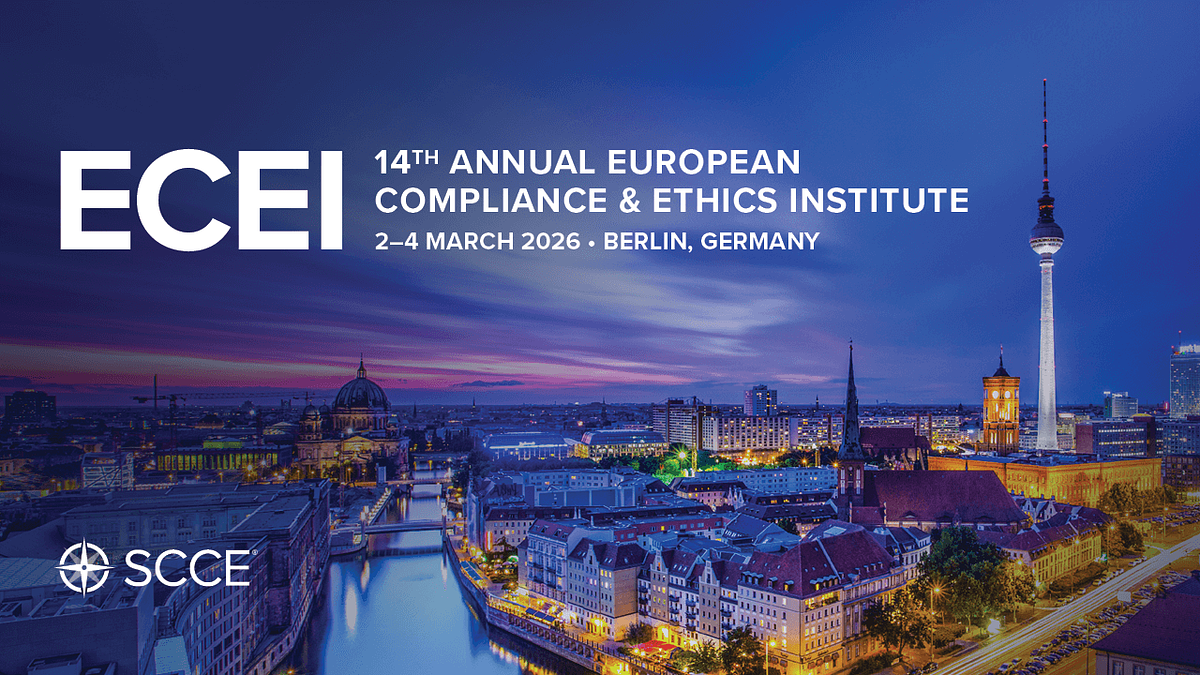
BERLIN, Germany – February 09, 2026 – More than 250 of Europe's top compliance and ethics professionals are set to convene in Berlin from March 2–4 for a critical summit, as businesses across the continent grapple with a tidal wave of complex new regulations governing artificial intelligence, sustainability, and supply chain integrity. The 14th Annual European Compliance & Ethics Institute (ECEI), organized by the Society of Corporate Compliance and Ethics (SCCE), promises to be a crucial forum for navigating what many see as the most significant regulatory shift in a generation.
The gathering at the JW Marriott Berlin comes at a pivotal moment. With several landmark European Union laws moving from legislative passage to full-scale enforcement in 2026, companies are facing unprecedented pressure to overhaul their governance, risk, and compliance frameworks. The agenda for the ECEI reflects this urgency, with over 40 sessions dedicated to the most pressing challenges facing modern corporations.
The New Regulatory Gauntlet: AI and Sustainability
At the forefront of discussions will be the European Union's AI Act, the world's first comprehensive legal framework for artificial intelligence. With most rules for high-risk AI systems becoming fully enforceable in August 2026, the clock is ticking for organizations to ensure compliance. The Act establishes a stringent risk-based approach, imposing heavy obligations on companies that deploy AI in sensitive areas like credit scoring, human resources, and critical infrastructure. Non-compliance carries the threat of massive fines, potentially reaching up to 7% of a company's global annual turnover.
Compliance leaders attending the ECEI will be seeking practical guidance on how to inventory their AI systems, conduct mandatory conformity assessments, and establish the robust human oversight required by the law. The challenge lies not only in technical compliance but also in addressing the ethical dimensions of AI, such as preventing algorithmic bias and ensuring transparency in automated decision-making.
Equally transformative is the EU's aggressive push on environmental, social, and governance (ESG) standards. The year 2026 marks a turning point where the focus shifts from policy creation to rigorous implementation and enforcement. The Corporate Sustainability Due Diligence Directive (CSDDD), which mandates that large companies identify and mitigate human rights and environmental risks throughout their supply chains, is set to be transposed into national laws by mid-year. This places a direct legal responsibility on boardrooms for activities occurring far beyond their immediate corporate borders.
This is compounded by the Corporate Sustainability Reporting Directive (CSRD), which now requires over 50,000 companies to provide detailed, audited reports on their sustainability performance. The ECEI's focus on third-party and supply chain due diligence directly addresses the immense operational challenge of tracing and verifying data across global value chains, a task made even more complex by regulations like the EU Deforestation Regulation (EUDR), which introduces strict traceability requirements for a range of commodities.
A Convergence of Industries and Expertise
The gravity of these challenges is reflected in the diverse array of speakers and attendees slated for the Berlin institute. The presence of compliance leaders from technology giants like Microsoft and Ericsson underscores the intense pressure on the tech sector to navigate not only the AI Act but also evolving data privacy and cybersecurity rules under GDPR and the Digital Operational Resilience Act (DORA).
Representatives from consumer-facing multinationals such as McDonald's Corporation and gaming operator Entain plc will bring perspectives on managing consumer protection, responsible marketing, and complex franchise or partner networks under the new regulatory microscope. Meanwhile, the participation of industrial firms like Philip Morris International and IT solutions aggregator TD SYNNEX highlights the universal impact on global supply chains, manufacturing, and distribution. Even non-governmental organizations are represented, with the UN World Food Programme speaking to the critical importance of ethics and anti-fraud measures in the humanitarian sector.
This cross-industry dialogue is a core strength of the ECEI. It provides a unique platform for leaders from vastly different fields to share strategies on common problems, whether it's managing third-party risk, conducting internal investigations, or preparing for a crisis in an era of heightened public and regulatory scrutiny.
Beyond the Rulebook: Fostering a Culture of Integrity
While navigating the technicalities of new legislation is a primary focus, the ECEI agenda emphasizes that sustainable compliance cannot be achieved through checklists alone. Sessions on organizational culture and professional skills signal a broader industry trend: the move toward embedding a genuine culture of integrity that goes beyond mere rule-following.
Experts argue that in a world of constantly evolving risks, a "Compliance by Design" mindset is essential. This involves proactively building ethical considerations into business processes from the outset, rather than reacting to failures after the fact. It requires strong ethical leadership, robust whistleblower protection programs, and continuous training that empowers every employee to act as a guardian of the company's values.
The institute serves as a catalyst for these discussions, offering a space for professionals to exchange best practices on how to champion ethics within their organizations and secure buy-in from the board level down to the front lines. For many attendees, the ultimate goal is to transform compliance from a cost center into a strategic business enabler that builds trust with customers, employees, and regulators.
As part of its mission to advance the profession, the SCCE will also offer on-site examinations for the Certified Compliance & Ethics Professional-International (CCEP-I)® credential. This provides a tangible path for practitioners to validate their expertise and demonstrate their commitment to the highest professional standards. In an increasingly complex and high-stakes environment, this shared commitment to professional development and collaborative problem-solving may be the most valuable resource of all.