
- Benchling serves over 1,300 biotech and pharmaceutical companies
- Model Hub offers a 4x increase in prediction speed due to upgraded GPU infrastructure
- Platform includes state-of-the-art models like DeepMind's AlphaFold and OpenFold 3
Experts agree that Benchling's Model Hub addresses a critical industry need by democratizing access to AI tools, eliminating technical barriers, and integrating computational biology seamlessly into lab workflows.
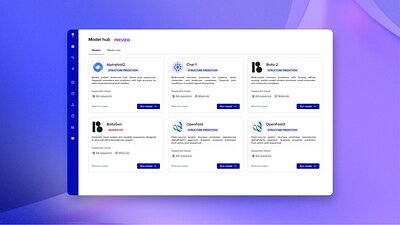
Benchling's Model Hub Puts AI in Every Scientist's Hands
SAN FRANCISCO, CA – May 13, 2026 – By Stephanie Lewis
Benchling, a central software provider for over 1,300 biotech and pharmaceutical companies, today launched Model Hub, a new platform feature designed to embed powerful artificial intelligence models directly into the daily workflow of research and development scientists. The move aims to dismantle the significant technical barriers that have traditionally kept cutting-edge AI tools out of the hands of the bench scientists who need them most, potentially accelerating the pace of drug discovery and development.
Until now, leveraging AI models for tasks like protein structure prediction required a complex, months-long process involving dedicated engineering teams, compute resource provisioning, and custom API integrations. The resulting data often existed in a silo, disconnected from the experimental records it was meant to inform. Model Hub promises to change that by creating a unified environment where scientists can discover, run, and track AI predictions alongside their experimental data, all within the familiar Benchling platform.
"Access to scientific AI models shouldn't depend on whether your team has the engineering resources to build and maintain the infrastructure to run them," said Mihir Trivedi, Product Manager for Scientific AI at Benchling, in the company's announcement. "Model Hub gives any scientist on Benchling a way to run state-of-the-art models and connect those outputs directly to their experimental record."
Democratizing Advanced Science
The core of Model Hub's value proposition is the democratization of sophisticated computational tools. Previously, a scientist wanting to predict the structure of a novel protein would have to export their sequence data, hand it off to a specialized computational biology team, and wait for the results. This process could be slow, inefficient, and created a bottleneck in the research pipeline.
With Model Hub, the process is streamlined to a few clicks. A scientist can select a protein sequence directly from their Benchling registry, choose a prediction model from a curated library, and run the analysis. The platform manages the underlying GPU hardware and complex computational steps, returning structured results with a full audit trail. This shift empowers individual researchers to ask and answer complex questions in near real-time, fostering a more iterative and dynamic approach to discovery.
This move aligns with a broader industry consensus that a major bottleneck in AI-driven drug discovery is not a lack of powerful models, but the difficulty of integrating them into practical lab work. Industry experts have consistently pointed to the need for platforms that abstract away the technical complexity, allowing scientists to focus on the science itself. By eliminating the need for DevOps and custom engineering for each new model, Benchling is positioning itself as a key enabler of this new, more accessible paradigm.
Beyond Predictions: An Integrated R&D Workflow
While accessibility is a key feature, the strategic power of Model Hub lies in its deep integration within Benchling's existing R&D Cloud. Competitors like Schrödinger and Dassault Systèmes BIOVIA offer powerful computational tools, but Benchling's advantage is embedding these capabilities within a platform that already serves as the central source of truth for experimental data for many organizations.
This integration creates a seamless, traceable loop between in silico prediction and wet lab experimentation. Every model run, input, and result is logged with timestamps and linked back to the source records. This complete traceability is not just a matter of convenience; it is critical for reproducibility, data integrity, and navigating the stringent regulatory requirements of the pharmaceutical industry.
To support this integrated workflow, Model Hub launches with several new capabilities. Batch Predictions allow scientists to run structure predictions across an entire library of drug candidates in a single operation, dramatically increasing throughput. The platform also includes GPU-accelerated Multiple Sequence Alignment (MSA) support, which improves the quality of structure predictions by incorporating evolutionary data and slashes the time for one of the most computationally intensive steps in the process. Benchling also reports a 4x increase in prediction speed due to upgraded GPU infrastructure, allowing teams to accomplish more with their existing resource allocations.
A Curated Arsenal of AI Models
Model Hub is launching with a formidable library of both open-source and proprietary models, signaling an intent to be a comprehensive resource for computational biology.
The open-source offerings include some of the most impactful models in the field, such as DeepMind's revolutionary AlphaFold and its open-source counterpart, OpenFold 2 and a preview of OpenFold 3. The inclusion of these state-of-the-art protein structure prediction tools provides immense value out of the box. Other open-source models like Chai-1 and Protenix are also available.
Perhaps more indicative of Benchling's long-term strategy is its inclusion of proprietary models through partnerships. The platform will soon feature Boltz-2 and BoltzGen from Boltz PBC, and Benchling has also announced its intention to make Lilly TuneLab available. This partnership with Eli Lilly, a global pharmaceutical leader, is a significant endorsement of the platform's vision and demonstrates its capability to host highly specialized, enterprise-grade AI tools. This hybrid approach allows customers to leverage both community-driven innovation and cutting-edge proprietary technology within a single ecosystem.
A Strategic Play in the AI-Biotech Arena
With the launch of Model Hub, Benchling is making a clear strategic play to solidify its position as the central nervous system for the modern, AI-driven biotech laboratory. By leveraging its vast install base—which includes industry giants like Merck, Moderna, and Sanofi—the company is building a powerful moat. It is transforming its platform from a system of record into a system of intelligence, where data is not just stored but actively used to generate new insights.
This move positions Benchling to capture significant value in the burgeoning AI-for-drug-discovery market. Instead of competing head-to-head with companies that develop novel AI models from scratch, Benchling is creating the essential platform where all models—whether open-source, proprietary, or customer-developed—can be deployed, managed, and utilized effectively.
This launch is a concrete step toward Benchling's broader vision of the "AI Scientist," where AI agents and models work as collaborators alongside human researchers. By handling the complex, time-consuming computational tasks, the platform aims to free up scientists to focus on higher-level strategic thinking, experimental design, and interpreting results. As the life sciences industry continues its rapid integration of artificial intelligence, providing the foundational infrastructure for that transformation proves to be a powerful and defensible market position.