
- 220,000 Lebanese left the country in 2025 alone, contributing to a severe brain drain.
- 40% of skilled medical doctors in Lebanon have departed due to the crisis.
- 30,000-square-foot campus in Midtown Manhattan, a rare Middle Eastern institution offering degree-granting programs in the U.S.
Experts view LAU's New York hub as a strategic asset to combat Lebanon's brain drain by fostering 'brain circulation'—allowing talent to thrive globally while maintaining ties to Lebanon.
Beirut to Broadway: LAU's New York Hub Fights Lebanese Brain Drain
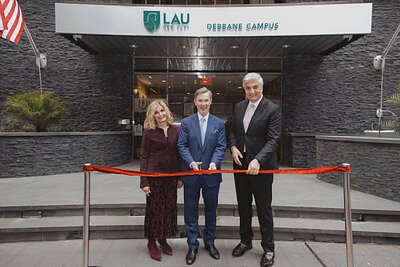
NEW YORK, NY – June 01, 2026 – In a move aimed at forging a global lifeline for Lebanon's future, the Lebanese American University (LAU) has announced a landmark philanthropic commitment from Trustee Ray Debbane. The gift, celebrated with the renaming of its Manhattan campus to the LAU New York Debbane Campus, is designed to counter the devastating "brain drain" crippling Lebanon by creating a powerful bridge between Beirut and one of the world's most influential cities.
A Strategic Bulwark Against a National Crisis
The initiative comes at a critical time for Lebanon. Since 2019, the country has been mired in a severe economic and political crisis, triggering a mass exodus of its most valuable asset: its people. According to the International Organization for Migration, over 220,000 Lebanese left the country in 2025 alone. This talent hemorrhage has hollowed out critical sectors, with an estimated 40% of skilled medical doctors and a significant number of academics and engineers having departed.
It is this crisis that Ray Debbane’s gift directly confronts. "Lebanon's natural resource is educated people," Mr. Debbane stated, framing the country's deepest crisis as the continued loss of this human capital. His vision, echoed by university leadership, is not one of retreat but of strategic expansion. "LAU should not respond to the crisis by retreating, but by expanding its reach, ambition, and global relevance," he affirmed.
This philosophy positions the New York campus as more than just an international outpost; it is a strategic asset in the fight to preserve Lebanon's intellectual future. By providing scholarships and world-class opportunities in a global hub, LAU aims to create what some experts call "brain circulation"—a dynamic where talent can be nurtured abroad without being permanently lost, fostering connections and skills that can ultimately benefit the home country.
The Philanthropist's Vision for Renewal
The driving force behind this initiative is Ray Debbane, a figure whose career straddles the worlds of high finance and deep-seated humanitarian commitment. As the Co-Founder and CEO of the global investment firm Invus, Mr. Debbane has a long track record of identifying and nurturing long-term value. He appears to be applying the same strategic foresight to his philanthropy.
His connection to the cause is deeply personal. An alumnus of the American University of Beirut with an MBA from Stanford, Mr. Debbane joined LAU's Board of Trustees in 2020, at the height of Lebanon’s turmoil. He found, in his words, "an institution of genuine excellence worth fighting for." This conviction, rooted in a "personal sense of responsibility toward Lebanon," shaped his view that universities are among the nation's most vital sources of renewal.
His commitment extends beyond LAU, serving as the Chairman of Action Against Hunger-USA. This dual focus on education and humanitarian aid highlights a holistic approach to national recovery, one that believes in investing in human potential as the primary engine for progress. For Mr. Debbane, the naming of the campus is secondary to its mission: to serve as a "bridge between Lebanon, the diaspora, and the world, and as a home for Lebanese talent and ambition in a global city."
From 'Beirooted' to Global Hub
LAU's presence in New York is a rarity in higher education. While the Middle East, particularly the Gulf, is saturated with branch campuses of Western universities, it is far less common for a Middle Eastern institution to establish its own degree-granting campus in the United States. After its inauguration in 2014, the campus achieved this significant milestone in March 2024, receiving approval from the New York Board of Regents.
This makes the 30,000-square-foot campus in Midtown Manhattan a unique player in transnational education. LAU President Chaouki T. Abdallah emphasized that this global expansion does not dilute the university's identity. "LAU is proudly and unapologetically 'Beirooted,'" he affirmed. "Our intellectual, cultural, and moral anchor is Beirut. But from that anchor, we are building bridges to the world."
The Debbane gift, Dr. Abdallah noted, accelerates this transformation. "New York is our principal global hub, a gateway that amplifies our mission, expands our reach, and ensures that an education rooted in Beirut can shape the world." This model envisions a global network combining online learning with in-person academic and experiential education, allowing for unprecedented international mobility for its students.
Cultivating Talent and Enterprise
The impact of the Debbane gift will be felt through concrete new programs designed to attract and cultivate talent. A significant portion will fund inaugural scholarships for deserving students, with a focus on applicants from Lebanon, the wider MENA region, Africa, and Latin America. This opens doors for students who might otherwise lack access to such an education, directly addressing the financial barriers that often fuel brain drain.
Beyond scholarships, the gift will establish two key initiatives bearing the Debbane name: an enterprise hub and an Endowed Distinguished Business Chair. The LAU Enterprise Hub is designed to embed experiential, entrepreneurial learning into the curriculum. It will serve as an incubator where students from various disciplines can collaborate on startup ideas, gaining hands-on experience in innovation.
The Endowed Distinguished Business Chair will attract top-tier academic talent, elevating the university's research and teaching in business. These initiatives will be central to the new academic programs launching at the campus, including an in-person Bachelor of Science in International Business and master's degrees in high-demand fields like Business Analytics, Computer Science, and Applied Artificial Intelligence. As Vice President for Advancement Juhi Dagli remarked, such "transformational gifts signal belief in an institution's mission," igniting possibility and galvanizing momentum for the future. The investment aims to ensure that LAU not only educates students but also empowers them to become creators and leaders on a global stage.