
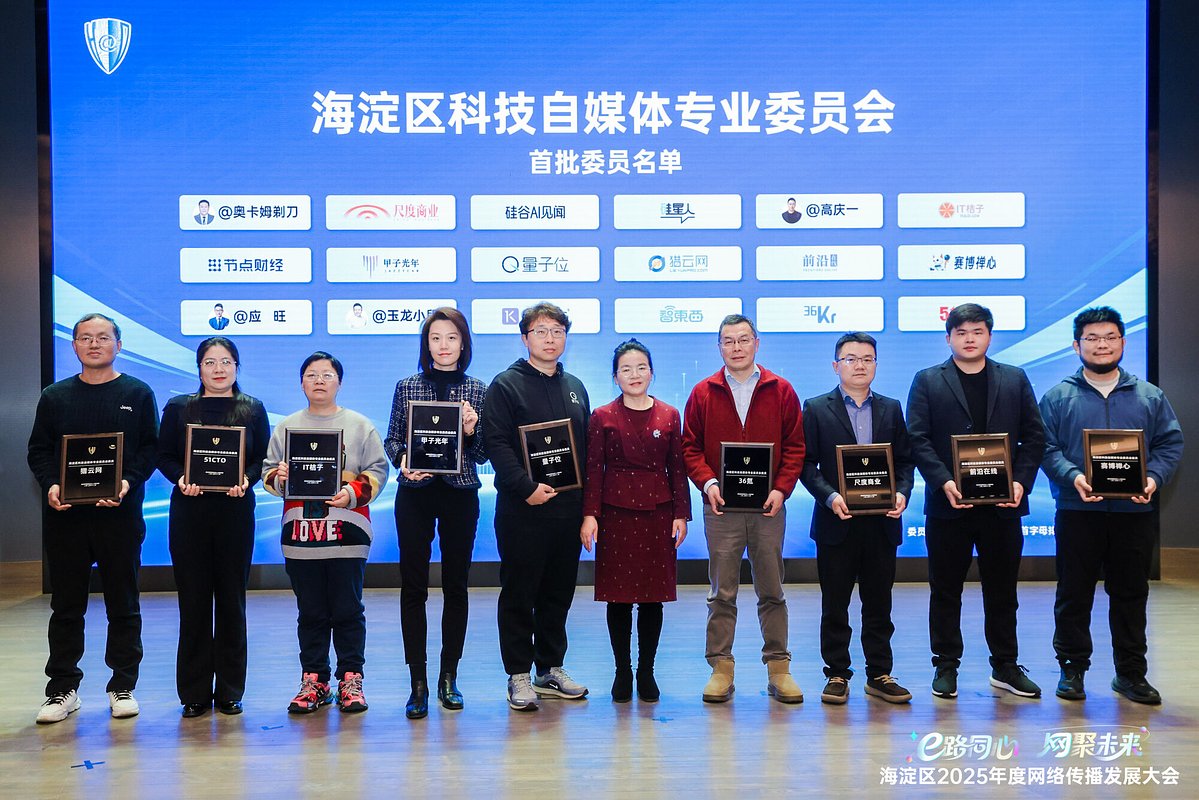
- 18 Key Media Outlets: The Haidian District Technology Self-Media Professional Committee includes 18 influential tech media organizations.
- State-Led Initiative: The committee is guided by the Publicity Department of the Haidian District Committee of the Communist Party of China and the Haidian Cyberspace Administration Office.
Experts would likely conclude that this initiative represents a strategic effort by Chinese authorities to organize and steer the narrative around critical technology sectors, blurring the lines between independent media and state-guided communication.
Beijing's Tech Hub Organizes Media, Blurring Lines of Influence
BEIJING, CN – January 19, 2026 – In a move signaling a significant shift in China's technology media landscape, Beijing's Haidian District has formalized its relationship with key online publishers and influencers. At a government-led conference, tech media firm Frontiers Online was named a founding member of the new Haidian District Technology Self-Media Professional Committee and a council member of the district's Network Influencers Association, integrating it into a state-guided "core communication ecosystem."
The appointments, announced at the Haidian District 2025 Annual Conference on Network Communication Development, bring a host of influential tech voices into a more structured and officially sanctioned framework. This development highlights a strategic effort by Chinese authorities to organize and steer the narrative around critical technology sectors, particularly in a district that serves as the nation's innovation engine.
Crafting a Coordinated Communication Core
The new committees were unveiled at a conference guided by two powerful state bodies: the Publicity Department of the Haidian District Committee of the Communist Party of China (CPC) and the Haidian Cyberspace Administration Office. These are the local arms of the nation's central propaganda and internet regulation authorities, underscoring the official nature of the initiative.
Frontiers Online, which focuses on AI and robotics, joins a cohort dubbed the "Founding Eighteen." This group includes some of China's most prominent and established tech media outlets, such as the venture capital-focused 36Kr, the artificial intelligence-centric QbitAI, and the smart hardware publication Zhidx. The inclusion of data platform ITjuzi and enterprise tech-focused JAZZ year further solidifies the committee's reach across the tech industry's value chain. Alongside these organizations, the new bodies also formally recognize influential individual content creators like Occam's Razor and Gao Qingyi, effectively bringing a wide spectrum of tech commentators under a single, organized umbrella.
The stated goal, according to a release from Frontiers Online, is to "jointly build a new technology communication ecosystem" and "contribute to the high-quality development of Haidian District." This move represents a deliberate effort to structure and channel the narrative flowing from one of the world's most important technology hubs, moving from passive regulation to active organization.
The Price of Legitimacy
For members like Frontiers Online, a self-described "think-tank-oriented technology communication organization," these appointments offer a powerful stamp of official legitimacy. In a market where government endorsement is invaluable, inclusion in this state-backed ecosystem can unlock access to exclusive resources, high-level policy briefings, and unparalleled networking opportunities with government and industry leaders. In its own announcement, Frontiers Online stated it feels "deeply honored" by the recognition, viewing it as both an "affirmation of our past efforts" and a "responsibility and mission."
However, this closer alignment comes with implicit trade-offs that are characteristic of China's media environment. The direct guidance from the Publicity Department and Cyberspace Administration raises critical questions about editorial independence. Analysts of Chinese media policy note that such arrangements often lead to increased self-censorship and a focus on narratives that align with government objectives, such as promoting industrial policy and highlighting technological breakthroughs while downplaying setbacks or controversial issues.
While gaining influence within the system, members may find their ability to conduct critical, investigative reporting constrained. The pressure to adhere to official messaging can be immense, potentially transforming media outlets from independent watchdogs into strategic communication partners for the state. This creates a complex dynamic where commercial success and market access become intertwined with political alignment.
Haidian's Strategy for Global Tech Leadership
This initiative is more than just media management; it is a core component of Haidian District's ambitious economic strategy. As the heart of the Zhongguancun National Innovation Demonstration Zone, often called China's "Silicon Valley," Haidian is home to dozens of unicorn companies and top-tier research institutions. It is a critical engine for China's national tech ambitions, particularly in strategic sectors like artificial intelligence, which are central to global competition.
By creating a unified communication front, local authorities can project a powerful, consistent, and positive message to a global audience of investors, partners, and highly skilled talent. This coordinated messaging helps amplify successes, manage perceptions of its burgeoning AI and robotics industries, and bolster the district's brand as a premier global innovation center. The conference's theme, "Connected by Digital Roads, United for the Future," underscores this vision of a cohesive ecosystem where information flow is managed as strategically as capital investment or research and development.
This approach allows the district to present a polished and unified narrative that supports its industrial goals, ensuring that the story of its technological progress is told in a way that aligns with its long-term vision for economic and technological supremacy.
A New Blueprint for Tech Media in China
The Haidian model is a microcosm of a broader national trend. Across China, the government has been systematically tightening its grip on the digital sphere, extending oversight from traditional media to the once-freewheeling world of "self-media" and online influencers. The Cyberspace Administration of China (CAC) has progressively implemented a web of regulations governing everything from data security and algorithms to online content and user comments.
The creation of formal, government-guided committees at the district level represents the next phase of this strategy: not just regulating but actively organizing and co-opting influential online voices. By bringing key players into a formal structure, authorities can more effectively leverage their reach and credibility to disseminate state-sanctioned narratives. This Haidian experiment could serve as a blueprint for other major technology and economic zones across the country, further institutionalizing the relationship between the state and the digital commentariat.
As this model proliferates, it will continue to reshape the future of public discourse on technology and innovation in China. The result is an environment where tech communication becomes an integral tool of state industrial policy, increasingly blurring the lines between independent analysis and strategic promotion.