
Beijing's 2026 Art Season: A City-Wide Canvas of Art, Tech, and Trade
- 400+ events across 20 countries
- 5 million visitors expected
- Hundreds of millions of yuan in projected economic impact
Experts view the 2026 Beijing Art Season as a strategic move to solidify Beijing's position as a global cultural hub, integrating art, technology, and commerce in an unprecedented city-wide festival.
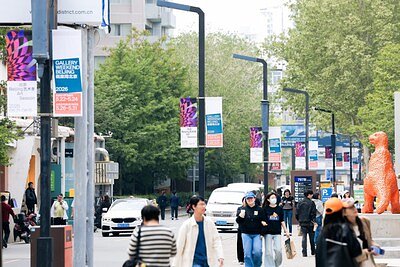
Beijing's 2026 Art Season: A City-Wide Canvas of Art, Tech, and Trade
BEIJING – April 27, 2026 – Beijing is set to transform into a sprawling, city-wide gallery this spring with the launch of the 2026 Beijing Art Season, an ambitious festival running from May 21 to June 15. Unveiled at the capital's iconic 798 Art District, the event promises an unprecedented fusion of art, technology, and commerce, featuring over 400 events and drawing participation from hundreds of art institutions across nearly 20 countries.
Under the theme "Art Gathers in Beijing, Harmony Embraces All," the season aims to cement Beijing's status as a premier global cultural hub. Anchored by two powerhouse events—the 10th anniversary of Gallery Weekend Beijing and the Beijing Dangdai Art Fair—the festival will extend far beyond traditional gallery walls, integrating six urban districts into a comprehensive cultural experience. With projections of attracting over 5 million visitors and generating an economic impact worth hundreds of millions of yuan, the event signals a bold new chapter for the city's cultural landscape.
A New Blueprint for the Art Market
Perhaps the most significant innovation of the 2026 Art Season is its strategic move to formally connect the primary art market of galleries with the secondary market of auction houses. This pioneering structure is designed to create a more fluid and robust ecosystem for art in China, streamlining the path from an artist's initial cultivation in a gallery to their establishment in the broader market.
By bridging this long-standing gap, organizers aim to bolster the entire art industry chain. For artists, it offers a clearer trajectory for career development and valuation. For collectors and investors, it provides a more integrated and transparent market, potentially attracting new capital and enhancing confidence in Chinese contemporary art. This structural reform is a calculated effort to move beyond simply hosting exhibitions and toward actively engineering a more mature and sustainable art economy that can compete on a global scale.
The City as a Living Gallery
Breaking free from the confines of museums and white-cube galleries, the Art Season will weave itself into the fabric of Beijing itself. For the first time, the festival will span six major districts, transforming public and commercial spaces into dynamic art venues. This expansion is powered by significant technological integration, reflecting Beijing's broader smart city ambitions.
Digital artworks will be showcased on commercial LED screens across the city, bringing contemporary art into the daily lives of millions of residents and visitors. This initiative builds on Beijing's burgeoning digital art scene, which already includes popular immersive destinations like teamLab Massless Beijing and the Yiyun Digital Art Center. By leveraging this existing infrastructure, the festival makes art more accessible and incidental, inviting engagement outside of a formal museum visit.
Further enhancing this city-wide integration is the introduction of NFC-enabled ticketing. This technology will allow attendees to move seamlessly between exhibitions, public programs, and city walks. More than just a convenience, the system is designed as an economic engine, with customized subsidies aimed at encouraging spending at over 500 partner businesses, including hotels, restaurants, and retail shops. This transforms the art festival into a powerful driver for the local tourism and consumer economy, creating a holistic urban experience where culture and commerce are mutually reinforcing.
Art as a Bridge: Forging Global Connections
True to its theme of global harmony, the 2026 Beijing Art Season is deeply rooted in international collaboration. The festival serves as a major platform for cultural diplomacy, with a diverse program that highlights artistic exchange between China and the world. A central feature is the celebration of the 2026 China-Brazil Year of Culture, which will see a series of exhibitions and exchange programs dedicated to Brazilian art and culture.
Further broadening its global scope, the season includes a special children's painting exhibition developed in partnership with UNESCO. This program will focus on critical contemporary themes of ecological awareness and intergenerational dialogue, using art as a medium to engage young minds in global issues. The international flavor is enriched by programming from a host of cultural institutions, including the Instituto Cervantes Beijing, the Danish Cultural Center, the Korean Cultural Center, and the Goethe-Institut, each contributing unique perspectives from their respective countries.
These extensive partnerships underscore the event's role as more than just a marketplace; it is a forum for cross-cultural dialogue, personified by the appointment of internationally recognized actress Zhu Zhu as the event's official ambassador.
Building on a Decade of Cultural Momentum
The ambitious scale of the 2026 Art Season is not an overnight phenomenon but the culmination of over a decade of steady growth in Beijing's cultural sector. The event is anchored in the proven success of its core components and the organizational strength of institutions like the 798 Art District, which has evolved from a decommissioned 1950s factory complex into a state-recognized art hub that hosts thousands of events annually.
The fact that Gallery Weekend Beijing is celebrating its 10th anniversary provides a strong foundation of experience and an established international network. The projection of attracting 5 million participants and generating hundreds of millions of yuan appears well-grounded when viewed against the city's recent tourism figures. During the three-day New Year holiday in 2026 alone, Beijing recorded nearly 9 million tourist visits, generating close to 11 billion yuan in revenue. Given the Art Season's three-week duration and multi-district footprint, its economic and social targets are set on a foundation of demonstrated capacity.
As the city prepares to open its doors to the world, the 2026 Beijing Art Season represents a powerful synthesis of artistic expression, economic strategy, and global outreach. It is a declaration of Beijing's intent to not only participate in the global art conversation but to actively shape its future, offering a model for how a modern metropolis can place culture at the very heart of its identity and development.