
- 2 million free "BofA Fan Bands" and 10 million custom beads distributed across 11 U.S. host cities.
- $2.25 million in free World Cup tickets donated to military veterans, service members, and first responders, benefiting 4,547 individuals.
- Fan engagement hubs in iconic locations like New York's Rockefeller Center and Washington, D.C.'s National Mall.
Experts would likely conclude that Bank of America's World Cup campaign is a strategic blend of community engagement and brand marketing, leveraging experiential tactics to create lasting emotional connections with consumers while enhancing its corporate image.
Bank of America's World Cup Play: Community Gift or Marketing Coup?
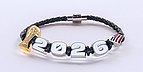
CHARLOTTE, NC – June 09, 2026 – As the FIFA World Cup 2026™ prepares to descend upon North America, its Official Bank, Bank of America, has unveiled a fan engagement strategy of staggering scale. The centerpiece is a seemingly simple giveaway: two million free, collectible "BofA Fan Bands." Paired with ten million custom beads, fan festivals from coast to coast, and a significant ticket donation, the initiative is being positioned as a grand gesture to celebrate the tournament's return to U.S. soil after more than thirty years. But behind the fanfare and free plastic lies a masterclass in modern corporate marketing, one that blurs the line between community-building and customer acquisition, forcing us to ask: what is the true value of a free gift?
A Symphony in Plastic and Brand Engagement
The mechanics of the campaign are undeniably impressive. Beginning June 11, the bank will unleash a torrent of branded memorabilia across all 11 U.S. host cities. The "Fan Bands" are simple bracelets, but their power lies in the 140 unique, collectible beads designed to be traded and cherished. These aren't just generic logos; they are tiny, tangible symbols of the event—a miniature Golden Gate Bridge for San Francisco, a cheesesteak for Philadelphia, and the national colors of participating teams. This is not passive advertising; it is a meticulously designed ecosystem of engagement.
Fans are invited to build their own bracelets at dedicated stations in FIFA Fan Festivals, the U.S. Soccer House in Venice Beach, and even from mobile tour trucks. "We wanted to help create memories that will last even longer," said David Tyrie, the bank's President of Marketing, in a statement. The goal, he explained, is to "capture the energy of FIFA World Cup 2026™."
This strategy moves far beyond the traditional stadium banner. By creating a collectible, tradable item, the financial giant inserts itself directly into the social fabric of the fan experience. The bracelets become a currency of interaction, a conversation starter, and a physical manifestation of a fan’s personal journey through the tournament. Each bead added is a story, and each completed bracelet is a personalized trophy. The inclusion of digital photo booths, where fans can capture their moment of creation and have it sent directly to their phones, closes the loop, transforming a physical giveaway into shareable digital content that further amplifies the brand's reach. Industry analysts recognize this as a sophisticated form of experiential marketing, designed to forge an emotional connection that a 30-second commercial could never achieve. The fan is no longer a passive recipient of a message, but an active participant in the brand's narrative.
The Calculus of Corporate Goodwill
Alongside the blizzard of beads, Bank of America has prominently advertised a partnership with Vet Tix and FIFA to provide $2.25 million in free World Cup tickets to military veterans, current service members, and first responders. This will place 4,547 individuals and their families at matches they might otherwise be unable to attend, including the semifinals and the final. It is a powerful and laudable act of corporate citizenship, particularly as it ties into the nation's 250th anniversary celebrations.
Yet, for an institution of Bank of America’s size—a global financial leader with nearly $4.6 trillion in client balances and operations in over 35 countries—this figure requires context. The goodwill generated by this donation is immense, casting the bank as a patriotic community partner. That positive association, particularly when tied to the world's most-watched sporting event, is an invaluable marketing asset that likely far exceeds the cash value of the donation itself. It is a calculated investment in the currency of public perception.
This is the central tension of modern corporate sponsorship. The act of giving is real, and its impact on the 4,547 recipients will be profoundly positive. But for the corporation, the donation is also a strategic tool. It softens the corporate image, generates positive press, and builds a reservoir of goodwill that can be drawn upon. It allows the brand to align itself with the cherished values of service and patriotism, all while its logo is displayed on the jumbotrons and its Fan Bands are on the wrists of millions.
Building a Legacy, Brick by Brick and Bead by Bead
The bank's stated ambition is to help build a "lasting legacy" for soccer in the United States. To this end, it is erecting massive fan engagement hubs in some of the nation's most iconic public spaces. A "Fan Village" will take over New York's Rockefeller Center, while a sprawling Fan Zone will occupy the National Mall in Washington, D.C., offering live match viewings, cultural showcases, and interactive exhibits for nearly a month.
These activations will undoubtedly inject significant economic activity into host cities and provide accessible, free entertainment for families and fans who may not hold a coveted match ticket. They transform sterile urban plazas into vibrant centers of global culture and celebration. But they also represent an unprecedented level of brand saturation in the public square.
The question of legacy, then, becomes complex. Is the legacy the growth of youth soccer programs that might be funded by FIFA's profits from such lucrative sponsorships? Or is the legacy the normalization of a financial institution as the central host of a public celebration? While fans collect beads representing a Dallas cowboy hat or a Boston lobster, they are also collecting, perhaps subconsciously, a positive affinity for the Bank of America brand. The ephemeral joy of the tournament becomes intertwined with the permanent identity of the corporation. When the final whistle blows and the tourists go home, the stadiums will be empty, but the brand recognition, fortified by millions of personal interactions and countless shared photos, will remain. The most enduring legacy of this campaign may not be for the sport, but for the sponsor who so brilliantly embedded itself within it.