
- 2,400sqm: Asia's largest indoor transparent screen at Central World, Bangkok
- 70% transparency rate: Allows natural light while maintaining vibrant display
- 8,000 cd/㎡ brightness: Ensures clear visibility even in sunlit atriums
Experts view this installation as a groundbreaking fusion of retail, architecture, and digital technology, setting a new standard for immersive commercial spaces in Southeast Asia.
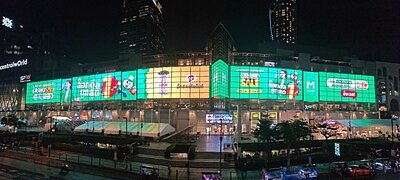
Bangkok's New Digital Icon: A 2,400sqm Transparent Screen at Central World
BANGKOK, THAILAND – March 27, 2026 – The heart of Bangkok's bustling shopping district now glows with a new, futuristic pulse. Central World, one of the city's premier commercial landmarks, has officially unveiled Asia's largest indoor transparent screen, a monumental 2,400-square-meter digital canvas that is reshaping the intersection of architecture, retail, and public art. The landmark project, built by the global LED leader Unilumin, establishes a new benchmark for the digital transformation of commercial complexes across Southeast Asia.
Located in a prime area that sees an average of over 400,000 people daily, the screen transforms the vast interior of the complex without blocking light or sightlines. It has almost instantly become a destination in its own right, a key visual centerpiece that captivates shoppers and tourists alike, cementing its status as one of the city's most popular new Instagram spots.
Engineering a Transparent Titan
The sheer scale of the installation belies its technological sophistication. The project, which spanned three years from conception to completion, involved intensive sampling, testing, and optimization to meet the demands of the complex architectural environment. Unilumin employed its UVF series transparent screen, a product engineered for precisely this type of large-scale, design-forward application.
The technical specifications are formidable. With a brightness of 8,000 cd/㎡ (nits), the display delivers vibrant, punchy images that remain clear and impactful even under the intense ambient light of the mall's sunlit atriums. Critically, it achieves this while maintaining a transparency rate exceeding 70%, allowing natural light to filter through and preserving the open, airy feel of the building's interior. This 'see-through' capability is a defining feature, distinguishing it from traditional opaque video walls that can create a closed-off, cavernous effect.
Further demonstrating its advanced engineering, the screen is remarkably lightweight at only 8 kilograms per square meter. This was a crucial factor in allowing for a seamless integration with the building's existing structure. The Unilumin team developed multiple bespoke installation solutions, including frame curtain walls, point-supported curtain walls, and hoisting methods, to adapt to the unique contours and structural points of Central World. A customized front-black, back-white aesthetic ensures the screen appears as an integrated architectural element even when powered off. For viewers, a 7680Hz high refresh rate and 16-bit grayscale processing ensure that content—from high-fashion advertisements to digital art—is rendered with exceptional smoothness and color fidelity.
Redefining the Retail Experience
Beyond the technical achievement, the screen represents a strategic masterstroke in the evolution of retail. For Central World and its parent company, Central Pattana PCL, this is more than just a new display; it's a foundational element in their strategy to create immersive, digitally-driven environments that attract and engage modern consumers. In an era where brick-and-mortar retail must offer more than just products, this installation transforms the shopping mall into a dynamic, experiential destination.
The screen functions as a giant digital canvas, providing unparalleled visibility for advertisers and brands seeking to capture the attention of a massive and diverse audience. The ability to display high-impact, full-motion video content on such a grand scale offers a powerful new medium for storytelling and brand marketing. This not only creates a new revenue stream for the property but also enhances the overall commercial atmosphere, making the space more vibrant and exciting for visitors.
The immediate popularity of the screen as a social media backdrop underscores its success in driving engagement. By creating an 'Instagrammable' destination, Central World is leveraging the power of user-generated content to amplify its reach and reinforce its image as a modern, must-visit location. This project serves as a compelling case study for commercial property developers worldwide on how to successfully merge the digital and physical realms to drive foot traffic and create memorable experiences.
A Symbol of Southeast Asia's Tech Ambition
While firmly rooted in Bangkok, the significance of the Central World screen extends across the region. It stands as a bold statement of Thailand's and Southeast Asia's growing commitment to digital transformation and technological adoption. By hosting Asia's largest indoor transparent screen, Bangkok solidifies its position as a forward-thinking city embracing smart city concepts and innovative urban design.
The technology itself, Unilumin's UVF series, holds its own in a competitive global market. While competitors like LG offer flexible, self-adhesive LED films ideal for retrofitting onto existing glass, they often have lower brightness levels. Meanwhile, emerging technologies like Samsung's transparent MicroLED promise superior clarity but are still in the early stages of large-scale commercialization. For a project of this magnitude and immediate impact, Unilumin's solution represents a mature, high-performance choice that balances transparency, brightness, and structural adaptability.
This installation joins a portfolio of other world-class projects by the company, including massive immersive displays for Riyadh Season in Saudi Arabia and the world's largest holographic screen at the Spring Cocoon in Shenzhen. It is part of a global trend where large-scale LED technology is no longer just for stadiums and concert venues but is becoming an integral part of the architectural fabric of our cities. As urban centers continue to evolve, projects like the one at Central World illuminate a future where digital displays and physical structures merge to create more dynamic, engaging, and visually stunning public spaces.