
- $17.6 billion: The GCC confectionery market value in 2024, with steady growth projected.
- 52°C (125°F): Baida's popping candy remains stable at this high temperature, reducing cold-chain dependency.
- 11% CAGR: Projected growth rate for popping boba in the Middle East over the next several years.
Experts would likely conclude that Baida's strategic combination of Halal certification, heat-stable technology, and deep cultural localization positions it as a strong contender in the Middle East's competitive confectionery market.
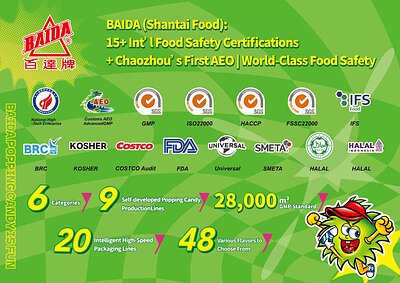
Baida's Sweet Strategy: Halal Candy & Tech Target Middle East Billions
CHAOZHOU, China – November 26, 2025 – In a move that blends regulatory acumen with advanced food science, Chinese confectionery giant Baida has secured Halal certification for its entire line of popping candy products. While on the surface a standard corporate announcement, the certification is the linchpin of a meticulously planned, multi-pronged strategy to penetrate the lucrative Middle Eastern food and beverage market. The initiative signals more than just a new product launch; it represents a sophisticated blueprint for market entry, leveraging technological innovation, deep cultural integration, and a keen eye on the region's evolving consumer trends.
The Halal Gateway to a $17 Billion Market
Securing Halal certification is the essential price of admission into the Middle East's vast consumer market, but Baida’s move highlights its strategic importance as a competitive differentiator. The Gulf Cooperation Council (GCC) confectionery market alone was valued at over US$17.6 billion in 2024 and is projected to grow steadily. For Baida, a company already distributing to over 100 countries, the certification from the Shaanxi International Halal Certification Center is the key that unlocks this massive opportunity.
However, navigating the region's regulatory landscape is a complex undertaking. Success will hinge on the certification's recognition by national bodies like the Emirates Authority for Standardization and Metrology (ESMA) in the UAE and the Saudi Food and Drug Authority (SFDA) in Saudi Arabia. These authorities maintain stringent standards and approve specific international certifiers, making compliance a significant operational hurdle for foreign firms. By securing this certification upfront, Baida demonstrates a clear understanding of these non-negotiable market requirements, positioning itself ahead of less prepared competitors.
This regulatory foresight is the foundation of the company's three-pillar strategy: OEM/ODM manufacturing for local brands, integration into the raw material supply chain, and the development of its own proprietary brand, "Baida Popping." This approach allows for diversified revenue streams and risk mitigation, enabling the company to build both a B2B footprint and direct-to-consumer brand equity simultaneously.
Engineering for Climate and Experience
Beyond regulatory compliance, Baida's market entry is built on a core technological advantage: its proprietary third-generation popping candy. A key feature of this innovation is the product's remarkable stability in high-temperature environments, maintaining its integrity at up to 52°C (125°F). This isn't merely a technical specification; it's a direct solution to one of the Middle East's biggest logistical challenges.
The region's extreme climate necessitates robust and often expensive cold-chain logistics for many food products to prevent spoilage and degradation. A heat-stable product significantly reduces this dependency, lowering supply chain costs, minimizing product loss, and ensuring a consistent consumer experience from the port to the pantry. This innovation, developed at Baida's 28,000-square-meter GMP-compliant facility in Chaozhou, gives the company a tangible competitive edge in both cost and quality assurance.
The technology also directly enhances the product's primary appeal. According to the company, its unique micro-gas cavity structure is engineered to deliver a more intense and long-lasting popping sensation. In a market driven by novelty and sensory experiences, this focus on the core "pop" is critical to capturing consumer interest and creating a memorable product.
A Recipe for Cultural Fusion
Baida’s strategy extends deep into cultural and consumer nuances, aiming for genuine market resonance rather than a simple product drop. The company is actively localizing its offerings to align with regional tastes and traditions. This includes developing flavors like date, rose, pomegranate, and mint, while skillfully blending them with globally popular options such as cola and blueberry to appeal to a diverse, multicultural consumer base.
The localization effort is most visible in its product and marketing initiatives. Baida has already designed themed gift products, including Ramadan gift boxes, Eid al-Fitr children's collections, and wedding-themed candy assortments. This demonstrates a sophisticated understanding of the region's powerful gifting culture, where confectionery plays a central role in social and religious celebrations.
Furthermore, the company is adapting its brand identity. Its proprietary brand, "Baida Popping," will be launched with a visual identity tailored to Arab culture. Its IP character, "BoomBoom Head," is being redesigned with Middle Eastern-inspired attire and color palettes, transforming it from a generic mascot into a relatable local character for children. This "Deep Localization" and "Cultural Integration" approach aims to position the brand as a joyful symbol of family and celebration, embedding it within the social fabric of its target markets in the UAE, Saudi Arabia, and Qatar.
The Next 'Boba'? A Bid to Electrify the F&B Scene
Perhaps the most ambitious part of Baida's strategy is its plan to position popping candy as the "next-generation experiential ingredient," aiming to replicate the disruptive success of boba pearls in the region's beverage and dessert scene. Ivan, Head of Baida's Overseas Markets, explicitly stated this goal, noting the candy's potential to follow in the footsteps of boba and its bursting variants.
This ambition is well-timed. The Middle East, particularly its younger Millennial and Gen Z demographics, has shown a voracious appetite for novel, texturally interesting, and social media-friendly food experiences. The bubble tea market is growing rapidly, and the closely related "popping boba" segment is projected to see a compound annual growth rate of nearly 11% over the next several years in the region. This trend provides a powerful proof-of-concept for Baida's ingredient-focused strategy.
The company plans to supply specialized fine-grain popping candy to a wide range of F&B clients, including milk tea shops, cafés, ice cream parlors, and bakeries. By offering complete application solutions that span from menu ideation to marketing support, Baida is not just selling a raw material; it is positioning itself as an innovation partner for local businesses. This B2B approach could see popping candy become a ubiquitous textural element in desserts and drinks, sparking new culinary trends and creating a sustained demand cycle that complements its direct-to-consumer retail efforts.
By combining a validated product technology with a dual-channel market strategy rooted in deep cultural understanding, Baida is not just entering a new market. It is making a calculated bid to become an integral part of the region's evolving culinary landscape, one pop at a time.