
- 13 million nanoscale multimodal electrodes distributed across microplates, enabling single-cell resolution.
- $23.75 million in total funding secured by CytoTronics before acquisition.
- $20 billion estimated market value for cell-based assays, where Axion now gains a competitive edge.
Experts view this acquisition as a strategic leap forward in drug discovery, enabling unprecedented single-cell resolution and high-throughput analysis, which is expected to accelerate therapeutic development and disease modeling.
Axion Acquires CytoTronics, Unlocking Single-Cell Drug Discovery
ATLANTA, GA – January 22, 2026 – Axion BioSystems, a prominent player in live-cell analysis tools, has announced its acquisition of the intellectual property and assets of CytoTronics, Inc., a move set to integrate groundbreaking high-density sensor technology into the broader life sciences market. The deal brings a novel microelectrode array (MEA) platform, born from a decade of research at Harvard University, into Axion's product suite, promising to accelerate drug discovery and disease modeling with unprecedented single-cell resolution.
The acquisition transfers CytoTronics' next-generation CMOS (Complementary Metal–Oxide–Semiconductor) microelectrode array technology to Axion. This technology is designed to continuously monitor living cells in vitro, providing deep insights into cellular function without the need for labels or dyes. For researchers working on complex diseases, this advancement represents a significant step toward understanding biological complexity at a scale previously thought impossible.
A Leap in Cellular Imaging and Analysis
At the heart of the acquisition is CytoTronics' highly sophisticated high-density (HD) MEA technology. Traditional bioelectronic assays use microsensors to monitor cell populations, tracking metrics like cell number, morphology, and the electrical activity of neurons and heart cells. However, these systems have often faced a trade-off between the detail of their measurements (resolution) and the number of experiments that can be run simultaneously (throughput).
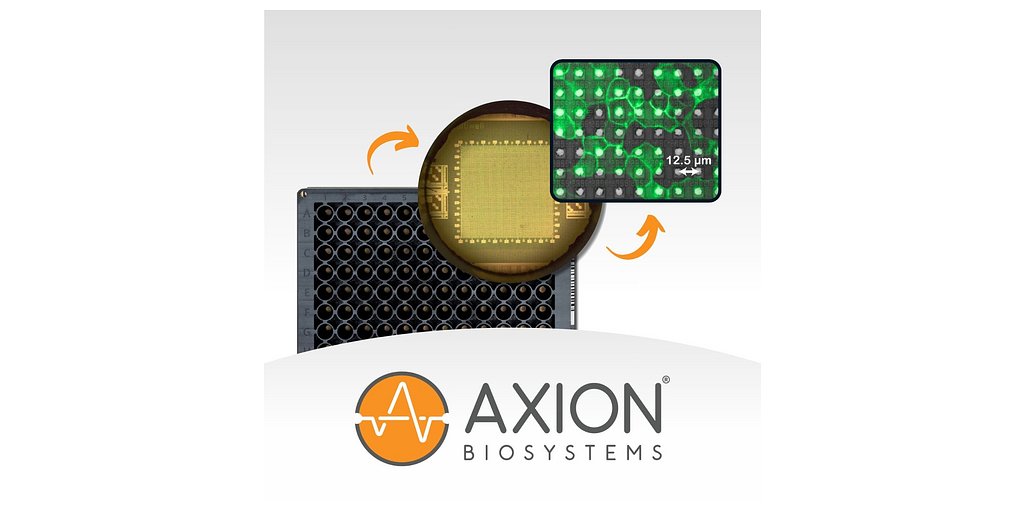
CytoTronics' platform, which was spun out of Harvard labs in 2021, shatters this compromise. Its MEA plates, built on CMOS technology similar to that in consumer electronics, contain over 13 million nanoscale multimodal electrodes distributed across industry-standard 96- or 384-well microplates. This architecture provides an extraordinary 4,096 electrodes per well, a massive increase from the handful of electrodes found in many standard systems. This density enables researchers to generate electrical "images" of cellular activity, achieving single-cell spatial resolution across a large screening area.
This innovation allows for simultaneous multi-modal readouts, capturing electrical, electrochemical, and electrophysiological data from the same cell cultures. The non-invasive and label-free nature of the technology makes it incredibly versatile for a wide range of biological questions. The scientific community has already taken note of its potential; CytoTronics' Pixel™ system earned a 2024 New Product Award from the Society for Laboratory Automation and Screening (SLAS) and an R&D 100 award, validating its impact. The foundational science was also detailed in a peer-reviewed article in the prestigious journal Nature Communications.
Reshaping the Competitive Landscape
For Axion BioSystems, this is a calculated and powerful strategic move. Julien Bradley, Chief Executive Officer at Axion BioSystems, described the acquisition as "highly strategic for Axion, complementing our industry-leading MEA and impedance platforms with high-density arrays without sacrificing high throughput." He noted that the integration would leverage Axion's "high-performance software, robust hardware, and customer support infrastructure."
This acquisition significantly fortifies Axion's position in the competitive life sciences tools market. While competitors like Multi Channel Systems offer their own advanced MEA systems, Axion's integration of CytoTronics' technology gives it a distinct edge in the high-growth market for cell-based assays, which is estimated to be worth approximately $20 billion. By offering a comprehensive portfolio—from its established Maestro and Lumos systems to this new high-density platform—Axion can now cater to a wider spectrum of research needs, from broad screening to deep, subcellular investigation.
The move also reflects a broader strategy of growth and technological consolidation. Backed by Summa Equity since 2021, a private equity firm focused on investments aligned with UN Sustainable Development Goals, Axion has been expanding its capabilities. Previous acquisitions, including live-cell imaging firm CytoSMART and printed electronics manufacturer M-Solv Manufacturing, have steadily broadened Axion's technological base, positioning it as a one-stop shop for live-cell analysis.
From Harvard Lab to Commercial Powerhouse
The journey of CytoTronics' technology from an academic concept to a key asset for an industry leader is a testament to focused innovation and strong backing. Prior to the acquisition, CytoTronics had demonstrated significant momentum, securing $9.25 million in seed funding in 2022, followed by a $13.5 million seed extension in 2024. This robust investor confidence underscored the perceived value and market potential of its platform.
Leading this charge was Jeffrey Abbott, PhD, co-founder and former CEO of CytoTronics, who now joins Axion BioSystems as a Vice President. Abbott, an engineer and scientist with a PhD from Harvard, was instrumental in translating a decade of multidisciplinary research into a commercial product. His expertise in merging CMOS integrated circuits with bioelectronics will be a critical asset as Axion works to commercialize the new technology.
Reflecting on the transition, Abbott stated, “Axion has a long-standing reputation for delivering intuitive, reliable, and scalable electrophysiology platforms to the cell biology community. That industry leadership makes Axion the ideal home for CytoTronics’ innovative technology.” He expressed his excitement to “commercialize the next generation of high-throughput, high-density CMOS MEA assays for neural and cardiac drug discovery.”
The Future of Drug Discovery and Disease Modeling
Ultimately, the impact of this acquisition will be measured by the scientific breakthroughs it enables. The primary applications for the enhanced MEA platform are in studying electrically active cells, making it an invaluable tool for neuroscientists and cardiologists. Researchers developing therapies for conditions like Alzheimer's disease, Parkinson's disease, and cardiac arrhythmias can now screen potential drug compounds with greater speed and accuracy, observing subtle effects on individual cells that were previously obscured in lower-resolution assays.
Beyond its core applications, the technology's versatility extends to other critical research areas, including oncology, vascular biology, and the complex process of stem cell differentiation. By providing richer, more detailed datasets earlier in the drug discovery pipeline, the platform has the potential to reduce the high failure rates associated with preclinical research, saving time and resources.
As Axion BioSystems integrates this powerful technology, researchers around the world will gain access to a tool that could fundamentally change how they approach disease modeling. The ability to peer into the intricate workings of cellular networks with such clarity and scale opens a new frontier for understanding biology and developing the next wave of effective therapeutics.