
- 2026 Holland on the Hill Freddy Heineken Award given to Axient Systems BV, recognizing its role in the PAMI-1 military imaging satellite mission.
- PAMI-1 provides the Netherlands with sovereign ISR capabilities, reducing reliance on allied/commercial intelligence feeds.
- Axient's European office in Delft (2024) strategically integrates with the 'Aerospace Delta,' a hub for 80% of Dutch space industry.
Experts would likely conclude that Axient's award underscores a critical evolution in US-Dutch defense collaboration, emphasizing technological sovereignty and transatlantic innovation ecosystems as key to modern security alliances.
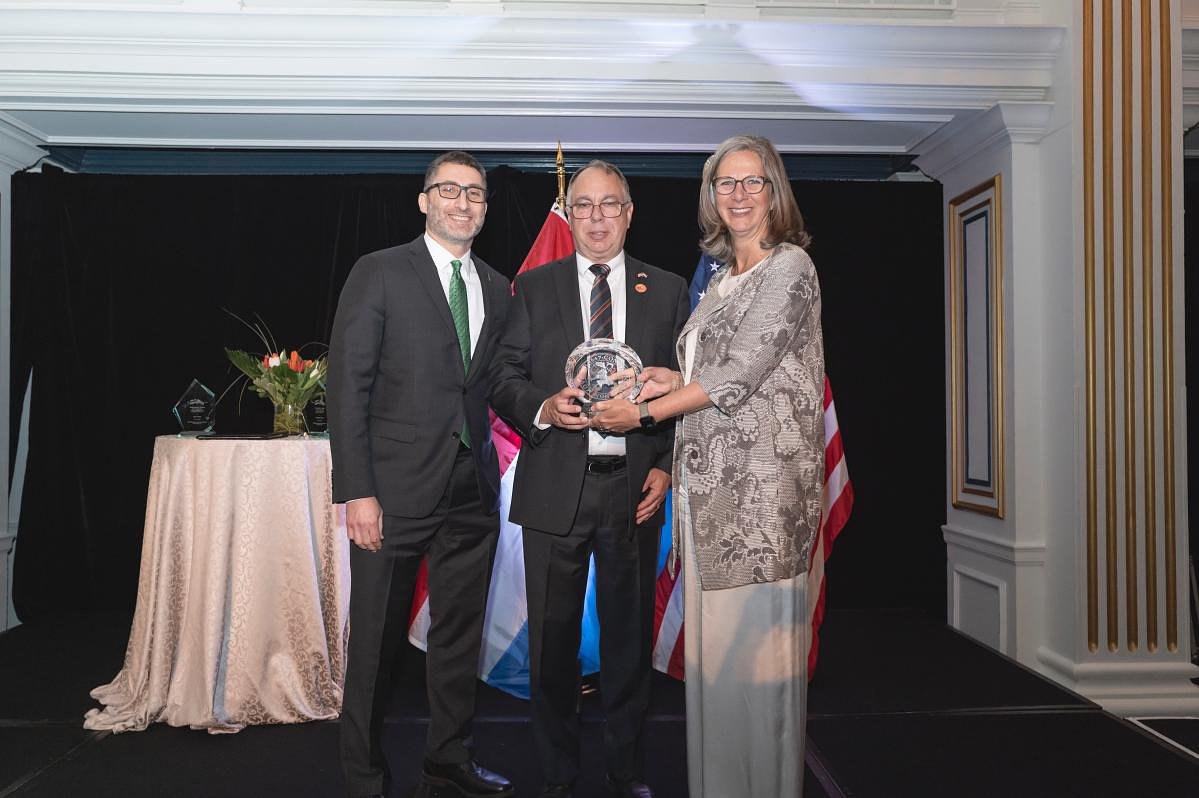
Axient's Award Signals Deepening US-Dutch Alliance in Space Sovereignty
WASHINGTON, D.C. – June 11, 2026 – In a move that resonates far beyond the ceremonial halls of Washington, D.C., aerospace and defense integrator Axient Systems BV has been honored with the 2026 Holland on the Hill Freddy Heineken Award. While the award ostensibly celebrates entrepreneurial spirit, it signifies something far more profound: the cementing of a new, high-tech chapter in the centuries-old US-Dutch alliance, one forged not in shipping lanes, but in the vacuum of space. The recognition of Axient, a subsidiary of Alabama-based Astrion, is intrinsically linked to its critical role as the mission integrator for the Netherlands' PAMI-1, a sovereign military imaging satellite. This project is a clear indicator that for modern nations, security and autonomy are now inextricably linked to the stars.
A Modern Alliance Forged in High-Tech
The Holland on the Hill Freddy Heineken Award, named for the entrepreneur who brought his Dutch brand to global prominence using American marketing savvy, has a history of recognizing industry titans like Amazon, Netflix, and Merck. Axient’s inclusion on this prestigious list highlights a strategic shift. The 400-year relationship, once defined by trade and shared cultural values, is now being actively shaped by collaboration in critical technology and defense sectors.
"The United States and the Netherlands share a long-standing partnership... built on a foundation of trust, collaboration and common interests," said Jay Kovacs, president of Axient Systems, upon accepting the award. His words underscore a relationship that has matured to tackle 21st-century challenges. This partnership is no longer just about economic benefit—though with the Netherlands being the fourth-largest foreign investor in the U.S. and supporting over a million American jobs, that tie remains robust. It is now about building shared resilience.
Ambassador Birgitta Tazelaar of the Kingdom of the Netherlands to the United States echoed this sentiment, noting Axient's rapid and deep integration into the Dutch innovation ecosystem. "In a remarkably short time, Axient has become a key player at the intersection of academia, government, and industry," she stated. This rapid integration is a testament to a deliberate strategy by both the company and the Dutch government to create a symbiotic relationship that advances mutual security interests.
The Strategic Imperative of Sovereign Space
At the heart of Axient's contribution is its role in the PAMI-1 mission. PAMI-1, or Payload for Military Imagery, is not just another satellite; it represents a quantum leap in Dutch defense capability. As mission integrator, Axient is responsible for weaving together the complex systems of a sovereign Earth observation satellite that will provide the Netherlands Defense Space Security Center (DSSC) with its own eyes in the sky.
In an era of contested global commons, relying on allied or commercial intelligence feeds carries inherent risks and limitations. The PAMI-1 mission provides the Netherlands with an independent intelligence, surveillance, and reconnaissance (ISR) capability, strengthening its information position and national autonomy. This is a direct response to a geopolitical landscape where information dominance is paramount. The project's funding by the Dutch Ministries of Defense and Economic Affairs underscores its national strategic importance.
Furthermore, PAMI-1 is a platform for demonstrating next-generation technology. The satellite will be equipped with advanced space-based laser communications, a technology being pioneered by Axient’s Dutch partners TNO and FSO Instruments. Laser satcom offers data transfer at speeds and levels of security that traditional radio-frequency communications cannot match, a crucial advantage for transmitting sensitive military data quickly and without fear of interception or jamming.
The 'Aerospace Delta' as a Transatlantic Catalyst
Axient's story is also a case study in the power of innovation ecosystems. The company’s decision to establish its first European office in Delft in 2024 was a highly strategic move. Delft is the heart of the 'Aerospace Delta,' a region in Zuid-Holland that hosts over 80% of the Dutch space industry, anchored by the world-renowned Delft University of Technology (TU Delft) and research institutes like TNO.
By embedding itself within this hub, Axient Systems, with its roots in Huntsville, Alabama's own legendary aerospace community, created a powerful transatlantic bridge. The company gains access to a rich ecosystem of talent, research, and specialized partners like FSO Instruments, while the Dutch ecosystem benefits from Axient's deep experience in complex systems integration and its connection to the vast U.S. defense market. This is not a simple foreign investment; it is a strategic fusion of capabilities. The collaboration brings together American expertise in mission lifecycle management and Dutch ingenuity in high-precision optics and instrumentation, creating a whole greater than the sum of its parts.
This synergy is precisely what drives lasting value. It fosters local economic growth, accelerates technological development, and builds a resilient, cross-border industrial base capable of tackling complex security challenges. It demonstrates how a targeted investment can improve the lives and security of citizens by creating not just jobs, but sovereign capabilities.
A Blueprint for 21st Century Security
The recognition of Axient Systems is ultimately a recognition of a successful new model for international alliances. As NATO increasingly recognizes space as a critical operational domain and European nations ramp up defense spending, the future of transatlantic security will not be defined solely by troop deployments or hardware sales. It will be defined by the kind of deep, technological integration exemplified by the PAMI-1 mission.
This model—leveraging private sector agility, fostering public-private partnerships, and focusing on co-development of critical capabilities—is the blueprint for how allied nations can maintain a technological edge and ensure their collective security in a rapidly changing world. The Holland on the Hill award, in 2026, celebrates more than just one company's success; it illuminates the path forward for a stronger, more technologically advanced, and deeply integrated transatlantic partnership.