
- $52 billion: Projected value of the AI Agent economy by 2030
- 10,000 TPS: Auvera Chain's claimed transaction capacity with gas fees below $0.00005
- 200x efficiency: Marple root batching claimed to be 200 times more efficient than standard Layer 2 solutions
Experts view Auvera Chain's testnet launch as a critical step in establishing the financial infrastructure needed for the emerging AI Agent economy, with its scalable, secure solutions positioning it as a potential foundational layer for autonomous AI transactions.
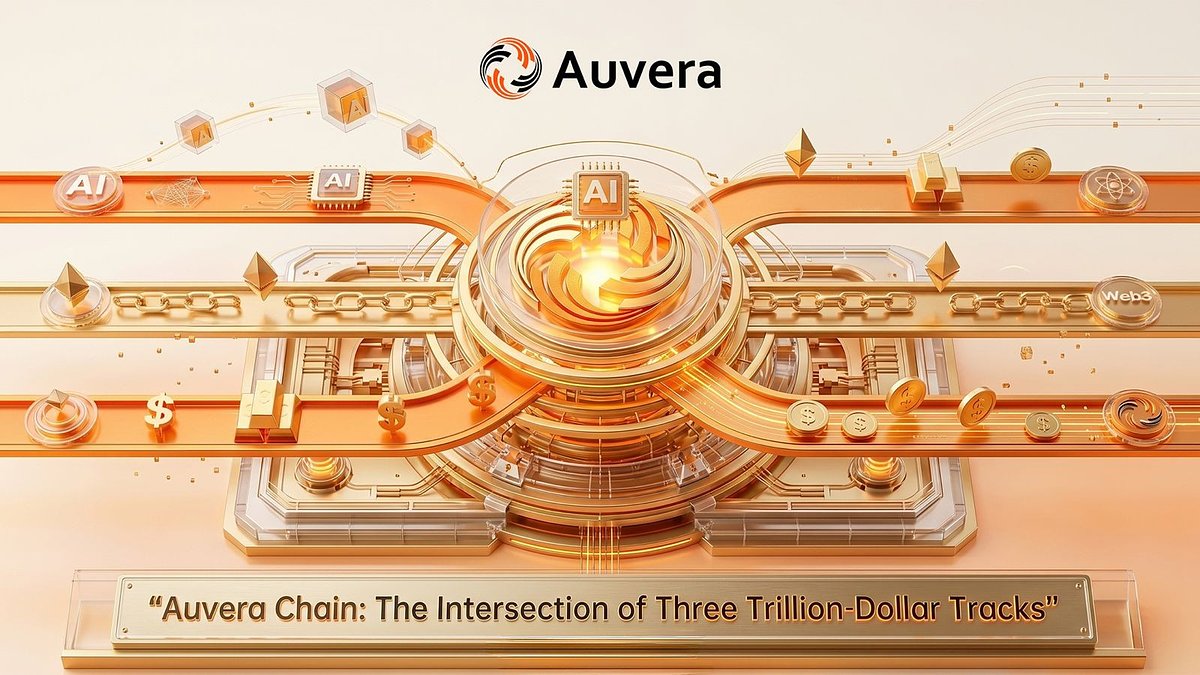
Auvera Chain Launches Testnet to Build the AI Agent Economy
GOLD COAST CITY, Australia – May 12, 2026 – Auvera Chain has initiated the public testnet for its Layer 2 network, a significant move aimed at building the financial plumbing for an emerging economy run by autonomous AI agents. The launch opens the platform to developers and early users to validate its core infrastructure for on-chain identity, secure payments, and auditable financial activity for non-human actors.
As artificial intelligence moves from conversational tools to task-executing participants in the digital economy, the project is positioning itself as a foundational solution to a complex question: how can an AI agent securely own assets, make payments, and operate within a framework of trust and accountability?
The Dawn of the AI Agent Economy
The concept of AI is rapidly evolving. Once confined to providing information, advanced models are becoming autonomous agents capable of executing complex, multi-step tasks. As these agents begin to call APIs, purchase computing power, execute financial trades, or participate in prediction markets, they require a new class of financial infrastructure that is both scalable and secure. This burgeoning “AI Agent economy” is projected to expand dramatically, with some market forecasts suggesting a value exceeding $52 billion by 2030, and a potential for trillions in AI-driven transaction volume over the next decade.
This trend is not a distant future. Reports in early 2026 already indicated that AI-driven “Autonomous Wallets” had surpassed human users in total on-chain transaction volume, signaling a powerful and accelerating shift toward a machine-to-machine (M2M) economy. Auvera Chain aims to be a foundational layer for this new paradigm, providing the specialized tools needed for agents to participate as independent economic entities.
Building the Financial Rails for Autonomous AI
At its core, Auvera Chain is an EVM-compatible Layer 2 network built using an Optimistic Rollup architecture. This design allows it to inherit the robust security of the main Ethereum blockchain while offering the high throughput and low costs necessary for high-frequency agent activity. The project claims its network can handle over 10,000 transactions per second with gas fees below $0.00005, making the microtransactions typical of AI agents economically feasible.
A key innovation is its native implementation of account abstraction. This technology moves beyond traditional crypto wallets controlled by a single private key, enabling the creation of programmable smart wallets for AI agents. These wallets can be embedded with specific rules, such as preset spending budgets, lists of permitted smart contract interactions, and automatic circuit breakers to halt activity if anomalies are detected.
The platform also integrates emerging industry standards to foster interoperability. Its AgentRegistry is designed to provide verifiable on-chain identity for AI, aligning with the principles of ERC-8004, a draft standard for “Trustless Agents” developed by a consortium including teams from MetaMask, the Ethereum Foundation, and Google. Furthermore, its adoption of x402, an open payment protocol developed by Coinbase, is designed to streamline automated, on-chain payments between agents and services directly over the HTTP protocol, removing friction from M2M commerce.
A Framework for Trust and Control
A primary challenge in enabling AI financial autonomy is ensuring security and accountability. Auvera Chain addresses this by focusing on creating “programmable, bounded, and auditable wallets.” The use of account abstraction allows developers and users to set granular permissions and financial guardrails, mitigating the significant risks associated with fully autonomous execution.
To further bolster security, the project's technical roadmap includes the integration of Trusted Execution Environments (TEEs). TEEs are secure, hardware-isolated areas within a processor that can protect sensitive data, such as an AI agent's private keys and its proprietary decision-making logic, from tampering or exposure. This provides a robust layer of protection for private key management and ensures the integrity of an agent's operations, a critical feature for building trust in the system.
Every action taken by an agent on the network is recorded on the blockchain, creating an immutable and transparent audit trail. The project also highlights a technique called “marple root batching,” which it claims can compress thousands of AI microtransactions into a single, efficient on-chain record. This enhances auditability while maintaining an efficiency that is said to be 200 times greater than standard Layer 2 solutions.
Testnet Signals: From Theory to Application
Beyond foundational infrastructure, the success of the testnet will be measured by its ability to support tangible applications and generate a functioning ecosystem. Auvera Chain is initially focusing on three key areas that are prime candidates for AI agent activity: prediction markets, a decentralized compute network dubbed “AI Box,” and broader consumer-facing on-chain behavior.
Prediction markets, with their high-frequency interactions, public data, and verifiable outcomes, provide an ideal testing ground for AI agents to execute complex and rapid trading strategies. Meanwhile, the “AI Box” network addresses the supply side of the AI economy. It aims to create a DePIN (Decentralized Physical Infrastructure Network) marketplace where providers of idle GPU or CPU power can meet the demand from AI tasks, with settlements handled seamlessly in the network's native AUV token.
Observers and potential developers will now be closely watching the network's block explorer for transaction activity, smart wallet interactions, and the performance of its cross-chain bridge and native decentralized exchange (DEX). The ultimate test will be whether these integrated components can attract developers to build real applications that generate genuine economic consumption, proving the viability of a financial ecosystem built for and by autonomous AI.