
- $58 billion: The global UAV market is projected to more than double by 2029, with logistics as a key driver.
- RTCA DO-377B: The C2 Link System meets rigorous performance standards for safety-critical datalink communications.
- Iridium & Viasat: The system leverages satellite networks for resilient, global connectivity.
Experts agree that Reliable Robotics' C2 Link System represents a pivotal advancement in autonomous aviation, offering a certifiable pathway for safe, large-scale drone integration into existing airspace without requiring new infrastructure.
Autonomous Skies: Reliable Robotics Clears Path for Drone Integration
MOUNTAIN VIEW, CA – April 29, 2026
The vision of a sky filled with autonomous aircraft has long been a staple of science fiction, but a critical piece of the puzzle for making it a reality is now being put into place. Reliable Robotics, a leader in aircraft automation, has announced a significant advancement in its C2 Link System, a safety-critical datalink designed to allow large, uncrewed aircraft to operate safely and seamlessly within the existing national airspace. The breakthrough promises to unlock the potential of autonomous air cargo without the need for building costly new airports or ground infrastructure, representing a pivotal step toward the future of aviation.
At the heart of this development is a system that enables a remotely located pilot to guide an aircraft, such as the company’s automated Cessna C208B Caravan, through all classes of airspace under the same Instrument Flight Rules (IFR) that govern conventional airliners. This capability is not about segregating drones into special corridors but about full, safe integration with the planes we fly on today.
The Invisible Highway in the Sky
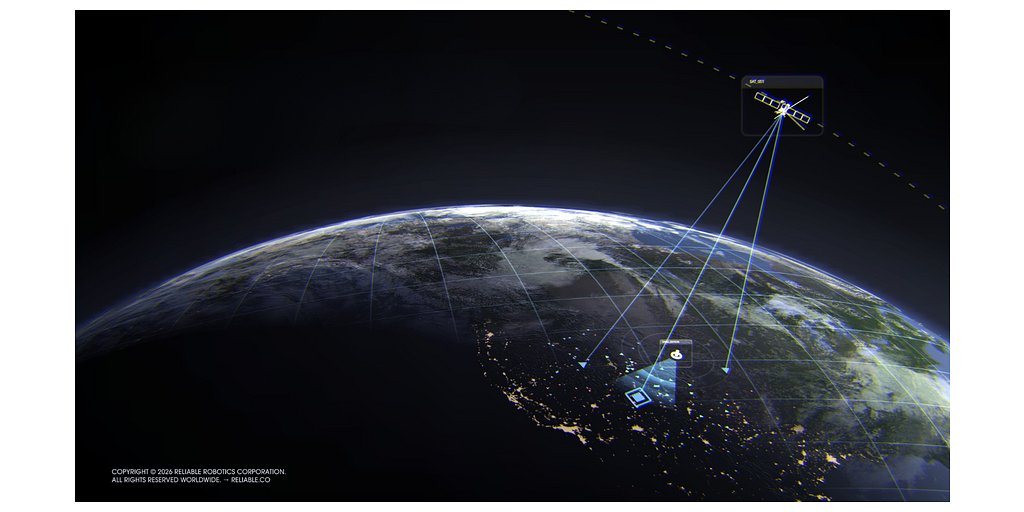
For an uncrewed aircraft to fly hundreds or thousands of miles beyond the operator's visual range, it needs an unbreakable, trustworthy line of communication—an invisible highway for data. This is the core function of Reliable Robotics' C2 Link System. It's a comprehensive connectivity solution that ensures a constant link between the aircraft and the remote pilot, facilitates communication with Air Traffic Control (ATC), and enables shared traffic awareness to prevent conflicts with other aircraft.
This isn't just a simple remote-control link. The system is engineered for extreme reliability and redundancy, compliant with Federal Aviation Administration (FAA) standards for Control and Non-Payload Communications (CNPC). This means the data controlling the aircraft's flight path is treated with the highest level of integrity, ensuring the remote pilot can safely act on clearances and instructions from ATC, just as an onboard pilot would. By leveraging existing satellite networks, the system bypasses the need for new ground-based infrastructure, a key component of the company's strategy.
“With our C2 System, Reliable will be able to bring more aviation – and safer aviation – into communities without requiring additional infrastructure,” said Brandon Suarez, VP of Uncrewed Aircraft Systems Integration at Reliable Robotics, in the company's announcement.
This infrastructure-agnostic approach is what makes the technology so transformative. It suggests that remote towns and underserved regions could become new hubs for air cargo, connected to the global supply chain by autonomous planes landing at their existing local airports.
Navigating a Complex Regulatory Maze
The greatest challenge to widespread autonomous flight isn't just technology; it's regulation. The FAA's primary mandate is safety, and integrating pilotless aircraft into the world's most complex airspace requires a new level of assurance. Current rules, like Part 107 for small drones, are largely restrictive, mandating that the operator maintain visual line of sight. For the large-scale commercial operations Reliable envisions, a new regulatory framework for Beyond Visual Line of Sight (BVLOS) flight is essential.
This is where industry standards become the bedrock of progress. Reliable Robotics is building its C2 system to meet the rigorous performance requirements of RTCA DO-377B, a consensus-based standard that defines the technical qualifications for C2 link systems. RTCA, a non-profit standards organization, develops the technical guidance that the FAA often uses as the basis for certification. By actively contributing to the RTCA working groups that develop these standards, Reliable isn't just following the rules—it's helping to write the rulebook for the entire industry.
Adhering to DO-377B provides a clear, certifiable pathway to prove to regulators that the communication link is robust enough to prevent lost connections, protect against interference, and maintain control of the aircraft under all foreseeable conditions. This painstaking work of standards development and certification is the unglamorous but absolutely critical process that will ultimately enable an automated Cessna to share a runway with a Boeing 787.
A Constellation of Collaboration
Solving a problem of this magnitude is not a solo endeavor. Reliable Robotics has assembled a coalition of industry leaders to provide the robust, multi-layered communications architecture its system requires. The C2 Link System is designed to be compatible with multiple networks, ensuring redundancy and constant connectivity.
For global, over-the-horizon flight, the system leverages the proven satellite networks of Iridium and Viasat. Iridium’s constellation of Low Earth Orbit (LEO) satellites provides pole-to-pole coverage with low latency, while Viasat’s high-capacity Geostationary (GEO) satellites offer powerful broadband links. Using both creates a resilient mesh of connectivity that ensures the aircraft is never out of touch.
Closer to the ground, especially in the dense communication environment of an airport terminal, the system integrates air-to-ground datalinks from uAvionix. A specialist in certified avionics for drones, uAvionix provides technology ideal for low-latency voice and data communications, critical during takeoff, landing, and taxiing. This collaborative ecosystem extends to regulatory and research bodies as well. The company is working directly with the FAA on flight simulations and is under contract with NASA to conduct extensive testing in real-world airport environments, gathering the data needed to validate the system's performance and safety.
From Cargo to the Future of Flight
The immediate application for this technology is in air cargo, a market ripe for the efficiency and scalability that automation can provide. The global UAV market is projected to more than double to over $58 billion by 2029, according to Mordor Intelligence, with logistics being a key driver. By automating existing, certified aircraft like the Cessna Caravan—a workhorse of regional cargo—Reliable Robotics can tap into this demand quickly, potentially lowering costs and increasing service availability, especially for rural and remote communities.
Looking further ahead, the technology being proven today is a foundational building block for a more profound transformation in aviation. The company's system is being designed to integrate into a future, modernized National Airspace System that operates under what some experts call Digital Flight Rules (DFR). DFR envisions a highly automated, data-centric airspace where all aircraft—manned and uncrewed—interoperate seamlessly, guided by intelligent systems to optimize safety and efficiency.
In this future, voice commands from air traffic controllers might be replaced by digital clearances sent directly to an aircraft’s automation system. The C2 Link System, with its emphasis on secure, high-integrity data exchange, is precisely the kind of technology needed to make such a digitally native airspace possible. The path from today's press release to a fully autonomous sky is long, but the critical communication links are now being forged.