
- $42 billion in global public funding announced for quantum computing research.
- 2029-2030 target window for fault-tolerant quantum breakthroughs by major players.
- Millions of physical qubits required for true fault tolerance, with PsiQuantum aiming for a photonic approach.
Experts would likely conclude that while PsiQuantum's project represents a significant step in the quantum computing race, the field remains highly competitive with multiple viable technological paths and no guaranteed winner yet.
Australia's Quantum Gamble: The High-Stakes Race for a New Reality
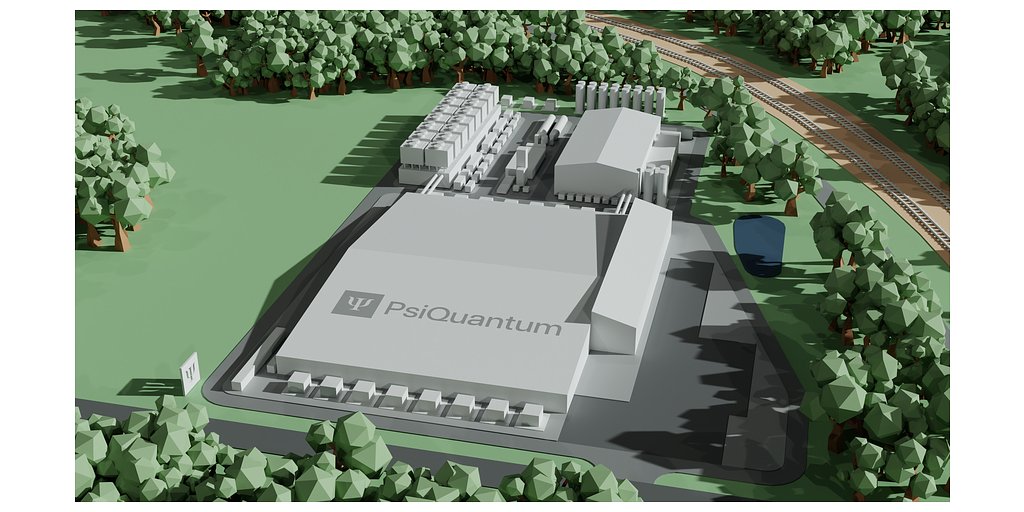
MORETON BAY, Australia – June 17, 2026 – In a quiet but significant ceremony today, heavy machinery broke ground on a project that promises to reshape our computational universe. Here in Moreton Bay, a fast-growing region north of Brisbane, the Palo Alto-based firm PsiQuantum began construction on what it claims will be the world’s first utility-scale, fault-tolerant quantum computer. Flanked by Australian federal and Queensland state ministers, company executives hailed the moment as a pivotal step in a decades-long quest.
“For decades, quantum computing has held the promise of transforming what humanity can achieve through computation, and today in Australia we are beginning to turn that promise into reality,” said Victor Peng, CEO of PsiQuantum. This project is more than just a new facility; it’s a bold declaration in a fiercely competitive global race and a multi-billion-dollar bet on a specific, and challenging, technological path.
The Anatomy of a Quantum Promise
Beneath the celebratory headlines lies a challenge of staggering complexity. The terms “utility-scale” and “fault-tolerant” are not mere marketing jargon; they represent the holy grail of quantum computing. For years, the field has been dominated by noisy, intermediate-scale quantum (NISQ) devices—fascinating but fragile systems prone to errors that render them impractical for most real-world problems. A fault-tolerant machine, by contrast, is the goal: a computer robust enough to detect and correct its own errors in real-time. This requires encoding a single, stable “logical qubit” using thousands, or even millions, of fragile “physical qubits.”
“Utility-scale” signifies the point where this technology graduates from the lab to industry, providing tangible value by solving problems that are currently intractable for even the most powerful classical supercomputers. These could range from designing new life-saving drugs and hyper-efficient materials to optimizing global supply chains and creating new financial models.
PsiQuantum’s strategy for achieving this hinges on a photonic approach, using particles of light as qubits. The company argues this path offers a crucial advantage in scalability, as it allows them to leverage the mature, high-volume manufacturing processes of the semiconductor industry. While the single-photon detectors required for the system will need to be cooled by a massive cryoplant—one of the largest ever built for quantum computing, set for delivery in 2027—the photonic qubits themselves do not require the near-absolute-zero temperatures demanded by competing technologies. This, the company wagers, is the most viable path to assembling the million-plus physical qubits needed for true fault tolerance.
A Global Race to the Quantum Frontier
While PsiQuantum breaks ground in Australia, its rivals are not standing still. The late 2020s have become a focal point for the entire industry, with several giants targeting the same 2029-2030 window for a fault-tolerant breakthrough. IBM, a pioneer in the field, is pursuing a superconducting qubit architecture, outlining a roadmap toward a 200-logical-qubit system by 2029. Similarly, Google’s Quantum AI team, which has already demonstrated significant progress in quantum error correction, is targeting the same year for its own large-scale machine.
Meanwhile, Quantinuum, using a different approach based on trapped-ion technology, recently demonstrated a dramatic, 800-fold reduction in error rates by creating logical qubits, proving the viability of another path. With an estimated $42 billion in public funding announced globally and billions more in private capital pouring in, the race is a geopolitical and economic marathon. PsiQuantum's claim to be building the “world’s first” is therefore a powerful statement of intent in a field where no single winner has yet been crowned.
“Australia has been part of this journey from the very beginning,” noted Prof. Jeremy O’Brien, PsiQuantum’s Co-Founder, alluding to his foundational research conducted in the country. This project is a homecoming, but it's also a strategic move to secure a critical position in the emerging quantum supply chain.
From Classroom to Cryogenics in Moreton Bay
Beyond the global race and complex physics, the project’s most immediate impact will be felt right here in Moreton Bay. The facility is the cornerstone of the Moreton Bay Central Innovation Precinct, an ecosystem designed to connect industry with academia. Its co-location with a TAFE Centre of Excellence and the University of Sunshine Coast campus is no accident.
“It’s wonderful to see this very purposeful industry ecosystem coming to life,” said University of the Sunshine Coast Vice-Chancellor, Professor Helen Bartlett, highlighting the vision of creating pathways “from classroom to career in one of the world's most advanced industries.”
This is where the abstract promise of a quantum future becomes tangible. The project is expected to create hundreds of highly skilled jobs in engineering, advanced manufacturing, and technical operations. For a region experiencing rapid growth, it represents an opportunity to build an economic pillar on cutting-edge technology rather than traditional industries. “This is exactly the type of investment we have been working to attract,” said City of Moreton Bay Mayor Peter Flannery. “The economic benefits will be felt for years through new jobs, new skills, and new opportunities for local businesses.”
For Australia, the investment is a strategic play for sovereign capability in a technology poised to redefine everything from national security to economic competitiveness. As the first phases of construction begin and the site is prepared for its massive cryoplant, the project serves as a powerful symbol of a nation betting big on the next technological revolution. With the foundations now being laid in the Australian soil, the world watches to see if this ambitious vision of a computational future will, in fact, take root.