
- 10 years of official cooperation between AU and KAICIID, renewed with a new Memorandum of Understanding
- 900,000 forcibly displaced in the Central African Republic, where KAICIID supports interfaith peace efforts
- 5,000 killed and over 1 million displaced in Mozambique's Cabo Delgado province due to insurgency
Experts agree that faith-based dialogue and community-led initiatives are essential for addressing Africa's complex conflicts, particularly when traditional political frameworks fall short.
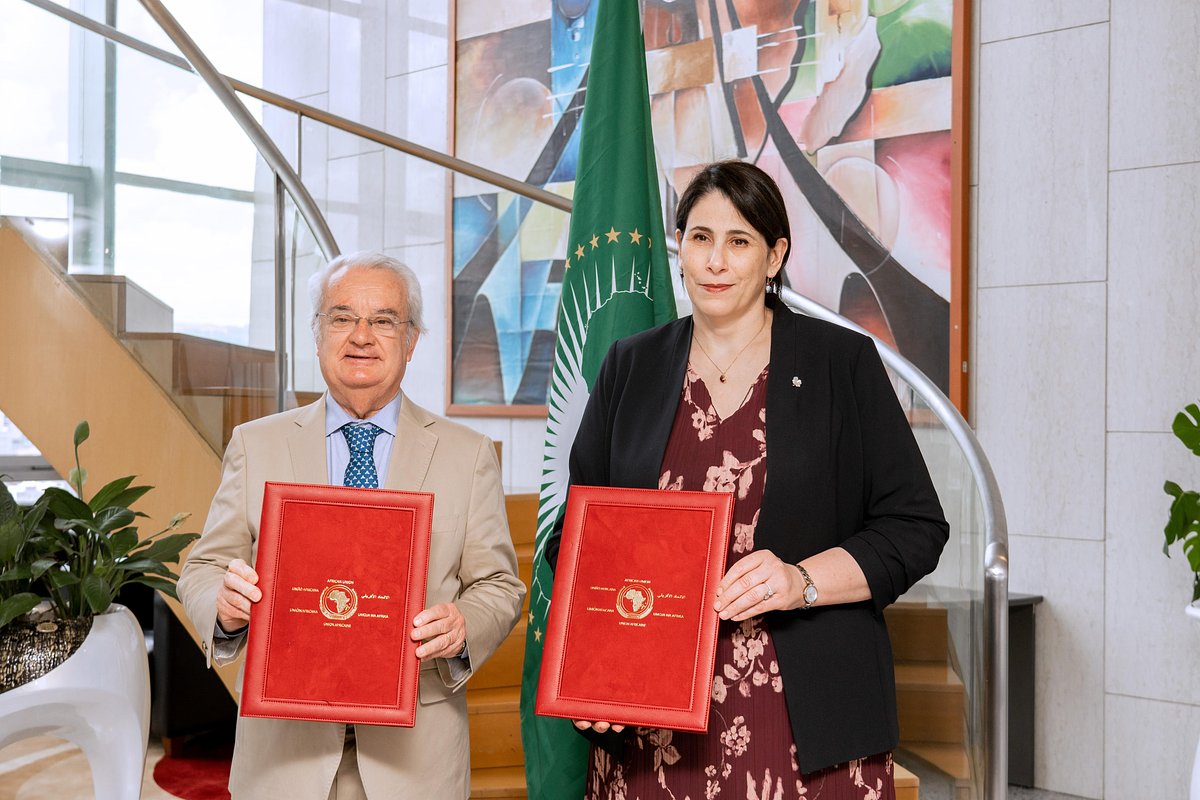
AU & KAICIID Deepen Peace Pact to Combat Modern African Conflicts
ADDIS ABABA, ETHIOPIA – April 21, 2026 – The African Union Commission and the International Dialogue Centre - KAICIID have formally renewed their commitment to peacebuilding, signing a landmark Memorandum of Understanding that elevates dialogue as a core strategy for tackling the continent's most complex challenges. The agreement, signed at the AU headquarters on April 20, marks a decade of official cooperation and sets a new course for embedding interreligious and intercultural dialogue into Africa's peace and security architecture.
The renewed pact comes at a critical juncture for the continent, which faces a confluence of pressures from intercommunal tensions and climate-induced displacement to the rapid spread of digital hate speech. This initiative aims to move beyond traditional political frameworks by empowering local and religious leaders, who are often the most trusted voices in their communities.
A Strategic Alliance for a Peaceful Africa
The partnership is a cornerstone of the AU's long-term vision, Agenda 2063, particularly its fourth aspiration for a peaceful and secure Africa. H.E. Ambassador Selma Malika Haddadi, Deputy Chairperson of the African Union Commission, emphasized the strategic importance of the collaboration following the signing ceremony.
“The African Union Commission values this partnership as it reinforces our collective efforts to promote mutual understanding, prevent conflict, and strengthen resilience within our societies, in line with Agenda 2063,” she stated. “Dialogue remains central to building a peaceful and united Africa, and this collaboration strengthens our ability to translate that vision into action on the ground.”
The agreement provides an official framework for KAICIID, an intergovernmental organization dedicated to promoting dialogue, to align its work directly with continental priorities. This synergy is designed to institutionalize dialogue-based approaches, ensuring they are systematically integrated into peace and security responses rather than serving as ad-hoc interventions.
Ambassador António de Almeida-Ribeiro, Acting Secretary General at KAICIID, highlighted the tangible nature of this approach. "Africa's peace and security challenges are not going to be resolved through political frameworks alone. Communities hold trust, religious leaders hold influence. When those actors are equipped and supported, something real changes,” he said. "This partnership with the African Union Commission is built on these tangible outcomes, moving from dialogue as an abstract concept, into real change, taking place on a community level."
From Abstract Dialogue to Tangible Community Change
Over the past decade, the AU-KAICIID collaboration has yielded significant results, most notably through the revitalization of the AU Interfaith Dialogue Forum (AU-IFDF). This platform has created a structured continental space for religious leaders, policymakers, and civil society to tackle security challenges head-on. The forum has convened across the continent, addressing issues from religious extremism in Nigeria (2016) and Chad (2018) to climate resilience in Rwanda (2023) and reparatory justice in Namibia (2025).
KAICIID's Africa Programme has demonstrated the power of this model in some of the continent's most fragile regions:
In the Central African Republic (CAR), where nearly 900,000 people remain forcibly displaced, the organization has provided crucial support to the national interfaith platform (PCRC). Its work includes training leaders in mediation, countering hate speech, and establishing local peace committees. In a forward-looking move, KAICIID recently partnered with the University of Bangui to integrate interreligious dialogue into its Conflict Resolution Master's curriculum, equipping the next generation of peacebuilders.
In Nigeria, the partnership has helped reignite the Interfaith Dialogue Forum for Peace (IDFP), focusing on community-based early warning systems to prevent violence. With the 2027 elections on the horizon, this work is seen as vital for supporting interfaith engagement and mitigating electoral conflict.
In Mozambique's Cabo Delgado province, which has been devastated by an insurgency that has killed approximately 5,000 people and displaced over a million, KAICIID's work is particularly critical. The organization fosters dialogue between Christian, Muslim, and traditional leaders to counter extremist narratives that exploit local grievances. Recent intra-Muslim dialogue workshops in Pemba equipped religious leaders with skills to promote unity and resist radical ideologies.
Confronting the New Frontline of Conflict
The renewed MoU is not merely a continuation of past efforts but a strategic pivot to address the evolving nature of conflict in Africa. A high-level roundtable held alongside the signing, titled "Fostering a Culture of Transformative Dialogue in the Africa Region," brought together senior AU officials and ambassadors from KAICIID's member states to map out priorities.
The discussion centered on the modern drivers of instability that are eroding social trust across the continent. Climate change, for example, is no longer a future threat but a present-day catalyst for conflict, as droughts and resource scarcity intensify competition and drive displacement. The 2023 AU-IFDF in Rwanda specifically addressed this, highlighting how Africa suffers disproportionately from a crisis it did little to create.
Simultaneously, the proliferation of hate speech, amplified by digital platforms, has been identified as a significant threat to social cohesion. In regions like CAR, hate speech has been actively "weaponized" to incite violence and deepen divisions. The AU-KAICIID partnership aims to counter this by training journalists, supporting responsible media, and empowering community leaders to promote messages of peace and tolerance.
The Unique Power of Faith-Based Peacebuilding
Central to the success of this strategy is the unique role of religious leaders in African societies. In many communities where state institutions are weak or distrusted, faith leaders command significant moral authority and maintain deep grassroots networks. They are often the first responders in a crisis and the most credible mediators in a dispute.
The AU-KAICIID model leverages this influence by providing these leaders with the tools and training for professional mediation, conflict analysis, and peace advocacy. By doing so, it helps bridge the gap between local peace initiatives and national and continental policy, ensuring that the voices of the community are heard in the halls of power.
While the potential for religion to be instrumentalized for violence is a recognized challenge, this initiative tackles it directly by promoting intra- and inter-religious understanding. By creating platforms where leaders can build relationships and find common ground based on shared values of peace and justice, the partnership works to inoculate communities against extremist ideologies.
The renewed commitment in Addis Ababa, supported by a wide array of AU departments and international partners, signals a powerful consensus: building a peaceful and secure Africa requires more than just treaties and troops. It requires the patient, difficult, and transformative work of dialogue, systematically applied from the village level to the highest echelons of continental governance.