
- 70% of featured dual-physician couples included partners who were either firstborns or only children
- Physician divorce rate: ~24% (vs. U.S. average of 42%)
- 20% of physicians are married to other physicians (2023 Medscape survey)
Experts agree that intentional communication, shared purpose, and adaptability are critical to the success of dual-physician marriages, with these principles offering valuable insights for all high-stress dual-career partnerships.
The Doctor's Prescription for Lasting Love: New Book Reveals Secrets
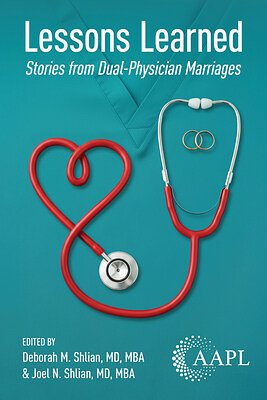
WASHINGTON, DC – February 13, 2026 – In an era where work-life balance feels more elusive than ever, a new book from the American Association for Physician Leadership (AAPL) is offering a rare look into the lives of one of the most demanding professions: dual-physician couples. The book, Lessons Learned: Stories from Dual-Physician Marriages, released today, unpacks the success strategies of 35 couples who have navigated the intense pressures of medicine while building resilient, long-lasting partnerships.
Edited by Drs. Deborah and Joel Shlian, a physician couple married for 54 years, the book presents a collection of authentic narratives that defy common assumptions about high-stress careers and relationships. By distilling these stories into 20 key lessons, the work provides a practical roadmap that extends far beyond the hospital walls, offering insights for any dual-career partnership.
A Prescription for Partnership
The central premise of Lessons Learned is that successful relationships in high-stakes environments are not accidental; they are built with intention. The Shlians curated stories from a diverse group of physicians across the United States, with marriages ranging from two to 54 years, to identify the common threads of their success.
These couples faced challenges familiar to many professionals—coordinating demanding schedules, managing separations during training, balancing work with family life, and supporting one another through illness and professional setbacks. From these shared experiences, the editors identified core principles such as the importance of a shared purpose, intentional and consistent communication, and the flexibility to adapt to life's changing seasons.
"Although dual-physician couples tend to have lower divorce rates overall, they still face distinct challenges," the Shlians note in the book's announcement. "Each couple's story is unique, but common themes emerged in what they believe contributed to their lasting relationships." These themes underscore the necessity of creating strong support systems and actively protecting the relationship from the relentless demands of their profession.
An interesting, albeit informal, finding from the editors' survey of the featured couples was that 70% included partners who were either firstborns or only children. This observation aligns with some psychological research on birth order, personality, and relationship compatibility, adding another layer to the discussion of what makes these partnerships click.
The Changing Face of Medical Marriages
The book arrives at a pivotal moment in medicine. The archetype of the male doctor with a stay-at-home spouse is rapidly being replaced by a new reality. According to a 2023 Medscape survey of over 9,000 physicians, 20% are married to other physicians, and an additional 25% are partnered with other healthcare professionals. This trend is particularly pronounced among younger generations of doctors.
This demographic shift is fueled by changes within medical education itself. Women now represent the majority of first-year medical students and constitute over a third of the active physician workforce. With grueling hours spent together in medical school, residency, and fellowship, it is increasingly common for physicians to find partners who intimately understand the unique sacrifices and pressures of a medical career. While only 16% of physicians who have been practicing for 30 years or more have a physician spouse, the growing prevalence among early- and mid-career doctors makes the lessons from the book more relevant than ever.
Challenging the Narrative on Physician Divorce
Contrary to the trope of the overworked, divorced doctor, research shows that physician marriages are remarkably stable. While the divorce rate for first marriages in the United States is approximately 42%, physicians have a significantly lower rate of around 24%. A landmark 2015 study in The BMJ confirmed this, finding that physicians were less likely to be divorced than lawyers, nurses, and the general population.
Lessons Learned explores the factors contributing to this stability, which include a higher average age at marriage, greater socioeconomic status, and the built-in shared understanding of the profession's demands. The very environment that creates stress—long hours and emotional intensity—also fosters a unique bond between partners who share that world.
However, the data is not uniformly positive. Studies consistently show that female physicians are about 1.5 times more likely to be divorced than their male counterparts, particularly if they work longer hours. This disparity highlights the persistent challenges many women face in balancing professional ambition with societal expectations and domestic responsibilities, even in a dual-physician household.
Lessons Beyond the Stethoscope
While the book's focus is on physicians, its core insights are universal for the growing number of dual-career couples across all demanding sectors, from law and finance to technology and academia. The challenges of career competition, time scarcity, and difficult relocation decisions are not unique to medicine. The success strategies outlined in the book—such as strategic planning, transparent communication about career priorities, and consciously building a team mindset—are directly transferable.
Experts in work-life integration note that successful dual-career couples often engage in meticulous long-term planning, openly discussing whose career might take precedence during different life stages and defining their non-negotiables. This proactive approach helps prevent the slow drift that can pull ambitious partners apart. By showcasing real-world examples of this in practice, Lessons Learned serves as a guide for any couple striving to build two meaningful careers and one strong relationship simultaneously.
The publication of this book is also reflective of the AAPL's broader mission to address physician well-being and combat burnout. The organization has long argued that physician wellness is inextricably linked to leadership and the overall health of medical institutions. By providing resources that support the personal lives of physicians, the AAPL acknowledges that a stable, supportive home life is a critical defense against the professional burnout that plagues the healthcare industry. Ultimately, fostering resilience in physicians' relationships may be one of the most effective ways to ensure the long-term health of the medical community and the patients it serves.
Topics & Related
Remote & Hybrid Work
Sustainability & Climate
Digital Transformation
Revenue
EBITDA
Healthcare & Life Sciences
Restructuring
Related Company Pulse