
- $100,000+: Per-patient cost of current manual cell therapy production
- 4 robotic arms: Multiply Labs' system operates in parallel to increase throughput
- 2023 acquisition: AstraZeneca's purchase of Neogene Therapeutics to boost its TCR-T therapy portfolio
Experts agree that automating cell therapy manufacturing is critical to overcoming production bottlenecks, reducing costs, and scaling access to these life-saving treatments.
AstraZeneca Bets on Robots to Solve Cell Therapy's Biggest Hurdle
SAN FRANCISCO, CA – January 27, 2026 – Pharmaceutical giant AstraZeneca has announced a pivotal collaboration with robotics firm Multiply Labs to tackle one of the most significant challenges in modern medicine: the manufacturing of cell therapies. The partnership will leverage Multiply Labs' advanced robotic systems to automate the complex, labor-intensive process of producing these revolutionary treatments, a move that could redefine the economics and accessibility of personalized medicine.
The agreement focuses on evaluating and implementing Multiply Labs’ GMP-ready robotic biomanufacturing system for commercial-scale production. By automating the end-to-end workflow, the two companies aim to create a high-throughput manufacturing model that can meet growing clinical demand while adhering to the industry's stringent quality and regulatory standards.
The Cell Therapy Paradox: Miraculous Cures, Manual Production
Cell therapies, which use a patient's own or donor cells to fight diseases like cancer, represent a frontier of medicine, offering cures for conditions once considered untreatable. However, their incredible potential has been shackled by a formidable manufacturing bottleneck. The current production model is often described as more of an art than an industrial process.
Traditionally, manufacturing a single patient's dose involves numerous manual steps performed by highly skilled technicians in expensive, sterile cleanroom environments. This process is slow, prone to human error, and incredibly costly, with per-patient costs running into the hundreds of thousands of dollars. The reliance on manual labor severely limits production capacity, creating long wait times for critically ill patients and making it nearly impossible to scale up to meet the needs of a broader population.
This manual paradigm also introduces risks of contamination and batch-to-batch variability, complicating the already difficult path to regulatory approval. Industry experts have long warned that without a fundamental shift in manufacturing technology, the full promise of cell and gene therapies would remain out of reach for all but a few.
A Robotic Revolution in Biomanufacturing
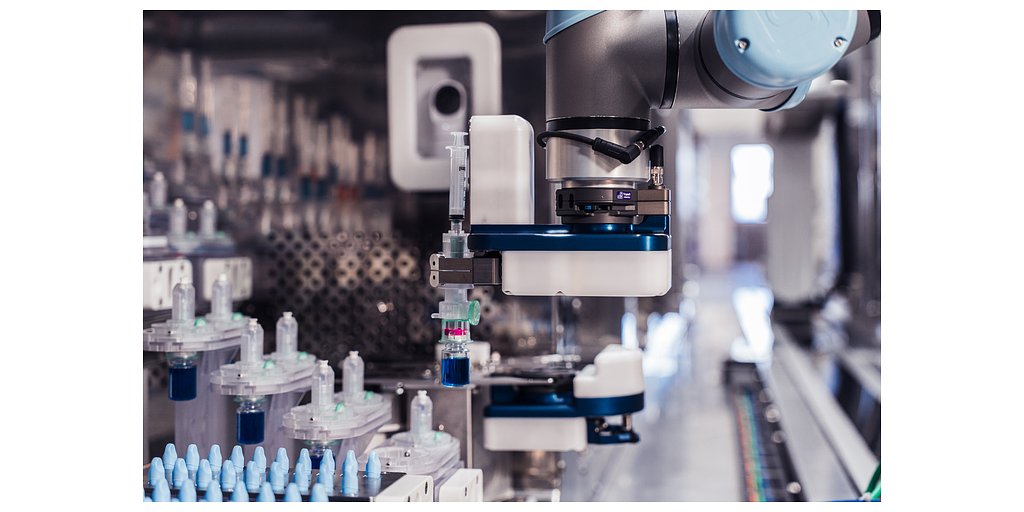
Enter Multiply Labs, a San Francisco-based company at the intersection of robotics and biopharma. The company has developed autonomous, cloud-controlled robotic systems specifically designed to industrialize the production of advanced therapies. Their latest platform features clusters of four robotic arms operating in parallel within a single, compact unit. This architecture is engineered to operate the same industry-standard instruments that technicians use today, minimizing the need for pharmaceutical companies to completely re-engineer their validated scientific processes.
By automating tasks from cell selection and expansion to final formulation, the robotic system aims to dramatically increase throughput, improve consistency, and reduce the risk of error. The cloud-based control system allows for constant monitoring and data collection, creating a robust digital record of the entire manufacturing process. This not only enhances quality control but also provides the detailed data integrity and traceability demanded by regulators like the U.S. Food and Drug Administration (FDA) and the European Medicines Agency (EMA).
“Cell therapies are among the most promising, yet complex medicines being developed today,” said Fred Parietti, PhD, CEO of Multiply Labs, in the official announcement. “Our mission is to make these therapies more widely available by increasing manufacturing efficiency and scale. This agreement with AstraZeneca allows us to evaluate our multi-arm robotic clusters in a setting where we can combine some of the world’s best scientific and clinical expertise with our robotic platform to build the next generation of high-throughput, GMP-ready cell therapy manufacturing.”
AstraZeneca's Strategic Push into Advanced Therapies
For AstraZeneca, this collaboration is a calculated and strategic move to secure a competitive advantage in the burgeoning field of advanced therapies. The pharmaceutical leader has been aggressively building its cell therapy pipeline, notably through its 2023 acquisition of Neogene Therapeutics to bolster its T-cell receptor (TCR-T) therapy portfolio for solid tumors. However, a powerful drug pipeline is only as valuable as a company's ability to produce and deliver it to patients.
By partnering with a technology leader like Multiply Labs, AstraZeneca is proactively addressing the manufacturing hurdle that has stymied others. Securing a scalable, cost-effective, and reliable production platform de-risks its significant R&D investments and positions it to bring its pipeline of cell therapies to market faster and more efficiently. This focus on manufacturing innovation is seen as essential for leadership in oncology and other areas where cell therapies are poised to become standard of care.
The partnership signals a broader industry recognition that the future of personalized medicine depends on the industrialization of its production. As more advanced therapies move from clinical trials toward commercial launch, the companies that master manufacturing will be the ones that ultimately succeed. This collaboration will be closely watched by the entire biopharmaceutical industry, as it could create a new blueprint for how life-saving, personalized medicines are made, moving them from the realm of bespoke treatments to globally accessible cures.