
- 20 million subscribers: Asiacell's AI-driven network assurance platform will benefit nearly 20 million subscribers in Iraq.
- $2.5 billion market: Iraq's telecom market was valued at approximately $2.5 billion in 2024.
- 82% internet usage: Nearly 82% of Iraqi citizens now use the internet, with mobile broadband as the primary gateway.
Experts would likely conclude that Asiacell's adoption of AI-driven network management represents a significant leap forward in predictive, self-healing infrastructure, positioning the company as a leader in Iraq's digital transformation and enhancing connectivity for millions.
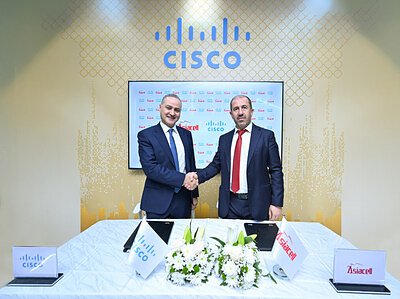
Asiacell’s AI Gambit: Redefining Connectivity for 20 Million in Iraq
DOHA, Qatar – November 26, 2025 – In a landmark move for Iraq's burgeoning digital economy, leading mobile operator Asiacell has announced a strategic collaboration with networking giant Cisco to deploy an advanced, AI-driven network assurance platform. The initiative marks one of the first major adoptions of AI-based network management in the country, signaling a pivotal shift from reactive problem-solving to predictive, self-healing infrastructure for Asiacell’s nearly 20 million subscribers.
The Technological Leap to Predictive Intelligence
At the heart of this collaboration is Cisco's Provider Connectivity Assurance (PCA) platform, a technology designed to embed intelligence directly into the network's core. For Asiacell, this isn't merely an upgrade; it's a fundamental re-architecting of its operational philosophy. Traditional network management has long been a reactive discipline—engineers responding to alarms after a service has already been degraded or disrupted. The Cisco PCA solution aims to invert this model entirely.
By leveraging sophisticated machine learning algorithms, the platform will continuously monitor and analyze immense volumes of real-time data from across Asiacell's network, which spans all 19 governorates of Iraq. This includes traffic patterns, device telemetry, and service performance metrics. The AI's primary function is to establish a baseline of normal network behavior and then proactively identify subtle anomalies that often precede major failures. This enables the system to predict potential issues—from hardware malfunctions to impending congestion—and trigger automated resolutions before customers even notice a problem.
"With Cisco's AI-powered Provider Connectivity Assurance, we're taking a major step toward intelligent, automated network operations," stated Hassan El Chami, CTIO at Asiacell. "The result will be a more agile, self-optimizing network that keeps pace with the demands of digital services and the 5G evolution. The ability to predict and prevent service issues before they happen will transform how we serve our customers."
This concept of a "self-optimizing network" is crucial. It means the system can automatically reroute traffic to avoid bottlenecks, intelligently allocate bandwidth based on demand forecasts, and flag components for preventive maintenance, drastically reducing the likelihood of unexpected downtime.
Powering Iraq's Digital Renaissance
Asiacell's investment is strategically timed, aligning with Iraq's ambitious national digital transformation agenda. The nation's telecom market, valued at approximately $2.5 billion in 2024, is on a steep growth trajectory. Mobile penetration now exceeds 100% of the population, and internet usage has surged to cover nearly 82% of citizens, with mobile broadband serving as the primary gateway to the digital world for millions.
The Iraqi government has been actively fostering this growth through its "Transformation Strategy 2021–2025," which includes modernizing infrastructure and launching e-government services like electronic signatures. In this context, a reliable, high-performance digital backbone is not just a commercial asset but a critical piece of national infrastructure.
This AI-driven upgrade also provides Asiacell with a powerful competitive advantage. The Iraqi mobile market is dominated by Asiacell and Zain Iraq, who together hold over 70% of the market. With a state-backed fourth operator expected to launch in early 2025 and a new 5G license awarded to a state-run entity, the competitive pressures are intensifying. In a market where network quality is a key differentiator, the ability to promise and deliver superior reliability could be a decisive factor in retaining and attracting customers.
From Network Metrics to Real-World Impact
For Asiacell's 19.7 million subscribers, the technical jargon of "predictive analytics" and "automated assurance" will translate into tangible, everyday benefits. The primary goal is to significantly improve the overall customer experience by minimizing the frustrations of modern digital life: dropped calls, lagging video streams, and unexplained service outages.
Industry benchmarks for similar AI deployments suggest a dramatic improvement in key performance indicators (KPIs). Mean Time to Resolution (MTTR) for network issues can be slashed from days or weeks to mere minutes. More importantly, proactive maintenance can prevent a significant portion of outages from ever occurring. This translates to higher network uptime and more consistent performance, whether a user is in a dense urban center like Baghdad or a more remote rural area.
The economic implications for the operator are also substantial. Industry analysis projects that AI-driven automation can reduce operational expenditures (OpEx) by up to 40% by eliminating costly emergency repairs and optimizing resource allocation.
"At Cisco, we understand that achieving superior business outcomes in today's digital landscape demands consistently delivering exceptional digital experiences to every user, everywhere, at all times," commented Zayan Sadek, Managing Director for Service Providers in the MEA region at Cisco. This collaboration underscores the shared vision of elevating the standard of connectivity for millions.
A Strategic Play in a Rapidly Evolving Region
Asiacell's move is not happening in a vacuum. It reflects a broader, accelerated trend of AI adoption among telecom operators across the Middle East and North Africa (MENA). In fact, many regional players are embracing network automation at a pace that outstrips their global peers. From AI-powered drone inspections of telecom towers in the UAE to predictive maintenance for 5G-Advanced networks in Qatar, the region is becoming a hotbed for telecom innovation.
By being one of the first in Iraq to implement such a comprehensive AI assurance system, Asiacell positions itself as a technological leader within its home market and a serious player on the regional stage. For Cisco, the partnership represents a significant strategic win, embedding its flagship AI technology into the infrastructure of a leading operator in a key emerging market. It serves as a powerful case study for further expansion across the region.
Navigating the Implementation Gauntlet
The path to a fully autonomous network is not without its challenges. Implementing a sophisticated AI system across a vast and complex network requires overcoming significant hurdles. Integrating the new platform with legacy systems can be a complex and costly endeavor. Furthermore, the success of any AI model is contingent on the quality and volume of the data it's fed, demanding robust data governance and cleansing processes.
There is also the human element. The telecom industry globally faces a skills gap in AI and data science, requiring operators like Asiacell to invest in upskilling their engineering teams to manage these next-generation systems effectively. In a country like Iraq, practical challenges such as intermittent power stability can also pose a threat to systems that require constant energy and connectivity.
Despite these potential obstacles, the collaboration between Asiacell and Cisco represents a confident and forward-looking bet on Iraq's digital future. The project is more than a technical upgrade; it's a foundational investment in the reliability and intelligence of the network that will underpin the nation's economic growth, digital services, and eventual transition to 5G. By tackling network complexity head-on with AI, Asiacell is not just aiming to fix problems faster, but to build a network that can anticipate the needs of its users tomorrow.