
- 20 million subscribers: Asiacell serves nearly 20 million subscribers in Iraq.
- 81% internet penetration: Iraq's internet penetration now exceeds 81%.
- 8.5% CAGR: Iraq's enterprise cloud services sector is projected to grow at a CAGR of over 8.5% through 2030.
Experts view this partnership as a strategic move to accelerate Iraq's digital transformation, positioning Asiacell as a leader in enterprise cloud services while addressing critical infrastructure and regulatory challenges.
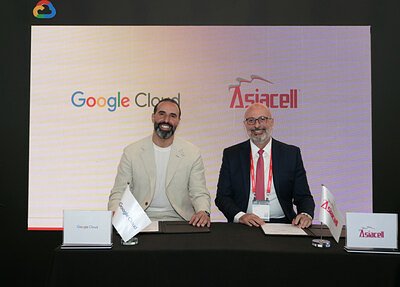
Asiacell & Google AI: A Strategic Bid to Rewire Iraq's Economy
DOHA, QATAR – November 26, 2025 – In a move signaling a new phase of digital ambition for Iraq, leading telecommunications operator Asiacell has announced a strategic partnership with Google Cloud. The collaboration, unveiled at MWC Doha 2025, positions Asiacell as the first provider in the nation to offer Google's suite of AI-powered productivity tools, including Google Workspace and the advanced Gemini Enterprise, to its vast market of businesses and educational institutions.
This isn't merely a product launch; it's a foundational play to wire a post-conflict economy for the digital age. By integrating these cloud-native solutions, the partnership aims to accelerate enterprise modernization and equip a new generation of professionals and students with the tools necessary to compete on a global stage.
"This collaboration with Google Cloud allows us to provide Iraqi businesses and educational institutions with reliable, secure, and future-ready productivity solutions," said Amer Sunna, Chief Executive Officer of Asiacell, during the announcement. "It's a key milestone in our mission to accelerate Iraq's digital transformation."
A Calculated Leap into the Cloud Economy
For Asiacell, this partnership represents a critical strategic pivot. With a dominant market presence serving nearly 20 million subscribers and providing 4G+ coverage to over 99% of the population, the company has long been the backbone of Iraq's connectivity. However, in a maturing global telecom market, long-term growth hinges on moving beyond the role of a simple utility provider. This deal is a decisive step up the value chain.
By becoming the exclusive telecom channel for Google Workspace in Iraq, Asiacell secures a powerful first-mover advantage over its primary competitors, Zain Iraq and Korek Telecom. While rivals focus on traditional voice and data services, Asiacell is positioning itself as an integrated digital services enabler. This move diversifies its revenue streams away from pure connectivity and into the high-growth sector of enterprise cloud services, which is projected to grow at a CAGR of over 8.5% in Iraq through 2030.
The strategic value lies in bundling high-quality connectivity with essential business software. For Iraqi enterprises—from small businesses to major players in the oil and banking sectors—this creates a one-stop shop for digital infrastructure. The ability to offer a seamless package of reliable internet and world-class productivity tools could significantly reduce customer churn and attract high-value corporate clients, solidifying Asiacell's leadership in an increasingly competitive landscape.
Fueling Iraq's Digital Transformation Engine
The timing of this partnership aligns with a palpable surge in Iraq's digital appetite. With internet penetration now exceeding 81% and mobile connections surpassing 103% of the population, the groundwork for widespread digital adoption has been laid. The nation's ICT market, valued at nearly $0.84 billion in 2025, is hungry for the efficiency and innovation that cloud-based tools promise.
The introduction of Google Workspace, Gemini Enterprise, and the educational-focused Google NotebookLM directly addresses this demand. For businesses, these tools offer the potential to streamline operations, enhance collaboration across disparate locations, and leverage generative AI for tasks ranging from data analysis to content creation. This is particularly crucial for key industries like oil and gas and finance, where government and corporate entities are actively migrating enterprise resource planning (ERP) and analytics workloads to the cloud.
The impact on the education sector could be equally transformative. By equipping schools and universities with Google Workspace for Education, the partnership provides a platform to modernize curricula and bridge a recognized digital skills gap. In a country where nearly three-quarters of the population uses social media, fostering digital literacy through formal education is a critical step in building a resilient, tech-savvy workforce for the future.
Navigating the Hurdles of a Nascent Digital Market
Despite the immense potential, the path to digital ubiquity in Iraq is not without its obstacles. Deploying sophisticated cloud services requires navigating a complex landscape of infrastructure gaps and evolving regulations. While Asiacell’s 4G+ network is extensive, challenges such as intermittent power supplies and the final-mile fiber connectivity in some areas remain hurdles to consistent, high-speed service delivery.
More significantly, the partnership must operate within a nascent regulatory framework for data and cloud computing. The Iraqi government has shown a commitment to modernization, evidenced by the 2022 Draft Cloud Computing Policy from the Communications and Media Commission (CMC). This policy aims to protect personal data and requires cloud service providers to be licensed and adhere to international security standards like ISO 27001.
Compliance with these evolving rules, particularly concerning data sovereignty and privacy, will be paramount. The Iraqi constitution protects the right to privacy, and as more sensitive business and government data moves to the cloud, questions about where that data is stored and how it is secured will become increasingly critical. Asiacell's local expertise and Google's global security infrastructure will be put to the test in building the trust necessary for widespread adoption, especially as Iraq continues to develop a comprehensive, codified data protection law.
Google's Playbook for Emerging Markets
This collaboration is a classic example of Google Cloud's broader strategy for penetrating high-growth emerging markets. Rather than building its own customer base from scratch, Google frequently partners with established telecommunications giants who possess deep market knowledge, an existing subscriber base, and the underlying network infrastructure. Similar partnerships with Vodacom in Africa and Orange across the Middle East demonstrate a proven playbook: leverage the telco's reach to deploy Google's technology at scale.
Ghassan Kosta, Google Cloud's Regional General Manager, alluded to this synergy, stating, "By combining Asiacell's market understanding and reach with Google's innovative solutions, we are committed to fostering digital transformation."
Google's recent investments in the region, including new cloud regions in Qatar and Saudi Arabia, underscore its long-term commitment to the Middle East. These regional data centers are crucial for addressing data residency concerns and reducing latency, making their services more attractive to governments and regulated industries. For Iraq, the proximity of these data centers provides a tangible performance and compliance advantage. The Asiacell deal allows Google to effectively tap into the Iraqi market's potential, using a trusted local partner to navigate its unique complexities while advancing its own regional dominance in the cloud wars. The move is not just about selling software; it's about embedding the Google ecosystem into the very fabric of a nation's burgeoning digital economy.