
- 10,000+ PFAS chemicals could be restricted under the EU's ECHA proposal.
- 2024: EPA designated PFOA and PFOS as hazardous substances under Superfund law.
- 2025: Asahi Kasei plans to launch its PFAS-free LEONA polyamide at K 2025 trade fair.
Experts agree that Asahi Kasei's PFAS-free polyamide represents a critical innovation for industries facing regulatory pressures, offering a high-performance alternative that balances compliance with sustainability without compromising product integrity.
Asahi Kasei Unveils High-Performance Polymer for a Post-PFAS World
DUESSELDORF, Germany – January 29, 2026 – As industries from automotive to industrial machinery face a rapidly closing window on the use of 'forever chemicals,' Japanese materials giant Asahi Kasei has announced a significant breakthrough: a new PFAS-free polyamide (PA) engineered to deliver high performance in demanding, low-friction applications. The development provides a critical, forward-looking solution for manufacturers scrambling to comply with tightening global regulations without compromising the integrity of their products.
For decades, per- and polyfluoroalkyl substances (PFAS) have been the go-to additives for imparting durability, low friction, and wear resistance to engineering plastics used in everything from car engines to factory robots. But their extreme persistence in the environment and links to a host of health concerns have triggered a wave of regulatory action, forcing a fundamental rethink in material science.
A Regulatory Tsunami Forces Innovation
The market urgency for alternatives like Asahi Kasei's new material is not speculative; it is being driven by a coordinated global regulatory crackdown. In the European Union, the European Chemicals Agency (ECHA) is advancing a sweeping proposal that could restrict over 10,000 PFAS chemicals, with a final decision looming. This move threatens to disrupt supply chains for countless products that have long relied on the unique properties of fluoropolymers.
Across the Atlantic, the United States Environmental Protection Agency (EPA) is taking aggressive action. In 2024, the agency designated two of the most notorious PFAS compounds, PFOA and PFOS, as hazardous substances under the Superfund law, creating significant liability and reporting requirements for manufacturers. The EPA has also established the first-ever national drinking water standards for several PFAS and is enforcing a new rule that will soon require companies to report all PFAS usage in their supply chains. States like California have pushed even further, enacting their own bans on PFAS in products ranging from textiles to food packaging, setting a precedent that many other regions are expected to follow.
This regulatory tsunami has transformed the search for PFAS-free alternatives from a long-term sustainability goal into an immediate business imperative. For manufacturers of complex mechanical parts, the challenge is particularly acute: how to replace PFAS without sacrificing the performance and reliability essential for safety and function.
The Engineering Challenge of a PFAS-Free Future
Replacing PFAS is not a simple matter of substitution. These substances provided a unique combination of chemical inertness, thermal stability, and an exceptionally low coefficient of friction. Finding a material that can replicate these properties, especially in high-load and high-temperature environments where lubrication is impossible, represents a major engineering hurdle.
Asahi Kasei's new PFAS-free polyamide, part of its LEONA™ family of materials, is designed to meet this challenge head-on. The company reports that the new material exhibits excellent low-friction and sliding properties, making it a viable replacement for traditional PFAS-laden components. It is engineered to maintain stable performance under the intense mechanical stress and heat characteristic of modern industrial and automotive applications.
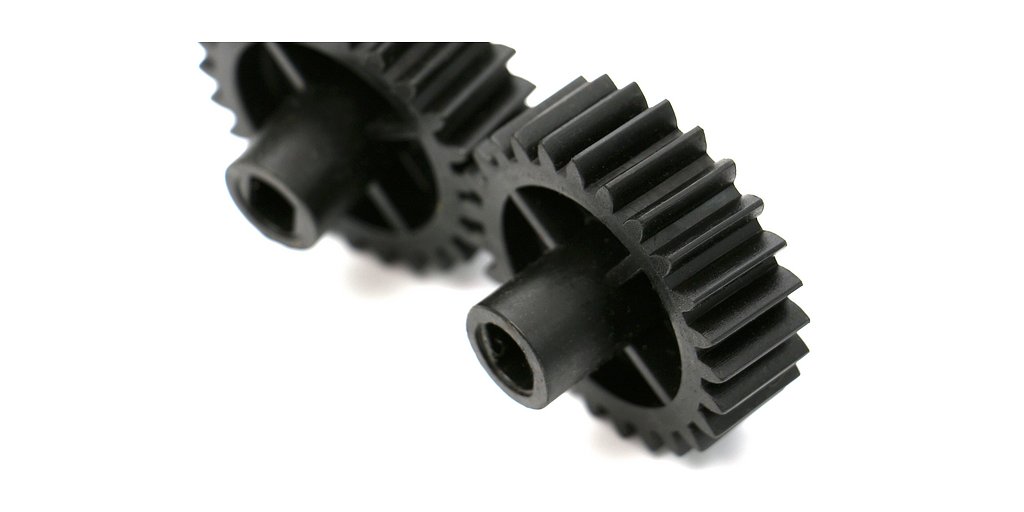
This makes it an ideal candidate for critical, unlubricated moving parts such as gears, bearings, chain guides, and other sliding components that must operate reliably in dry conditions. To meet the diverse needs of global manufacturers, Asahi Kasei is offering the material in both unreinforced and reinforced grades. This allows engineers to select the optimal balance of strength, stiffness, and durability required for their specific application, from a lightweight robotic arm component to a robust gear in an automotive transmission system.
Furthermore, the company is leveraging its proprietary processing control technology to offer customized formulations. This allows for the fine-tuning of filler content, heat resistance, and stiffness, providing designers with the flexibility needed to seamlessly transition away from PFAS without a costly or time-consuming redesign of their products.
Beyond Compliance: Performance Meets Sustainability
The push away from PFAS is rooted in their profound environmental and health impacts. As 'forever chemicals,' they do not break down naturally, leading to accumulation in soil, water, wildlife, and the human body. This persistence has resulted in widespread contamination and has been scientifically linked to serious health issues, including various cancers, thyroid disease, and developmental problems.
Asahi Kasei’s innovation is therefore positioned not just as a tool for regulatory compliance, but as a step toward a safer and more sustainable manufacturing ecosystem. The company's leadership emphasizes that this development is about more than just removing a problematic substance.
“As industries around the world move away from PFAS, we see a strong need for materials that go beyond compliance and actually raise the bar for durability and efficiency,” said Yoshitaka Hori, Senior General Manager of Asahi Kasei's LEONA PA66 business, in the company's announcement. “Our new PFAS-free PA delivers exactly that, and we are excited to support our customers in building safer, more sustainable products.”
This product launch aligns directly with Asahi Kasei's broader corporate vision, which includes a commitment to achieving carbon neutrality by 2050 and a guiding philosophy of “Care for People, Care for Earth.” The company has been actively investing in a portfolio of sustainable solutions, including biomass-derived plastics and advanced recycling technologies, positioning itself as a key enabler of the circular economy.
Market Rollout and Industry Impact
With the material now developed, Asahi Kasei is beginning its market introduction. The company plans a major European launch of the new PFAS-free, low-friction LEONA grade at K 2025, the world's leading trade fair for plastics and rubber, set to take place in Düsseldorf. This venue will provide a platform to demonstrate the material's capabilities to a global audience of engineers, designers, and business leaders.
While public announcements of adoption by major automotive or industrial manufacturers are not yet available—a typical situation for a newly launched material requiring extensive validation—the existence of a viable, high-performance alternative is a significant development. It provides a tangible pathway for industries to de-risk their operations and future-proof their products against the inevitable tightening of environmental laws.
For companies facing the daunting task of navigating the post-PFAS landscape, the availability of advanced materials like this new polyamide could prove to be the key to maintaining a competitive edge while embracing a more responsible and sustainable model of manufacturing.
Topics & Related
Circular Economy
Related Company Pulse