
- 2024 Pertussis Surge: Early detection by ARUP Laboratories months before widespread public health alerts.
- Weekly Updates: Dashboard refreshed weekly with data from hundreds of thousands of tests.
- Pathogen Coverage: Tracks a wide array of pathogens, including seasonal flu and emerging threats.
Experts view ARUP's dashboard as a groundbreaking tool for early infectious disease detection, offering near-real-time data to enhance clinical decision-making and public health preparedness.
ARUP Launches Dashboard to Predict Infectious Disease Outbreaks
SALT LAKE CITY, UT – May 13, 2026 – In 2024, as cases of pertussis, or whooping cough, began to quietly climb across the country, a national reference laboratory in Utah noticed a disturbing trend in its data. Months before widespread public health alerts were issued, the rising tide of positive tests was already visible inside ARUP Laboratories' systems. The lag between this early signal and broader clinical recognition resulted in delayed diagnoses and testing for a highly contagious disease.
To prevent such a scenario from repeating, ARUP Laboratories today launched the National Infectious Disease Test Positivity Trends Dashboard, a first-of-its-kind public health tool from a U.S. reference laboratory. The dashboard aims to transform the vast amount of diagnostic data flowing through its facilities into an early warning system for clinicians, laboratories, and public health officials, potentially revolutionizing how the nation prepares for and responds to infectious disease threats.
An Early Warning System for the Nation
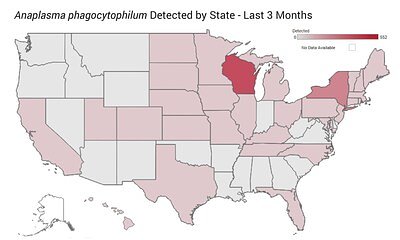
The new dashboard provides a public window into national positivity trends for multiple pathogens, refreshed weekly. Using maps and charts, it visualizes the ebb and flow of diseases based on hundreds of thousands of tests processed by ARUP, which serves as a reference lab for hospitals and health systems across the United States.
The core concept is to leverage this high volume of data to spot statistical signals that might otherwise be missed. "As a national reference laboratory, ARUP sees enough testing volume to identify meaningful trends for certain pathogens," said Ben Bradley, MD, PhD, ARUP medical director of the Institute for Research and Innovation in Infectious Disease Genomic Technologies, High Consequence Pathogen Response, Virology, and Molecular Infectious Diseases. "This dashboard was designed to give our clients, laboratories, and clinicians information they can use to make better decisions for their patients."
This approach represents a significant shift from traditional public health surveillance, which often relies on data reported from state and local health departments. While essential, that reporting can have inherent delays. ARUP's dashboard offers a complementary, near-real-time view directly from the laboratory source, potentially closing the critical information gap that was evident during the 2024 pertussis surge. By making these trends public, the laboratory hopes to empower local healthcare providers to recognize unusual activity sooner, adjust their testing protocols, and contribute to a more proactive public health response. The system is designed to track a wide array of pathogens, with dedicated pages for specific viruses and bacteria, allowing for granular analysis of everything from seasonal flu to emerging threats.
Empowering Clinicians on the Front Lines
Beyond its role in national surveillance, the dashboard is designed to have a direct impact on clinical practice. For a hospital's medical director or an infectious disease specialist, knowing which pathogens are trending upwards nationally can be a powerful diagnostic aid. This "syndromic surveillance" data can help clinicians form a more accurate differential diagnosis when a patient presents with general symptoms like fever or respiratory distress.
For example, if the dashboard shows a spike in a specific strain of adenovirus in the country, a physician in an unaffected region might be more inclined to test for it, leading to a faster, more accurate diagnosis. This is particularly valuable for pathogens that are not routinely included in standard testing panels.
This data-driven intelligence also has significant operational benefits for healthcare systems. Clinical laboratories can use the trend data to anticipate demand for certain tests, ensuring they have adequate supplies and staffing. Hospital administrators can use the information to help predict potential surges in patient admissions related to specific infections, allowing for better management of bed capacity, staffing, and pharmaceutical supplies. In essence, the dashboard moves infectious disease tracking from a reactive posture to a predictive one, allowing the entire healthcare ecosystem to prepare more effectively for what is coming.
The Blueprint for Secure Data Sharing
Creating a public dashboard from sensitive health information presents a formidable challenge: balancing the immense public health value of the data against the non-negotiable need for patient privacy. ARUP's approach to this problem could serve as a model for future health data initiatives.
The laboratory has implemented rigorous privacy and security safeguards, with all data presented on the dashboard being fully de-identified according to the stringent standards set by the Health Insurance Portability and Accountability Act (HIPAA). This process involves stripping the data of 18 specific personal identifiers—including names, specific locations smaller than a state, and precise dates—to ensure there is no reasonable basis to believe the information can be used to identify an individual.
"Our team designed this dashboard with patient and client protection at the center," said Jenna Rychert, PhD, ARUP director of Laboratory and Clinical IT and medical director of Microbial Immunology and Customer Services. "We are deeply committed to sharing knowledge and equally committed to safeguarding the trust our clients place in ARUP. This dashboard reflects both of those priorities."
To further protect privacy, the dashboard’s interactivity is intentionally limited. Users can view national trends and pathogen-specific data but cannot drill down to levels that could potentially risk re-identification. This careful design demonstrates that it is possible to aggregate and share invaluable health insights on a national scale while upholding the highest standards of data stewardship and ethical responsibility.
A New Tool in the Public Health Arsenal
While the Centers for Disease Control and Prevention (CDC) and the Association of Public Health Laboratories (APHL) operate sophisticated surveillance networks that are the backbone of the nation's disease response, ARUP's dashboard offers a unique and complementary data stream. As the first national, multipathogen dashboard provided directly by a commercial reference laboratory, it provides a consistent, centralized view of testing data that spans different states and healthcare systems.
Public health agencies typically aggregate data from a multitude of sources, which is a complex and time-consuming process. By providing a clean, pre-aggregated signal based on its own testing, ARUP's tool can act as a valuable cross-check and an early indicator that can help focus the efforts of public health investigators.
The nonprofit laboratory, which is an enterprise of the University of Utah Spencer Fox Eccles School of Medicine, views the dashboard as an extension of its academic and public service mission. By investing in this tool and making it publicly available, ARUP is leveraging its unique position as a high-volume national laboratory to contribute directly to the public good. As the landscape of infectious diseases continues to evolve, this kind of innovative, data-driven tool will be an essential component in building a more resilient and responsive national health security infrastructure.