
- Contract Value: Initial $13.2 million, with potential to grow to $42 million over three years
- Flight Endurance: Over five hours of flight time
- Deployment Time: Mission-ready in under ten minutes with hot-swappable batteries and payloads
Experts agree that the P550 drone represents a significant advancement in battlefield intelligence, offering enhanced autonomy, modularity, and rapid deployment capabilities that will empower tactical leaders with greater situational awareness and decision-making speed.
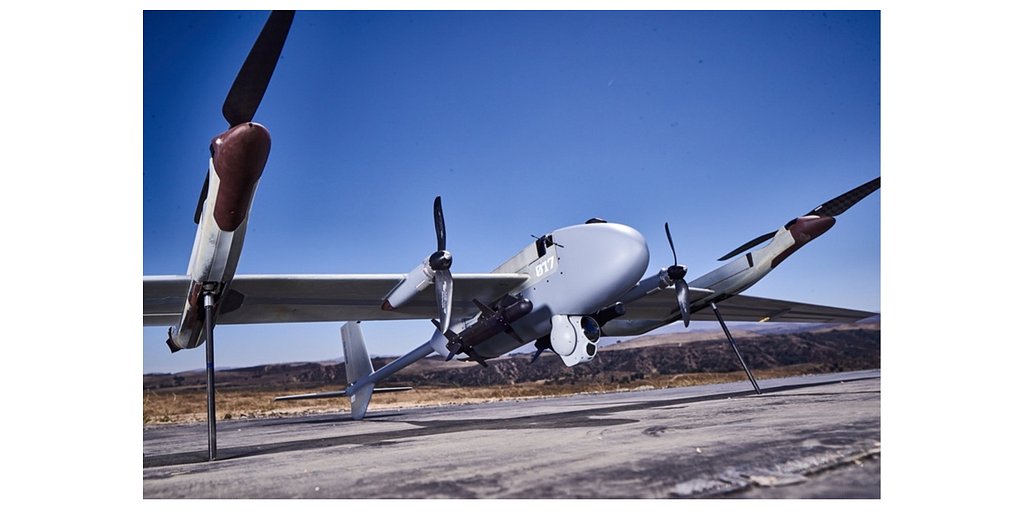
Army Taps AeroVironment for AI-Powered P550 Reconnaissance Drone
ARLINGTON, VA – December 08, 2025 – The U.S. Army has awarded defense technology leader AeroVironment a significant contract to supply its newly developed P550™ uncrewed aircraft system (UAS) for the Army's Long Range Reconnaissance (LRR) program. The three-year agreement, secured in partnership with Parry Labs, holds an initial value of $13.2 million with the potential to grow to $42 million, signaling a strong commitment to modernizing battlefield intelligence capabilities.
The P550 is a high-performance, all-battery electric UAS designed to deliver a potent combination of long-range intelligence, surveillance, and reconnaissance (ISR) alongside lethal effects. This award builds on previous deliveries of the P550 and will see AeroVironment provide system updates, support, and documentation to integrate the advanced drone into the Army's Family of Systems for extensive testing and evaluation. The contract marks a critical step in equipping soldiers with autonomous tools that enhance situational awareness and combat effectiveness in increasingly complex environments.
A New Era for Battalion-Level Intelligence
The U.S. Army's Long Range Reconnaissance program is a cornerstone of its broader modernization strategy, designed to address a critical capability gap at the battalion level. For years, ground commanders have required organic aerial assets capable of providing real-time Reconnaissance, Surveillance, and Target Acquisition (RSTA) over extended distances without relying on higher-echelon support. The LRR program aims to fill this void by fielding advanced Group 2 drones—aircraft weighing under 27 kg—directly to maneuver battalions.
This initiative aligns with the Department of Defense's high-level strategy to “Unleash US Military Drone Dominance,” which emphasizes rapid innovation and fielding to ensure soldiers have the best technology available. By providing units with their own long-range reconnaissance drones, the Army is decentralizing intelligence gathering and empowering tactical leaders with greater autonomy and faster decision-making cycles. The P550 is engineered to be a perfect fit for this new operational paradigm, offering a single, adaptable platform that can see, decide, and act across the battlefield.
“AV’s LRR offering was engineered to meet the Army’s unique needs, resulting in an architecture tailored to match battalion-level battlefield requirements,” said Jason Hendrix, AeroVironment’s vice president of Small Uncrewed Aerial Systems. The P550 is designed to bridge the current capability gap, giving the Army a multi-mission tool that enhances force protection and targeting in contested environments.
Inside the P550: AI, Modularity, and Open Architecture
The P550 UAS is more than an evolution of previous drone models; it represents a technological leap forward, integrating cutting-edge AI, a versatile airframe, and a groundbreaking open systems approach. Its design philosophy prioritizes adaptability, survivability, and ease of use, ensuring it remains relevant across a wide spectrum of mission scenarios.
A key technical differentiator is its deep integration of a Modular Open Systems Approach (MOSA), a core principle of modern defense procurement. Developed in partnership with Parry Labs, a leader in MOSA integration, the P550’s architecture allows for the swift exchange of payloads, datalinks, and software. This eliminates vendor lock-in and enables the Army to rapidly upgrade the system with best-in-class components as new technologies emerge. The entire system can be reconfigured in under five minutes without tools, a critical advantage in the field.
Powering its autonomous capabilities is AeroVironment’s sophisticated suite of AI-driven software, including SPOTR-Edge™ for Automatic Target Recognition (ATR) and the AVACORE™ onboard edge computing suite. This allows the P550 to autonomously detect, classify, and track objects like personnel, vehicles, and aircraft, day or night. For operations in GPS-denied environments, it features an integrated visual navigation system with laser terrain matching, significantly boosting its survivability against electronic warfare threats.
Further enhancing its operational flexibility is its all-battery electric Vertical Take-Off and Landing (VTOL) design. The P550 can be deployed from confined spaces without a runway, providing over five hours of flight endurance for long-duration missions while minimizing the acoustic and thermal signatures associated with traditional fuel-powered aircraft.
From Sensor to Shooter: A Versatile Tool for the Warfighter
While the P550's technical specifications are impressive, its true value lies in its direct impact on the safety and effectiveness of the warfighter. Every feature is engineered to reduce soldier exposure to enemy fire, streamline logistics, and provide commanders with a decisive battlefield advantage.
The VTOL capability allows launch and recovery from small clearings or urban environments, keeping soldiers away from exposed, predictable locations. The system’s modularity and toolless assembly, which allows it to be mission-ready in under ten minutes, means a small team can deploy a powerful ISR and targeting asset with minimal logistical burden. Hot-swappable batteries and payloads enable a rapid turnaround time of less than five minutes between missions.
With a payload capacity of up to 15 pounds, the P550 is a true multi-role platform. It can be equipped with a range of advanced multi-sensor gimbals for high-fidelity intelligence gathering or laser designators for precision targeting. Crucially, it can also be configured to deliver lethal effects, carrying lightweight guided munitions like the Shryke precision bomb. This integration of sensor-to-shooter capabilities within a single, battalion-owned asset dramatically shortens the kill chain, allowing forces to engage targets faster and more effectively than ever before.
AeroVironment's Strategic Play in a Surging Drone Market
This contract is a significant strategic victory for AeroVironment, cementing its role as a premier supplier of uncrewed systems to the U.S. military and its allies. The P550 program, from its unveiling in October 2023 to its initial deliveries in August 2025 and this subsequent contract award, demonstrates the company's ability to rapidly innovate and field systems that meet the Army's urgent operational needs.
The award also highlights the growing importance of the military UAS market. Global demand for such systems is surging, with market projections estimating a value of over $21 billion by 2030. This growth is fueled by the increasing need for persistent ISR and the operational advantages demonstrated by UAS in recent conflicts. The P550, with its advanced autonomy and MOSA-compliant design, positions AeroVironment to capture a significant share of this expanding market.
By successfully transitioning from legacy systems like the hand-launched Raven and Puma to the more capable and versatile VTOL-based P550, AeroVironment is aligning its product roadmap with the future of warfare. The confidence shown by the U.S. Army through this contract validates the company's technological direction and its collaborative approach with partners like Parry Labs, ensuring that the P550 is not just a platform for today, but a flexible and expandable system for the conflicts of tomorrow.