
- 12% national increase in homelessness in the past year, the highest since data collection began in 2007.
- 55% reduction in veteran homelessness from 2009 to 2025, compared to a 21% rise in general homelessness.
- $90 million investment in HELP USA's new 200-bed HELP Women's Center in Brooklyn.
Experts would likely conclude that integrated, multi-sector approaches combining finance, policy, healthcare, and on-the-ground services are essential to effectively address the housing crisis and homelessness.
Architects of Hope: Forging New Models to Combat the Housing Crisis
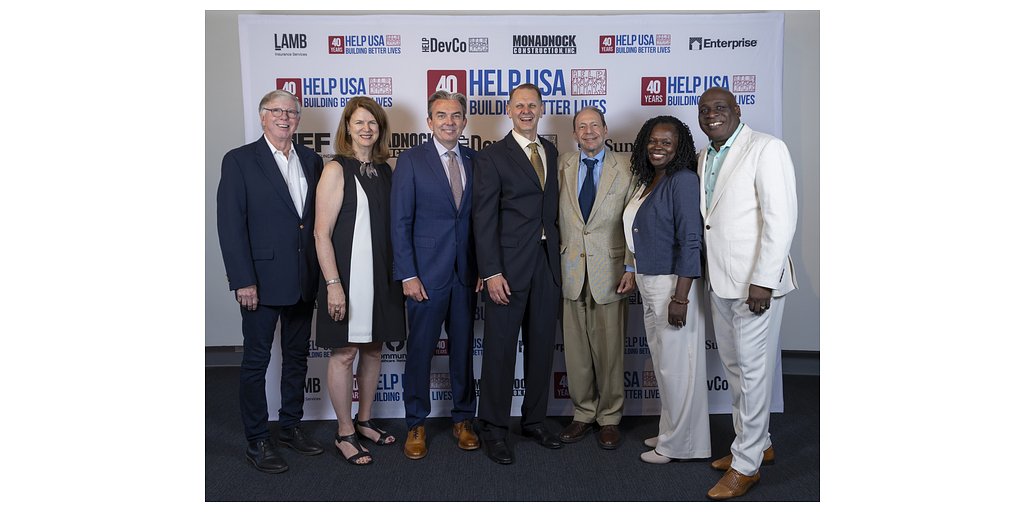
NEW YORK, NY – June 04, 2026 – On a warm Wednesday evening in Lower Manhattan, nearly 300 leaders from business, government, and philanthropy gathered at Tribeca 360 for HELP Heroes Night 2026. While the event celebrated five remarkable individuals, the evening was more than a ceremony of accolades. It was a powerful demonstration of a new, collaborative blueprint for tackling one of the nation's most intractable problems: a housing and homelessness crisis that has reached historic levels.
As the U.S. Department of Housing and Urban Development (HUD) reports a staggering 12% national increase in homelessness in the past year—the highest since data collection began in 2007—and New York City shelters strain under the weight of over 88,000 people per night, the work of HELP USA and its partners has never been more critical. The gala served as a microcosm of the multi-faceted strategy required, showcasing how the convergence of corporate finance, healthcare integration, housing policy, and on-the-ground services is forging a more resilient and humane response.
The New Blueprint: Fusing Finance, Policy, and Healthcare
The five honorees of the evening represent the essential pillars of this modern approach. Their work illustrates a crucial shift from siloed efforts to an integrated ecosystem of support. David Healy, President of Sun Life U.S., was recognized not for a simple charitable donation, but for a pioneering investment model. Sun Life co-led a $90 million investment in HELP USA's new 200-bed HELP Women's Center in Brooklyn, a move that re-engineers corporate capital to generate both financial returns and profound public good. "Working with HELP USA has shown us that addressing homelessness needs support from both individuals and the business community,” Healy stated, highlighting a growing trend where corporate social responsibility evolves into strategic social investment.
This fusion of finance and social impact is also the life's work of Debbie Burkart, Managing Director of Supportive Housing at the National Equity Fund. An inductee into the Affordable Housing Hall of Fame, Burkart has been instrumental in financing tens of thousands of supportive homes. Her targeted efforts on veteran housing, through initiatives like "Bring Them HOMES," are a key reason for the stunning success HELP USA has seen in this area. As Burkart noted, "HELP USA’s leadership significantly contributed to an awe-inspiring 55% reduction from 2009 to 2025 in veteran homelessness compared to a 21% rise in general homelessness." This statistic is a testament to the power of supportive housing—combining a stable home with integrated services—as a scalable, effective model.
Moving upstream to prevent homelessness before it begins is the focus of Baaba Halm, Senior Vice President of Programs at Enterprise Community Partners. Her work on the "Home 4 Good" eviction prevention program demonstrates a critical innovation in the field. "Today, I’m proud to report that there are nearly 1,000 households participating in Home 4 Good, and more than $4 million in rental arrears have been recouped through the program," Halm shared. This program, which uses an outcomes-based financing approach, not only saves families from the trauma of eviction but is also economically sound, preventing the far greater public cost of shelter stays.
Rounding out this collaborative framework are the foundational pillars of legal rights and healthcare. Honoree Robert M. Hayes, President and CEO of Community Healthcare Network, is the legal giant who won the landmark Callahan v. Carey lawsuit in 1979, establishing New York's fundamental "Right to Shelter." His current work focuses on the inseparable link between health and housing, advocating for integrated healthcare services as a non-negotiable component of stability. Praising HELP USA's four-decade effort, he remarked, "The leadership over these decades has been amazing, and it's needed now more than ever."
A 40-Year Legacy Confronts a Historic Crisis
Founded in 1986, HELP USA has been on the front lines for four decades, evolving from an emergency response organization into a comprehensive engine for social change. Today, it operates over 70 sites across the country, serving more than 35,000 individuals and families annually. This enduring legacy provides a stark contrast to the worsening national trends. While the number of people experiencing homelessness nationwide surges, HELP USA's proven models offer a glimmer of what is possible with sustained investment and strategic innovation.
The recently opened HELP Women's Center is a prime example. More than just a shelter, it is a purpose-built, trauma-informed facility designed to be a gateway to stability for single women, many of whom are fleeing domestic violence. It provides a comprehensive suite of services, from onsite medical and mental health care to case management and skill-building classes, all within a framework that recognizes and addresses the deep impact of trauma.
This on-the-ground impact is what has driven Khreme Tony Laud, Executive Director of WestHELP, for 25 years. Starting as a family care monitor and rising through the ranks, Laud has overseen the transition of thousands of families from crisis to stability. His perspective cuts to the core of the organization's mission. "When they leave our shelter with keys in hand for permanent housing," he explained, "they leave with their dignity and a sense of purpose." It is this restoration of dignity, not just the provision of a roof, that defines the organization's success.
The Mechanics of Impact: From Shelter to Stability
Beyond the headlines of galas and ribbon-cuttings lies the complex machinery that makes this work effective. The success in reducing veteran homelessness, for instance, is not an accident. It is the direct result of the supportive housing model that Debbie Burkart and others have championed. This model recognizes that for many, particularly those dealing with chronic health conditions, mental illness, or substance use disorders, housing alone is not enough. By integrating case management, healthcare, and employment services directly into the housing environment, the model creates a platform for long-term recovery and stability.
Similarly, the economic logic behind eviction prevention programs like 'Home 4 Good' is compelling. The average length of stay for a family in a New York City shelter exceeds 500 days, at an enormous cost to taxpayers and an immeasurable toll on the family itself. By intervening early and providing financial assistance to cover rental arrears—as the program has done to the tune of over $4 million—it prevents this downward spiral. It is a cost-effective, compassionate, and economically prudent strategy that keeps families in their homes and communities intact.
These programs are fueled by a complex blend of public grants, private philanthropy, and the innovative corporate investments celebrated at the Heroes Night. As Dan Lehman, President and CEO of HELP USA, summarized, "Tonight’s honorees remind us that real progress is possible. Every day, families move from shelter to stable housing, households avoid homelessness through prevention services, and communities come together to expand access to the housing and support people need to thrive."
The Path Forward: A Call for Systemic Integration
The success stories highlighted by HELP USA offer a clear, if challenging, path forward. The key is scaling these proven, integrated models. While the work of one organization, no matter how effective, cannot single-handedly solve a systemic crisis, it can provide the blueprint for broader policy and investment. Experts in the field, including the night's honorees, advocate for systemic changes, such as statewide housing voucher programs and a national, agency-led initiative to seamlessly integrate health services with housing.
The cross-sector collaboration on display at HELP Heroes Night is not merely a feel-good narrative; it is the essential strategy for the future. The crisis of housing and homelessness is too vast and complex for any single sector to solve alone. It requires the financial acumen of the business world, the policy innovation of community partners, the legal and healthcare frameworks of dedicated advocates, and the unwavering commitment of frontline service providers. The evening was a celebration of five heroes, but more importantly, it was a powerful argument for a more integrated, strategic, and hopeful approach to ensuring that everyone has a place to call home.