
- Raleigh ranks 3rd in the U.S. for construction activity based on building permits and land acquisition (CoreLogic report).
- Raleigh's Community Climate Action Plan aims to reduce greenhouse gas emissions by 80% by 2050.
- WPA was recognized by Fast Company as one of the Most Innovative Companies in Social Good in 2025.
Experts would likely conclude that WPA's expansion into Raleigh represents a strategic alignment of architectural innovation with urgent regional needs for climate resilience and sustainable urban growth.
Architects Bring Resilient Design to Raleigh Amid Growth and Climate Risk
RALEIGH, NC – February 11, 2026 – As North Carolina grapples with the dual pressures of explosive population growth and increasing climate-related threats, the award-winning architecture firm Work Program Architects (WPA) has announced the opening of a new office in downtown Raleigh. The expansion from its Norfolk, Virginia headquarters marks a strategic move to bring its nationally recognized expertise in resilient and community-driven design to the heart of the booming Triangle region.
The new office, located at 300 Fayetteville St., is poised to address some of the most pressing challenges facing the state. It will be led by Managing Principal Sam Bowling, an experienced leader within the firm, and Rae LeClair, a rising project manager. Their mission extends beyond the urban core of the Triangle, aiming to support historic renovation and thoughtful placemaking in smaller surrounding communities such as Oxford, Morrisville, and Knightdale.
A Strategic Move into a Booming Market
The decision to expand into Raleigh is a calculated response to the region's dynamic growth. The city is consistently ranked among the fastest-growing in the United States, with a recent CoreLogic report placing it third for construction activity based on indicators like building permits and land acquisition. This rapid development creates immense demand for architectural services, but also raises critical questions about sustainability and community character.
"Raleigh was a natural next step for our firm," says Bowling. "The Triangle region has a deep appreciation for thoughtful design, and we are equally excited to work in halo communities of the region. Good design can play a critical role in strengthening infrastructure, preserving history and supporting long-term growth."
This appreciation for design is matched by a pressing need for it. Raleigh's Community Climate Action Plan (CCAP), adopted in 2021, sets an ambitious goal of reducing greenhouse gas emissions by 80% by 2050 and explicitly focuses on improving the resilience of its buildings and energy infrastructure. WPA's arrival aligns directly with these local priorities, offering a proven methodology for sustainable development in a market that is actively seeking such solutions.
Designing for a Changing Climate
Perhaps the most significant expertise WPA brings to North Carolina is its focus on environmental resilience. The state is no stranger to climate-related disasters, with the memory of Hurricane Helene's widespread flooding serving as a recent, stark reminder of its vulnerability. This reality has spurred state-level action, including the creation of the North Carolina Office of Recovery and Resiliency (NCORR) and the development of a comprehensive Climate Risk Assessment and Resilience Plan.
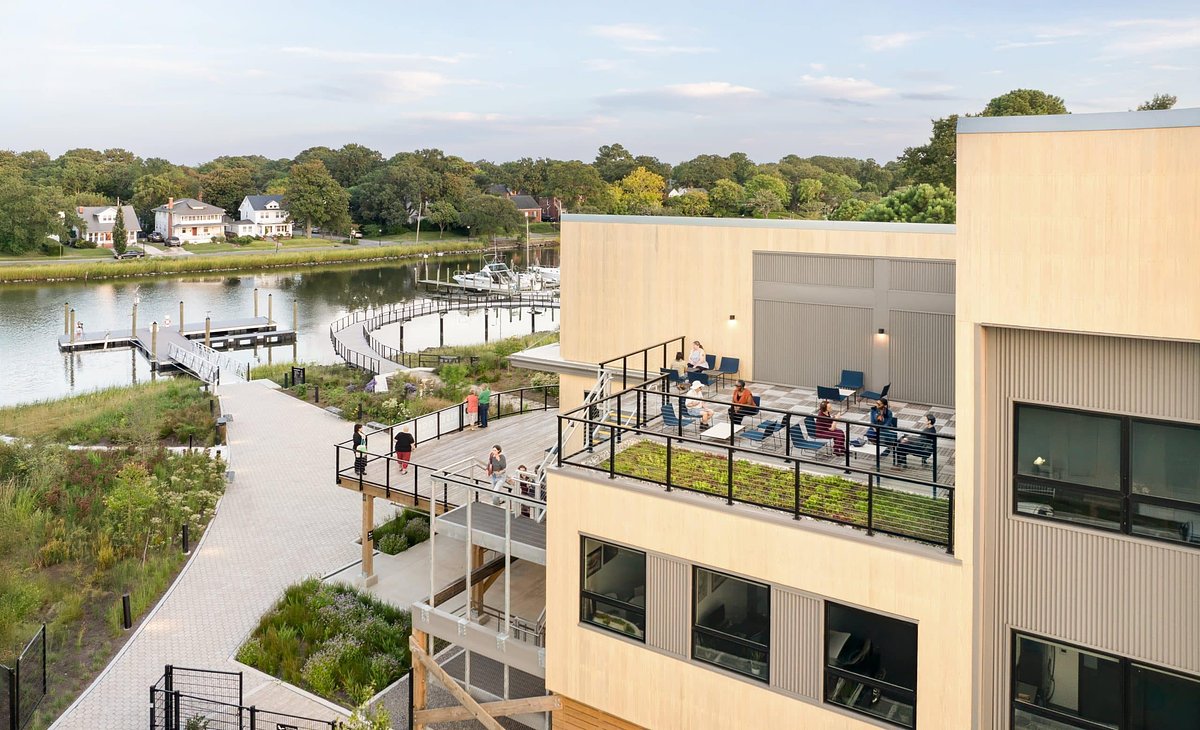
WPA enters this landscape with a portfolio of tangible solutions. Bowling served as the lead architect on one of the firm's most celebrated projects: the Elizabeth River Project's Ryan Resilience Lab in Virginia. The facility, which garnered national attention with a feature on the TODAY show, was intentionally built in a vulnerable floodplain to serve as a living laboratory for climate adaptation strategies. It demonstrates how buildings can be designed to coexist with rising sea levels and frequent flooding, a lesson directly applicable to North Carolina's coastal and riverine communities.
"Sam and Rae are the perfect team to lead this new office and expand the geographic impact of our mission," states WPA co-founder and CEO Mel Price. "Their backgrounds in designing for the environmental challenges of the present and future, along with their ability to balance input from multiple stakeholders, position WPA to lead on many of the key issues shaping the built environment in the Triangle region."
Balancing Growth with Heritage
Beyond environmental resilience, WPA has built its reputation on a foundation of deep community engagement. The firm's philosophy rejects a one-size-fits-all approach, instead emphasizing a process of listening and collaboration to create spaces that reflect local identity and needs. This is particularly relevant as rapid urbanization threatens to erase the unique character of both cities and the smaller towns in their orbit.
"At our core, we believe in getting into communities, listening and building responsive design solutions," explains LeClair. "Tactical urbanism, civic partnerships and community engagement are not add-ons for us — they're foundational to how we work."
LeClair's experience includes major community and education projects, such as the St. Paul's Transformation initiative and serving as lead architect on the Blue Ridge Community College Truck Driving Range, a project aimed at boosting regional economic mobility. This focus on social and economic resilience complements the firm's environmental work, offering a holistic approach to strengthening communities from the ground up. The firm's interest in historic renovation and adaptive reuse—a growing trend in North Carolina—promises a path for growth that honors the past while building for the future.
A Culture of Innovation Fuels Expansion
Underpinning WPA's expansion is a progressive and lauded internal culture that has proven to be a powerful engine for growth. In 2025 alone, the firm was recognized by Fast Company as one of the Most Innovative Companies in Social Good, included in the Inc. 5000 list of fastest-growing private companies, and named one of Inc.'s Best Workplaces. This triple recognition highlights a business model that successfully links social mission with commercial success.
The firm's commitment to full pay transparency and a supportive work environment helps it attract and retain top-tier talent, a crucial advantage in the competitive architectural field. This culture of innovation and respect is what enables WPA to confidently expand into new markets with leaders like Bowling and LeClair at the helm, ready to implement the firm's ambitious vision.
With its new Raleigh office, Work Program Architects is not merely expanding its footprint. The firm is planting a flag for a new kind of development in North Carolina—one that is resilient, inclusive, and deeply rooted in the communities it serves. As the state continues to navigate its path forward, this approach to building a better, more sustainable future will be more critical than ever.