
- 100x Faster: Beneq's C2R™ system achieves deposition rates up to 100 times faster than conventional ALD, reaching 2000 nanometers per hour. - $360B Market: The global XR market is projected to surpass $360 billion by 2026. - 2.61 Refractive Index: The system can deposit materials like Titanium Dioxide (TiO₂) with a tunable refractive index up to approximately 2.61.
Experts agree that this manufacturing breakthrough in AR waveguide production is a foundational step toward enabling sleek, high-performance, and cost-effective augmented reality glasses, accelerating mainstream adoption across consumer and enterprise markets.
AR Glasses Get Closer as New Tech Solves Manufacturing Hurdle
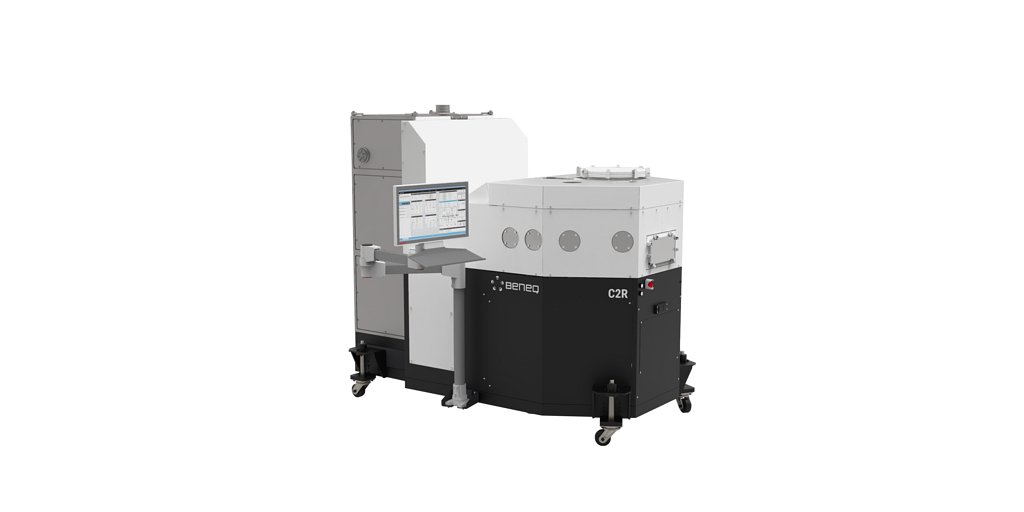
TAICHUNG, Taiwan – February 20, 2026 – A strategic collaboration between a Taiwanese optical manufacturing giant and a Finnish technology pioneer is set to dismantle a critical barrier hindering the mass production of next-generation augmented reality (AR) glasses. Kinko Optical Co., Ltd., a leading Asian original design manufacturer (ODM), has announced its adoption of Beneq's C2R™ advanced coating system, a move designed to enable high-volume manufacturing of the complex optical components at the heart of the immersive digital world.
The partnership directly addresses one of the most significant bottlenecks in the burgeoning eXtended Reality (XR) market: the scalable and cost-effective production of high-performance AR waveguides. These transparent optical elements are essential for seamlessly overlaying digital information onto a user's real-world view, but their intricate nanostructures have posed immense challenges for traditional manufacturing, keeping truly mainstream AR glasses just out of reach. This new alliance signals a major step toward making lightweight, high-fidelity AR a widespread consumer reality.
The Bottleneck in Augmented Reality's Future
At the core of any pair of AR glasses lies the waveguide, a marvel of optical engineering. Its function is to receive an image from a micro-display and guide the light across its surface before projecting it into the user's eye. To achieve this with high efficiency, brightness, and a wide field of view (FOV), manufacturers are increasingly turning to advanced designs like surface relief gratings (SRG+) created using nano-imprint lithography (NIL). These methods create complex, three-dimensional nanostructures on the waveguide's surface.
While these gratings are key to performance, they also create the central manufacturing challenge. The microscopic peaks and valleys must be perfectly coated with a high-refractive-index material to guide light effectively. Traditional coating methods, such as physical vapor deposition, often struggle to apply a uniform, conformal layer over these intricate topographies, leading to optical loss, reduced brightness, and inconsistent performance. This has created a significant "design-to-manufacturing gap," where brilliant optical designs are difficult to produce at scale with acceptable yields and costs.
This technical hurdle has been a primary factor constraining the form factor of AR devices. To compensate for inefficient optics, designers have often needed to use brighter, more powerful projectors, which consume more battery and generate more heat, leading to the bulky, heavy, and often uncomfortable headsets that have characterized the market's early stages. Overcoming this optical coating challenge is therefore not just an incremental improvement; it is a foundational step toward creating the sleek, all-day wearable glasses that consumers and enterprises are waiting for.
A Breakthrough in Atomic-Scale Precision
Enter Atomic Layer Deposition (ALD), a technology that offers a solution at the atomic level. ALD builds material films one single layer of atoms at a time, providing unparalleled precision and control. Beneq, a Finnish company that commercialized the first industrial ALD system in 1984, has now advanced this concept with its C2R™ plasma-enhanced spatial ALD system.
Unlike conventional ALD, which is often too slow for mass production, Beneq's spatial ALD design separates the chemical precursors in space rather than time. This allows for a continuous, high-speed process with deposition rates up to 100 times faster than its predecessors, reaching speeds of 2000 nanometers per hour. This leap in throughput makes it a viable solution for high-volume manufacturing without sacrificing the core benefits of ALD.
The C2R™ system is uniquely suited to solve the AR waveguide problem. Its exceptional conformality ensures that the complex 3D gratings are perfectly and uniformly filled with a high-index, low-loss optical coating. The system can deposit materials like Titanium Dioxide (TiO₂) with a tunable refractive index up to approximately 2.61, a critical property for efficient light guidance. Furthermore, it operates at low temperatures—as low as 100°C—making it compatible with the polymer substrates that are essential for producing lightweight and durable glasses. This combination of speed, precision, and material flexibility represents a significant technological breakthrough for the industry.
Forging a Critical Link in the Global XR Supply Chain
The partnership between Kinko Optical and Beneq is a powerful fusion of Asian manufacturing expertise and European deep-tech innovation. With over 45 years in the precision optics industry, Kinko has established itself as a trusted ODM for global technology brands, producing components for everything from DSLR cameras to automotive systems. Its adoption of the C2R™ system is a strategic investment to solidify its position in the high-growth XR market.
“We recognized early the potential of ALD for its coating quality, exceptional conformality, and ability to deliver high-index, low-loss materials essential for advanced optics,” said Dr. Angus Wu, CTO of Kinko Optical Co., Ltd. “With Beneq's C2R™, we now achieve performance without compromise, combining unmatched deposition speed with low-temperature processing for true high-volume production while maintaining precision on complex structures. This enables us to accelerate AR waveguide commercialization and power the next generation of XR glasses.”
This collaboration underscores Taiwan's pivotal role in the global high-tech supply chain. By integrating a cutting-edge European technology into its advanced manufacturing workflow, Kinko is not just enhancing its own capabilities but is also positioning the entire region as a central hub for producing the critical components that will power the metaverse and next-generation computing platforms.
Accelerating the Path to Mainstream Adoption
By enabling the scalable production of superior optical components, this technological advancement is poised to have a ripple effect across the entire XR ecosystem. The global XR market is already on a steep growth trajectory, with some forecasts projecting it to surpass $360 billion by 2026. However, growth has been contingent on solving fundamental hardware challenges to improve user experience and reduce cost.
Manufacturing breakthroughs like this help solve the industry's "chicken-and-egg" problem, where the lack of affordable, high-quality hardware stifles content development and consumer adoption. By improving production yields and optical efficiency, the cost of AR glasses can be driven down while performance is driven up, making them a more attractive proposition for both enterprise and consumer markets.
The benefits extend beyond just consumer electronics. High-performance waveguides are also crucial for automotive heads-up displays (HUDs), professional training simulators, and advanced surgical tools. The ability to mass-produce these components efficiently will accelerate innovation and adoption in these sectors as well. Furthermore, the efficiency gains of spatial ALD, which can reduce energy and material consumption compared to older methods, align with the growing demand for more sustainable and energy-efficient manufacturing practices in the technology industry. This partnership, therefore, does more than just build a better component; it helps build a more viable and sustainable foundation for the entire augmented reality future.