
- $2.7 billion: Global balcony PV market forecast by 2035, up from $762 million in 2026.
- 1,876 euros: Projected average annual savings for households using the Lake 6 ESS.
- 97.6%: Maximum efficiency of APsystems' new LSH-6 hybrid inverter.
Experts would likely conclude that APsystems' strategic pivot toward AI-driven, accessible energy storage solutions positions the company to capture a growing segment of urban and suburban energy consumers, though success will depend on execution in a competitive market.
APsystems Bets on AI and Balconies to Democratize Home Energy Storage
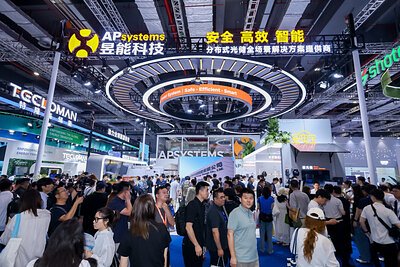
SHANGHAI, China – June 03, 2026 – The residential energy landscape is undergoing a fundamental transformation. For years, the conversation was about generation—placing panels on a roof to offset utility bills. Today, the frontier has moved to intelligent management. At the SNEC 2026 expo here in Shanghai, solar technology firm APsystems provided a clear look at this future with the launch of seven new product lines, signaling a strategic pivot from being a component supplier to an integrated home energy ecosystem provider. The company’s new offerings are not merely iterative hardware updates; they represent a calculated push to make sophisticated energy storage and management accessible to a broader market, powered by artificial intelligence and designed for a new class of urban prosumers.
The Intelligence Layer: From Grid Consumer to Grid Contributor
The most significant thread running through the APsystems launch is the integration of intelligence. The company is embedding its in-house BESS AI model and Virtual Power Plant (VPP) interoperability across its new residential storage products. This marks a critical shift for homeowners, transforming their solar-plus-storage systems from passive backup devices into active, profit-optimizing assets. The AI algorithm moves beyond simple charge-discharge cycles, instead creating a dynamic strategy based on real-time inputs: dynamic electricity pricing, weather forecasts, and the household's unique consumption patterns. The goal is twofold: maximize the use of self-generated solar power and intelligently arbitrage energy costs by charging the battery when grid prices are low and discharging when they are high.
More compelling is the seamless VPP readiness. VPPs, which aggregate distributed energy resources like home batteries to provide grid-stabilizing services, are moving from pilot programs to mainstream infrastructure. By enabling its products to participate in VPP trading, APsystems is giving users a direct path to new revenue streams. While the income potential varies by region and utility program, participation in established VPPs can already yield homeowners hundreds of dollars in annual incentives. “This is the endgame for distributed energy,” noted one smart grid analyst. “Your home is no longer just a load on the grid; it’s a flexible resource that can earn revenue by helping to balance it.” This capability turns a significant capital investment into an asset with a more predictable and multifaceted return.
Unlocking Urban Solar: The Rise of the Balcony Power Plant
Perhaps the most telling product in the new lineup is the Lake 6, a 6kWh plug-and-play Energy Storage System (ESS) explicitly designed for the burgeoning balcony solar market. This is a direct response to a massive, underserved demographic: the millions of people living in apartments and multi-family dwellings who lack the rooftop space for a traditional solar array. The global balcony PV market is forecast to grow from approximately $762 million this year to over $2.7 billion by 2035, driven by rising energy costs and a desire for energy independence in dense urban areas.
The Lake 6 is engineered to capture this market with a focus on simplicity and accessibility. Its “tool-free, plug-and-play” installation promises to lower the barrier to entry, appealing to DIY enthusiasts and renters. The unit stores surplus energy generated from small-scale balcony solar panels during the day for use during evening peak hours. APsystems projects an average annual saving of 1,876 euros for a typical household, a figure derived from its AI model’s optimization. While real-world savings will depend on local utility rates and usage patterns, the product’s design clearly addresses a core market need. By offering a compact, all-in-one storage solution for this segment, the company is effectively democratizing energy storage, extending its benefits beyond suburban homeowners.
Engineering for Execution: A Focus on Safety and Usability
Beneath the smart software and market strategy lies a foundation of solid engineering—a critical factor for a product meant to operate inside a home for over a decade. APsystems has clearly prioritized safety and performance in its new flagship inverters, the hybrid LSH-6 and AC-coupled LSA-6. The LSH-6 boasts a maximum efficiency of 97.6%, placing it among the top tier of residential inverters where every percentage point translates into more usable energy and a faster return on investment.
Crucially, the company has adopted low-voltage architectures across the board. The Lake 6 ESS operates at just 19.2V, while the new inverters are designed for 48V battery systems. This is a significant safety advantage in a residential setting, drastically reducing the risks associated with high-voltage DC systems. This focus is complemented by features like a built-in fireproof structure in the ESS and an IP65 rating for dust and water resistance, making the units suitable for indoor or outdoor installation. The fan-less, natural convection cooling design also ensures quiet operation below 30dB—a small but important detail for equipment located in or near living spaces. For homeowners concerned with grid reliability, the system’s UPS-level 4-millisecond switchover time provides a near-instant transition to backup power during an outage, protecting sensitive electronics.
Navigating a Crowded and Evolving Market
APsystems is no newcomer. The company has carved out a solid position as a leading global manufacturer of microinverters, competing directly with industry giant Enphase by offering cost-effective and reliable module-level power electronics. This launch, however, marks a significant strategic expansion into the highly competitive integrated storage market, a space currently dominated by names like Tesla, Enphase, and a growing list of formidable international players. The global residential energy storage market is projected to grow at a CAGR of over 18%, making it an essential, if crowded, field for any serious solar hardware company.
APsystems' strategy appears to be one of targeted differentiation. Rather than taking on the premium, whole-home backup market head-on, it is leveraging its strengths in cost-effective manufacturing and module-level electronics to address accessibility and intelligence. The focus on balcony systems, VPP integration, and user-friendly installation suggests a push to capture the next wave of adopters who prioritize practical economics and ease of use over sheer power. By blending its established hardware prowess with a sophisticated, forward-looking software layer, the company is making a compelling case that the future of home energy is not only smart and resilient but also accessible to everyone, from the suburban rooftop to the urban balcony.