
- $800: The amount Ronald Wayne sold his 10% stake in Apple for in 1976.
- $1.6 million: The auction price of the original Apple partnership contract in 2011.
- 12 days: The duration of Wayne's involvement as a formal partner in Apple.
Experts would likely conclude that Ronald Wayne's contributions to Apple's early days were foundational but often overlooked, and his decision to leave was a pragmatic choice based on personal risk assessment rather than a lack of vision.
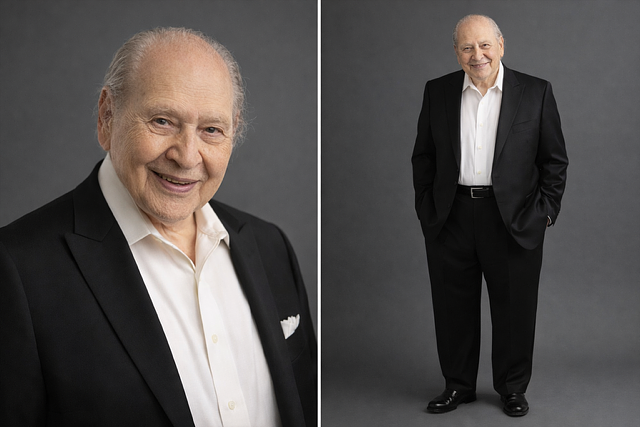
Apple's Forgotten Founder: Ronald Wayne's Quest to Reclaim His Legacy
BOCA RATON, Fla. – January 26, 2026 – In the pantheon of Silicon Valley origin stories, the tale of Apple Inc.’s founding in a garage by two Steves—Jobs and Wozniak—is legendary. Yet, a third name on the original partnership agreement, Ronald G. Wayne, has largely faded into a historical footnote, often remembered only for selling his 10% stake for $800 just 12 days after the company’s inception. Now, a new public relations campaign aims to bring Wayne's story out of the shadows and re-establish his legacy as a pivotal, if brief, architect of the world's most valuable company.
Florida-based TransMedia Group has announced it will spearhead an effort to, in its words, "reawaken Ronald G. Wayne's remarkable career." The initiative seeks to move Wayne beyond the moniker of the 'forgotten founder' and present a more complete picture of his contributions not just to Apple, but to the burgeoning tech industry of the 1970s.
"Most people know only a fragment of my story and misunderstand my true role in Apple's earliest days," Wayne stated in the announcement. "By engaging TransMedia Group, I am focused on restoring an accurate public record and demonstrating how my work helped shape the modern technology industry."
The Adult in the Room
On April 1, 1976, when Apple Computer Company was formed, Ronald Wayne was 41 years old—a seasoned engineer in a trio with the 21-year-old Jobs and 25-year-old Wozniak. Recruited by Jobs, with whom he had worked at Atari, Wayne was seen as the "adult in the room." His role was to provide the administrative and structural oversight the two younger visionaries lacked. In exchange for his experience and acting as a tie-breaker in potential disputes, he was granted a 10% stake in the new venture.
His contributions in those initial twelve days were tangible and foundational. Wayne single-handedly drafted the original three-page partnership agreement that legally established the company. He also designed Apple’s first logo: a complex, pen-and-ink drawing depicting Isaac Newton sitting beneath a tree, an apple dangling precariously above his head, framed by a ribbon inscribed with "Apple Computer Co." While it was quickly replaced by the iconic bitten apple, Wayne's design was the company's first visual identity.
Perhaps most significantly, he authored the complete operations manual for the Apple I, the company's first product. This document was crucial, providing the technical schematics and instructions necessary for hobbyists to assemble and use the primitive computer, which was sold as a bare circuit board. Before his time at Apple, Wayne had already established himself as an innovator, designing one of the first electronic slot machines in 1969 and, while at Atari, developing a purchase parts inventory system that dramatically improved efficiency and impressed a young Steve Jobs.
A Calculated Exit and a Billion-Dollar 'What If'
The story of Wayne's departure is as famous as his involvement is obscure. On April 12, 1976, he formally relinquished his stake. His decision was not a rash one but a calculated move rooted in past financial trauma and a pragmatic assessment of risk. Years earlier, a slot machine business Wayne had started failed, leaving him with its debts. When Steve Jobs secured a $15,000 order for 50 Apple I computers and planned to take out a loan to buy the parts, Wayne grew concerned.
Unlike Jobs and Wozniak, who had few personal assets, Wayne owned a house and other possessions. As a partner in an unincorporated business, he was personally and fully liable for any debts the company incurred. The prospect of another business failure threatening his personal financial security was a risk he was unwilling to take. He sold his 10% share back to his co-founders for $800 and later accepted an additional $1,500 to forfeit any future claims against the newly incorporated Apple.
That decision has since become a legendary cautionary tale in business history. Today, a 10% stake in Apple would be valued in the hundreds of billions of dollars. The original partnership contract he drafted, which he reportedly sold in the early 1990s for $500, was auctioned in 2011 for $1.6 million. Despite the astronomical financial loss, Wayne has consistently stated in interviews over the years that he does not regret his decision, believing it was the right one for him at the time, given his circumstances and aversion to risk.
Reshaping a Silicon Valley Legend
The new campaign by TransMedia Group aims to shift the narrative from the financial 'what if' to the historical 'what was.' The firm plans a nationwide media blitz to highlight Wayne's career and correct what it calls his "sadly opaque and asleep reputation as an unsung heroic visionary."
"For decades, people have relied on Apple Inc.'s technology in their daily lives, but there is much more to the story than just the latest upgrade," said Adrienne Mazzone, President of TransMedia Group. "We look forward to reshining a long-lost spotlight on Ronald G. Wayne's story to cement him as a true trailblazer."
Beyond media interviews, the project includes an ambitious plan to preserve Wayne's legacy in a physical form. TransMedia CEO Tom Madden noted that the firm will work to "establish a location where those interested in retro technology can view Ronald G. Wayne's creations in-person, preserving them for years to come and granting them respect as symbols of technological ingenuity."
A Common Tale in Tech History
Wayne's story, while dramatic, is emblematic of a wider phenomenon of 'forgotten founders' and overlooked pioneers in the history of science and technology. The annals of innovation are filled with figures whose foundational contributions were overshadowed by more charismatic partners or simply lost to the vagaries of history. Figures like Hedy Lamarr, whose frequency-hopping technology laid the groundwork for Wi-Fi, or Alan Turing, whose code-breaking genius was long suppressed, serve as historical parallels.
These stories highlight the complex interplay of genius, timing, risk, and public perception that determines who is immortalized and who is relegated to a footnote. The campaign to restore Ronald G. Wayne's legacy is more than an effort to correct one man's historical record; it is a potent reminder that behind every celebrated innovation lies a complex web of collaboration, and that the official story is rarely the whole story.