
- 1M+ households served: Apolosign reports serving over one million households with its factory-direct model.
- $80 annual subscription: Competitor Skylight charges nearly $80 annually for key features, while Apolosign offers a one-time purchase.
- $35 discount: Limited-time spring promotion offers a $35 discount on orders over $200.
Experts suggest that while Apolosign's gamified chore system can boost short-term engagement, its long-term effectiveness depends on balancing rewards with intrinsic motivation for children.
Apolosign's Hub: The Smart Calendar Without a Subscription Fee
NEW YORK, NY – March 24, 2026 – In an era defined by subscription fatigue, a new contender in the smart home market is making a bold promise: pay once, use forever. Apolosign has officially launched its Digital Calendar, a device aiming to become the central nervous system for the modern, chaotic family. It combines scheduling, chore management, and AI assistance onto a single touchscreen display, but its most talked-about feature is what’s missing: a monthly subscription fee.
For years, families have cobbled together solutions to manage the whirlwind of school events, soccer practices, and doctor's appointments, often relying on a patchwork of apps, paper calendars, and frantic text messages. The Apolosign Digital Calendar seeks to unify this chaos on a high-definition screen designed to be the family’s go-to information hub.
A Challenge to the Subscription Economy
The most significant differentiator for the Apolosign calendar is its business model. While competitors have increasingly leaned on recurring revenue, this device stands apart. The prominent digital calendar brand Skylight, for instance, requires an annual subscription of nearly $80 to unlock key features like meal planning and chore charts on its device, which can otherwise become a static display. In contrast, Apolosign offers its full suite of features after a single hardware purchase.
This strategy is made possible by the company's factory-direct approach. By managing design, research, and manufacturing in-house since its founding in 2008, Apolosign aims to eliminate markups and pass savings to the consumer. This model has apparently proven viable, with the company reporting it serves over one million households. “We want families to buy a product — not a recurring bill,” Apolosign’s product lead, Fyhack, stated, signaling a clear intention to disrupt the market's status quo. For consumers tired of seeing their bank accounts debited for countless services, this one-time-cost philosophy presents a compelling value proposition for long-term ownership.
Gamifying Chores to Foster Responsibility
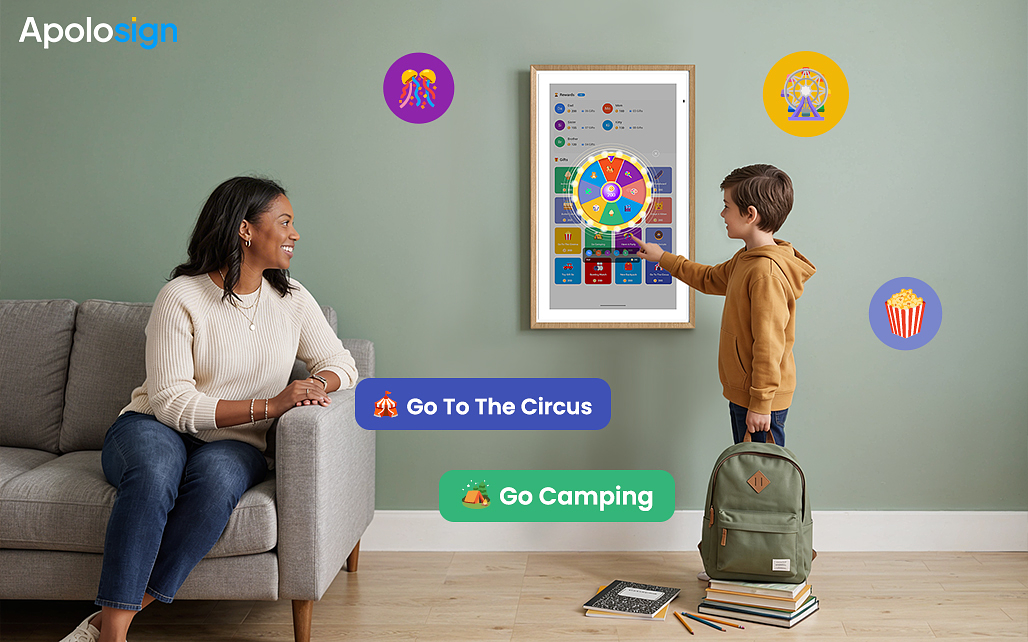
Beyond its business model, the Apolosign calendar ventures into the realm of child development with a built-in reward points system. Targeting children aged 3 to 10, the feature turns household duties into an interactive game. Kids can visually track their progress and earn points for completing tasks like homework, tidying their rooms, or brushing their teeth. Parents can then set custom rewards, such as tying 20 points to a weekend trip to the zoo.
This gamified approach to responsibility is a growing trend, but child development experts caution that its effectiveness hinges on proper implementation. While points and rewards can provide a powerful short-term boost in engagement, there is an ongoing debate about their long-term impact on a child's intrinsic motivation—the desire to do something for its own sake. Experts suggest that for such systems to be successful, they should supplement, not replace, a child's natural curiosity. The key may lie in Apolosign's customization feature, which allows parents to evolve the rewards and keep them meaningful, preventing the system from becoming a predictable and less motivating routine.
Early feedback from parents suggests the feature is a hit with kids. The combination of progress bars and instant feedback appears to effectively engage children, helping them develop a sense of accountability and time management. For many, it successfully shifts the dynamic from parental nagging to a goal that children actively pursue.
The Kitchen Counter Command Center
Positioned as more than just a scheduler, the Apolosign Digital Calendar is designed to be a true smart home nerve center. Its integration with Google Assistant and Gemini AI allows for hands-free control over a wide range of daily tasks. A parent preparing dinner can ask, “Hey Google, how do I make Orleans chicken wraps?” and receive step-by-step instructions on the screen without smudging it with greasy fingers. Voice commands can also be used to get weather updates, play music, or control other connected smart home devices.
This functionality is enhanced by a dual-mode operating system, a feature the company first introduced in 2025. Users can switch between the dedicated, streamlined Calendar Mode and a more versatile Android Dashboard Mode. This allows families to not only view their schedules but also pull up a YouTube video, browse for recipes, or use other compatible Android apps, adding a layer of flexibility not always found in dedicated smart displays. Available in 15.6-inch, 21.5-inch, and 27-inch models—with the largest offering an optional 4K display—the device can be adapted to various spaces, from a busy kitchen wall to a central living room area.
Navigating the Trade-Offs of a Connected Home
As with any device that listens and learns, the integration of powerful AI brings with it the modern trade-off between convenience and data privacy. The ability to sync calendars, manage tasks, and get personalized suggestions is powered by data. Google's privacy policies for its AI assistants emphasize user control and data security, but the information collected is used to improve and personalize services. Apolosign's own privacy policy notes that data may be shared with “strategic partners” to improve products, though not for third-party marketing without consent.
This is the fundamental bargain of the modern smart home: users grant access to their routines and habits in exchange for seamless, predictive assistance. While the vast majority of user experiences appear smooth, some early adopters have noted minor technical limitations, such as the one-way and infrequent sync with Apple's iCloud calendar, suggesting the device performs best within a Google-centric ecosystem.
Ultimately, the Apolosign Digital Calendar presents a comprehensive package for families looking to bring order to their lives. With a limited-time spring promotion offering a $35 discount on orders over $200, the company is making a strong push to get its device into homes. For households weary of juggling multiple apps and recurring fees, this all-in-one, subscription-free family hub arrives as a compelling and timely solution.