
- Market Size: Singapore’s professional hair care market projected to exceed USD 100.8 million by 2033.
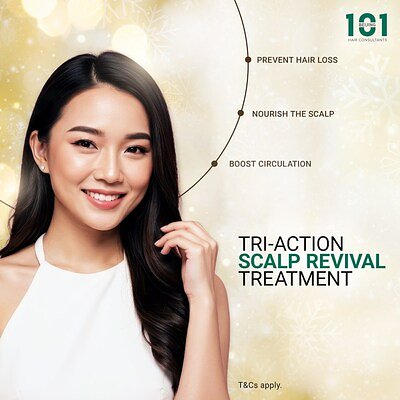
- Treatment Steps: Tri-Action Scalp Revival Treatment features a three-step system (Suction, Vibration, Spray) combining TCM and modern technology.
- Brand Legacy: Beijing 101 Hair Consultants established in 1974, leveraging 50 years of brand equity.
Experts view Beijing 101’s Tri-Action treatment as a strategic innovation that bridges traditional Chinese Medicine (TCM) and modern technology, addressing a growing consumer demand for scientifically credible yet holistically grounded wellness solutions.
Ancient Remedies, Modern Tech: A New Strategy in Wellness Markets
SINGAPORE – December 09, 2025 – In the hyper-competitive Singaporean wellness market, standing out requires more than just a new product; it demands a compelling new strategy. Beijing 101 Hair Consultants, a stalwart in the region’s hair care industry since 1974, has just unveiled its latest gambit: the "Tri-Action Scalp Revival Treatment." More than a mere line extension, this launch represents a calculated move to capture the modern consumer by fusing the ancient wisdom of Traditional Chinese Medicine (TCM) with a suite of modern, device-led technologies.
This strategic hybridization is not just an innovation in cosmetology; it’s a telling indicator of where the multi-billion-dollar wellness industry is headed. As consumers increasingly seek solutions that are both scientifically credible and holistically grounded, companies are being forced to innovate beyond their traditional silos. Beijing 101’s approach provides a fascinating case study in how to bridge this gap, aiming to carve out a dominant position by offering what many see as the best of both worlds.
Deconstructing the High-Tech, High-Touch Approach
At its core, the Tri-Action treatment is a meticulously structured, three-step system designed to address scalp health from multiple angles. The company claims this systematic process of cleansing, nourishing, and rejuvenating can tackle a wide array of common issues, from male and female pattern baldness to stress-related hair loss and chronic dandruff.
The first step, dubbed "Suction – Hydro Scalp Reset," employs a device to perform what is essentially a deep-cleansing facial for the scalp. The goal is to remove stubborn impurities, product buildup, and excess sebum that can clog hair follicles—a well-understood contributor to poor hair health. This is followed by "Vibration – Nutrient Booster," a phase that uses targeted mechanical vibration. The stated purpose is to improve scalp condition and prepare it for better absorption of nutrients. While specific clinical data on proprietary "vibration technology" for hair growth is nascent, the underlying principle aligns with the established benefits of scalp massage, which is known to enhance blood circulation and deliver more oxygen and nutrients to hair follicles.
The final step, "Spray – Follicle Reawakening," involves the application of a nutrient-rich serum. The efficacy of this stage hinges on the active ingredients, which is where Beijing 101’s deep roots in Traditional Chinese Medicine become central to its strategy. This carefully sequenced integration of technology serves as a sophisticated delivery mechanism for the company’s core competency: herbal remedies.
The Fusion Strategy: Blending TCM with Technology
The true strategic differentiator for Beijing 101 lies not in the suction device or the vibrating applicator, but in their synthesis with TCM. For decades, the company has built its brand on harnessing the power of premium Chinese herbs. The new treatment platform is an evolution of this, using modern hardware to enhance the application and perceived efficacy of ancient formulations.
TCM philosophy posits that hair health is an external reflection of the body's internal balance, particularly the health of the kidneys (which govern growth) and the liver (which stores and circulates blood to nourish the scalp). Ailments like hair loss are seen as symptoms of deeper imbalances in Qi (vital energy) and blood. The herbs integrated into Beijing 101’s treatments, such as He Shou Wu (Polygonum Multiflorum), Ginseng, and Dong Quai (Angelica Sinensis), are chosen for their purported abilities to tonify these organs, invigorate blood circulation, and restore internal harmony.
By packaging these traditional remedies within a modern, technology-driven protocol, the company skillfully addresses two distinct consumer desires. For the skeptic who trusts in tangible, scientific-sounding procedures, the multi-step device system provides reassurance. For the wellness devotee drawn to natural and holistic solutions, the foundation in TCM offers a sense of deep, authentic healing. This dual appeal is a powerful tool in a market where consumers are increasingly educated and discerning.
Navigating a Crowded and Evolving Marketplace
The launch of the Tri-Action treatment is a direct response to the intense competition in Singapore’s professional hair care market, which is projected to exceed USD 100.8 million by 2033. The landscape is fragmented, with players occupying distinct niches. On one end are pure-play TCM clinics like Yong Kang and Sin Kang, which rely on traditional methods like acupuncture and herbal concoctions. On the other end are high-tech, clinical-style centers such as PHS Hairscience and Anagen Scalp, which champion proprietary serums, stem cell technology, and medical-grade devices. In between are popular herbal-focused brands like Bee Choo Origin, known for its accessible, all-natural paste treatments.
Beijing 101’s strategy is to transcend these categories by creating a new, integrated one. The company is betting that a significant segment of the market feels caught between the perceived slow, esoteric nature of pure TCM and the potentially harsh, symptom-focused approach of purely clinical treatments. By offering a structured, tech-enabled experience that delivers TCM benefits, it aims to become the default choice for the modern wellness consumer.
This move leverages the company’s half-century of brand equity. Having been established in 1974, Beijing 101 already commands a level of trust that new entrants struggle to build. Reinforcing this legacy with visible innovation helps protect its market share from both traditional and high-tech disruptors, positioning it not as a legacy brand, but as an enduring leader that adapts to the times.
Capitalizing on the Global Wellness Zeitgeist
Beyond local market dynamics, this strategy taps directly into global consumer trends. The modern definition of health is increasingly holistic, blurring the lines between medical treatment, personal care, and mental well-being. Consumers no longer see hair loss as a simple cosmetic issue but as a potential indicator of stress, hormonal imbalance, or nutritional deficiencies. They are actively seeking solutions that address these root causes.
Beijing 101's fusion model perfectly aligns with this "scalp-as-skin" movement, where scalp care is adopting the sophisticated, multi-step routines long associated with skincare. The Tri-Action system, with its distinct cleanse, treat, and nourish phases, mirrors the logic of a professional facial, making it intuitive and appealing to beauty-savvy customers.
Furthermore, the integration of TCM speaks to a powerful desire for authenticity and time-tested wisdom in an era of fleeting trends and chemical-heavy formulations. By framing its technology as a vehicle for delivering traditional herbal science, Beijing 101 offers a narrative that is both forward-looking and deeply rooted. This strategic positioning allows the brand to command a premium, not just for its ingredients or devices, but for the sophisticated synthesis of the two, promising a comprehensive solution for a complex problem.