
- $21 billion: The estimated cost of the Winter Storm Uri, the costliest winter storm in U.S. history.
- 90% of attendees: The percentage of participants who were able to attend the conference despite the crisis.
- 246 deaths: The tragic human toll of the storm in Texas.
Experts would likely conclude that proactive logistical planning and adaptive crisis management are essential for safeguarding critical healthcare innovation events, particularly in the face of increasing environmental and operational disruptions.
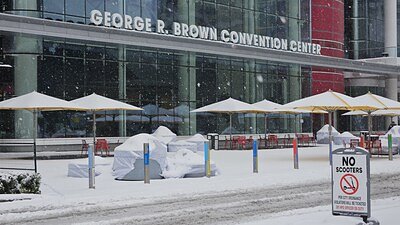
Anatomy of a Crisis: How Event Logistics Safeguard Healthcare Innovation
DALLAS, TX – December 15, 2025 – In an industry where the next breakthrough can hinge on a single presentation or a chance meeting, the cancellation of a major conference is more than an inconvenience; it's a disruption to the very engine of progress. This reality was thrown into sharp relief when Ultimate Ventures, a Dallas-based Destination Management Company (DMC), was named a Finalist in the 2026 ADMEI Awards. Their nominated submission, titled "THE STORM THAT STOPPED A CITY - BUT NOT OUR CLIENT'S PROGRAM," details an extraordinary feat of logistical resilience that holds profound lessons for the global healthcare sector.
The recognition spotlights the company's response to a crisis that threatened to derail a 10,000-attendee corporate conference in Houston. While the client remains confidential, the scale and timing are characteristic of a major pharmaceutical or medical device convention, where the dissemination of clinical data and the formation of strategic partnerships are paramount. The award nomination isn't just a corporate accolade; it's a case study in safeguarding the critical infrastructure that underpins healthcare innovation.
The Perfect Storm Meets Meticulous Planning
The crisis in question was no ordinary weather event. It was the historic Winter Storm Uri in February 2021, a catastrophic weather system that crippled Texas. It was the costliest winter storm in U.S. history, causing an estimated $21 billion in damages and leading to the tragic deaths of 246 Texans. Houston saw its first-ever wind chill warning as temperatures plunged, and over 90% of residents in the surrounding county lost power. The city's infrastructure ground to a halt.
This was the scenario facing Ultimate Ventures and their Houston partner, Cosmo Cool Concepts, just hours before their client's massive conference was set to begin. The logistical challenge was already immense: manage the arrival of thousands of attendees through two major airports, transport them to 24 different hotels, and operate a continuous shuttle system from 22 of those hotels across six routes. Compounding the complexity, an additional 400-plus employees were being chartered in from other cities.
As Uri descended, both of Houston's major airports closed, roads became impassable sheets of ice, and critical vendors suspended service. For most, this would have signaled an inevitable and costly cancellation. However, Ultimate Ventures activated a robust emergency response plan, shifting from meticulous planners to a real-time command center. This pivot is where the true value of professional destination management became evident.
A Masterclass in Logistical Resilience
In high-stakes industries like healthcare, continuity is not optional. The logistical response by Ultimate Ventures provides a powerful blueprint for resilience that extends far beyond event planning. Faced with a complete system collapse, the team didn't just adapt; they re-engineered the entire operation from the ground up. Within hours, they had rebuilt arrival manifests, rerouted transportation, and redeployed resources.
Crucially, their plan accounted for a localized disaster by leveraging a broader network. The firm mobilized additional drivers and vehicles from outside the impacted region, a strategy that mirrors best practices in resilient supply chain management for pharmaceuticals and medical devices. This ability to draw on external resources prevented a total shutdown when local assets were frozen, literally and figuratively.
Communication, often the first casualty in a crisis, became their central pillar of strength. The team maintained a constant, transparent flow of information between the client, the 24 hotels, and the disparate transportation teams. This is a critical lesson for any organization managing complex, multi-stakeholder projects, such as international clinical trials or product launches. As Ultimate Ventures President Laurie Sprouse, CITE, CMP, DMCP, noted in the announcement, "We refused to let our client's program fail... staying in constant contact so the client had confidence in every decision." This confidence is the currency of crisis management.
The result of this disciplined execution was staggering. The conference proceeded, enabling 90% of the attendees to participate. Most importantly, it was achieved with zero safety incidents, a testament to a plan that prioritized duty of care above all else. This outcome underscores a key principle: operational resilience is a direct function of proactive planning and adaptive leadership.
Protecting the Business of Healthcare
For the pharmaceutical, biotech, and medtech industries, large-scale conferences are not corporate luxuries; they are indispensable platforms for innovation and commerce. These events are where pivotal clinical trial results are unveiled, where regulatory strategies are debated, where multi-million-dollar licensing deals are forged, and where the next generation of researchers connects with established leaders.
The economic and scientific cost of cancelling such an event is immense. It can delay the market entry of a life-saving therapy, stall crucial R&D collaborations, and disrupt the flow of capital into emerging biotech ventures. The work performed by Ultimate Ventures, therefore, was not merely about saving a conference. It was about preserving a critical node in the global healthcare ecosystem. By enabling 90% of attendees to participate, they ensured that vital scientific exchange and strategic business development could continue, mitigating a potentially significant disruption to the industry's innovation cycle.
This case study highlights the often-unseen dependency of the healthcare sector on a network of highly specialized service providers. From clinical research organizations (CROs) that manage trials to DMCs that execute major congresses, the resilience of these partners is integral to the health of the entire industry. As climate volatility and other unpredictable events become more common, vetting partners for their crisis preparedness will become an increasingly critical component of corporate risk management.
A New Benchmark for Industry Preparedness
The ADMEI Awards are a significant benchmark of quality and professionalism within the destination management industry, judged by a panel of international peers. The 'Best Emergency Preparedness and/or Response' category specifically recognizes excellence in risk mitigation and crisis response. Ultimate Ventures' finalist status, particularly during the awards' 20th anniversary, elevates this case study from a corporate success story to an industry-wide teaching moment.
It sets a new standard for what clients in high-stakes sectors like healthcare should expect from their event management partners. The expectation is no longer just for flawless execution in ideal conditions, but for demonstrated, battle-tested resilience in the face of profound disruption. As companies across the healthcare spectrum continue to invest heavily in markets like India and China, where logistical and environmental challenges can be unique, the principles of proactive risk assessment, network redundancy, and adaptive communication demonstrated during the Houston storm become even more critical for ensuring global operational continuity.