
- 10% stock surge: Adeia's stock (NASDAQ: ADEA) jumped nearly 10% following the announcement.
- $100M revenue projection: Analysts project Adeia to reach $100 million in semiconductor-related revenue.
- 4-month resolution: The legal dispute was resolved in just over four months, highlighting a swift strategic pivot.
Experts view this agreement as a strategic validation of Adeia’s IP portfolio and a necessary move for AMD to secure its competitive edge in advanced semiconductor technologies, particularly in AI and high-performance computing.
AMD and Adeia End Patent War, Forge Alliance for Future Chip Tech
SAN JOSE, CA – March 09, 2026 – In a significant move that shifts a contentious legal battle into a strategic partnership, Adeia Inc. and Advanced Micro Devices (AMD) today announced a multi-year intellectual property (IP) license agreement. The deal provides AMD with access to Adeia’s foundational semiconductor patent portfolio and, crucially, resolves all outstanding litigation between the two technology firms.
The agreement marks a pivotal moment, ending a period of legal uncertainty for AMD and providing a major validation for Adeia’s extensive IP catalog, which underpins many of the world's most advanced electronics. The resolution was met with optimism from both sides, hinting at a new chapter of cooperation.
“We are pleased to reach this agreement with AMD, a global leader in high-performance computing and advanced semiconductor solutions,” said Paul E. Davis, chief executive officer of Adeia. “Resolving our disputes allows both companies to move forward and creates an opportunity for exploring future collaborations on advanced semiconductor technologies.”
From Courtroom to Collaboration
The settlement draws a line under a legal conflict that began in earnest on November 3, 2025. On that date, Adeia initiated two patent infringement lawsuits against AMD in the U.S. District Court for the Western District of Texas and a separate complaint at the U.S. International Trade Commission (USITC).
At the heart of the dispute were ten of Adeia’s patents. The company, which spun off from Xperi in 2022 and has roots in the pioneering work of Tessera Technologies, alleged that AMD’s processors infringed upon its IP related to semiconductor packaging and manufacturing. Seven of the patents in question were specific to hybrid bonding, a revolutionary technique for stacking chip components, while the other three pertained to advanced process node innovations.
The litigation specifically targeted AMD products incorporating its popular “3D V-Cache” technology, a feature that dramatically boosts performance in its Ryzen X3D gaming processors and server-class CPUs. At the time, Adeia’s leadership stated that legal action was a last resort after years of unsuccessful licensing discussions. The swift resolution in just over four months suggests a strategic pivot by both parties, moving from adversarial posturing to mutually beneficial negotiation.
The Strategic Value of Foundational IP
For AMD, securing access to Adeia's portfolio is more than just a legal necessity; it is a strategic imperative. The technologies at the center of the dispute are not peripheral but are fundamental to AMD's competitive edge in the high-performance computing, data center, and AI markets.
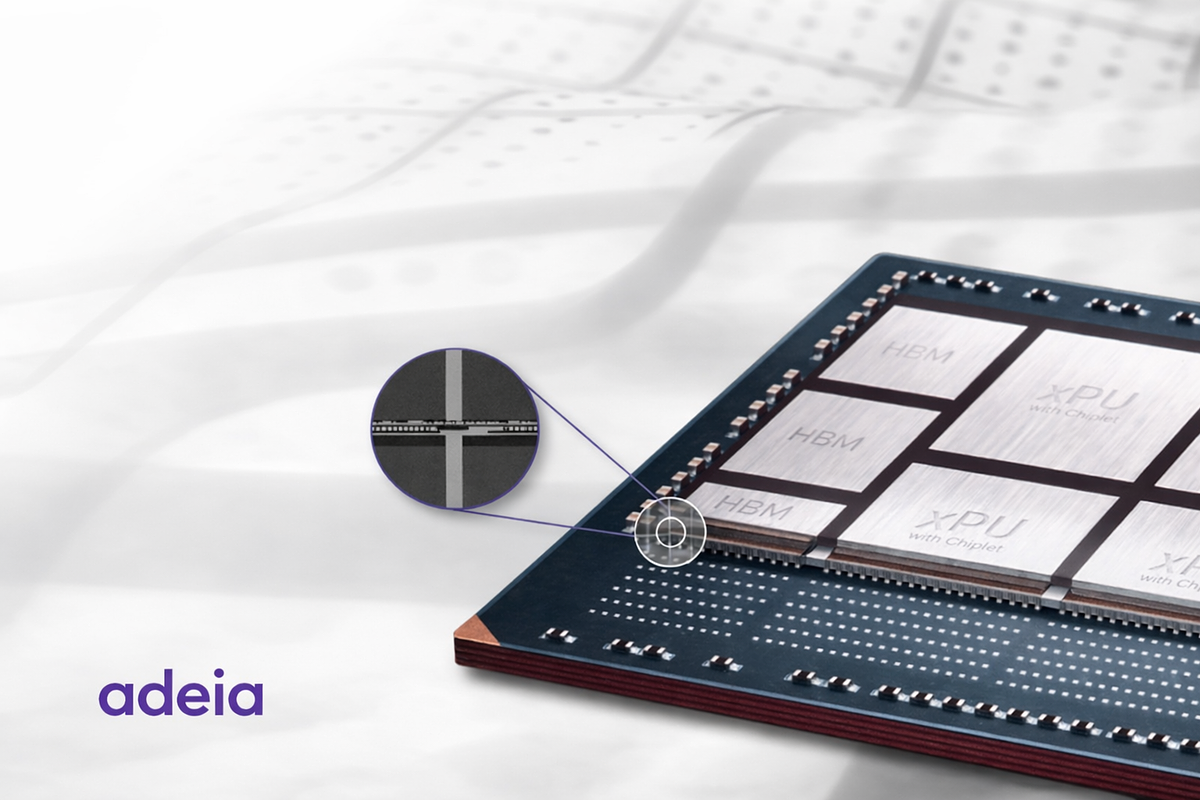
Hybrid bonding, a technology pioneered by Adeia's predecessors, allows for the direct, metal-to-metal connection of silicon layers. This is a significant leap beyond traditional methods, enabling far denser, faster, and more power-efficient interconnects between chip components. This is the magic behind AMD's 3D V-Cache, where an extra layer of L3 cache is stacked directly on top of the processor's compute die. The result is minimized latency and massively increased bandwidth, delivering tangible performance gains.
Furthermore, AMD has built its modern success on a modular chiplet architecture, breaking monolithic processors into smaller, specialized dies that are integrated within an advanced package. This approach, seen in its EPYC server processors and Instinct AI accelerators, relies heavily on cutting-edge packaging and bonding techniques. Access to Adeia’s IP—which includes the noted ZiBond and DBI technologies—ensures AMD can continue to innovate and optimize these complex multi-die designs without the looming threat of patent litigation.
Market Validation and Industry Ripple Effects
The market’s reaction to the announcement was immediate and telling. Adeia’s stock (NASDAQ: ADEA) surged on the news, with shares jumping nearly 10% in trading as investors recognized the deal as a powerful validation of the company's IP licensing model. Analyst sentiment was overwhelmingly positive, with firms like Rosenblatt raising their price target for Adeia to $40 and noting the deal paves the way for the company to reach a projected $100 million in semiconductor-related revenue.
The agreement is seen as a successful execution of Adeia’s strategy, which often uses litigation as leverage to bring major industry players to the negotiating table. A similar pattern was seen in its 2023 confidential settlement with NVIDIA over related semiconductor packaging claims. AMD’s stock (NASDAQ: AMD) also saw a modest rise, with investors welcoming the removal of legal uncertainty and allowing the company’s management to focus fully on its fierce competition with rivals in the booming AI sector.
This resolution is expected to send ripples across the semiconductor landscape. With its IP now publicly validated by a licensing deal with a leader like AMD, Adeia is in a strengthened position to approach other chipmakers. Competitors also heavily invested in chiplet architectures and advanced 3D packaging may now see licensing Adeia’s portfolio as a necessary cost of doing business to avoid similar, and potentially costly, legal entanglements.
A Foundation for Future Innovation
Beyond ending a conflict, the agreement explicitly opens the door for future technical collaboration. This prospect aligns perfectly with the trajectory of the semiconductor industry, where the limits of traditional scaling (Moore's Law) are making advanced packaging and heterogeneous integration the primary drivers of performance gains.
Potential areas for partnership are numerous. Joint research could push the boundaries of next-generation hybrid bonding, exploring finer pitches and novel materials for AMD’s future AI accelerators and CPUs. Adeia’s expertise in metrology and defect detection could prove invaluable for improving manufacturing yields and reliability for AMD’s increasingly complex chip designs. As power density in these stacked chips becomes a critical challenge, collaboration on thermal management solutions also presents a logical path forward.
By transforming a legal dispute into a licensing agreement and a potential R&D partnership, both companies have laid a foundation for future growth. AMD secures its technology roadmap in the race for AI dominance, while Adeia reinforces its role as a key enabler of the foundational technologies that will define the next generation of computing.
Topics & Related
Semiconductors
Venture Capital
Artificial Intelligence
Generative AI
AI & Software Platforms
Acquisition
Private Placement
Related Company Pulse