
- 25% faster acceleration with the Allison 3414 RHS transmission compared to competing automated manual transmissions (AMTs).
- July 2026 availability for the Allison 9-Speed transmission paired with the Cummins B6.7 Octane engine.
- January 2027 production start for the Allison 3414 RHS transmission with the Cummins X10 diesel engine.
Experts would likely conclude that this partnership strengthens the Freightliner M2 106 Plus's competitive position by offering advanced, efficient, and compliant powertrain solutions tailored to diverse fleet needs.
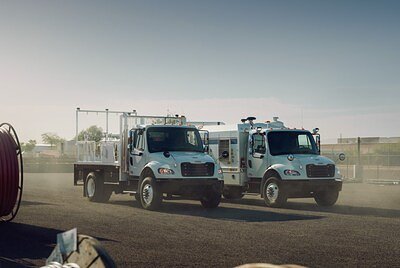
Allison and DTNA Deepen Tie-Up for Freightliner M2 106 Plus
By Stephanie Kelly
INDIANAPOLIS, IN – March 10, 2026 – In a significant move to bolster one of North America's most popular medium-duty trucks, Allison Transmission and Daimler Truck North America (DTNA) have expanded their long-standing partnership. The collaboration introduces two new, advanced fully automatic transmission options for the versatile Freightliner M2 106 Plus, a decision poised to deliver enhanced performance, efficiency, and powertrain diversity to a demanding commercial vehicle market.
The announcement details the integration of Allison’s 3414 Regional Haul Series™ (RHS) and its 9-Speed transmissions into the M2 106 Plus platform. This strategic pairing with next-generation Cummins engines is designed to equip fleet operators with tailored solutions that address both rigorous performance needs and the ever-present pressure to improve the bottom line.
A Strategic Alliance in a Competitive Market
The deepened alliance between Allison, a global leader in propulsion solutions, and DTNA, the continent's largest heavy-duty truck manufacturer, is more than a simple component supply deal. It represents a unified engineering front in a fiercely competitive medium-duty segment. As fleet operators face a complex landscape of rising operational costs, driver shortages, and evolving environmental regulations, the demand for optimized, reliable, and efficient powertrains has never been higher.
This move positions the Freightliner M2 106 Plus to compete more aggressively against rivals who are also pushing integrated and advanced powertrain solutions. Competitors like ZF, with its PowerLine 8-speed automatic, and PACCAR, with its proprietary TX-8 automatic transmission standard in Kenworth and Peterbilt medium-duty models, have intensified the race for smoother, more fuel-efficient systems. By combining Allison's renowned durability and performance with DTNA's dominant market presence, the two companies are making a powerful statement about their commitment to leading the segment.
“The expansion of our partnership with DTNA underscores a shared commitment to delivering powertrain solutions that best address our customers' needs,” said Rohan Barua, Vice President, North America Sales, Global Channel and Aftermarket at Allison Transmission. “By integrating our 3414 RHS and 9-speed transmissions into the Freightliner M2 106 Plus platform, we are providing purpose-built technology designed to enhance productivity, efficiency and long-term value.”
Engineering Performance for the Modern Fleet
The two new powertrain options are engineered for distinct applications, offering fleets unprecedented choice. The first option, slated for production in January 2027, pairs the Allison 3414 RHS transmission with the new Cummins X10 diesel engine. This combination is aimed squarely at regional haul and demanding vocational applications. The 3414 RHS is not just another automatic; it is engineered for superior vehicle handling and boasts a remarkable 25% faster acceleration compared to competing automated manual transmissions (AMTs). This performance boost translates directly to shorter trip times and increased productivity in duty cycles with frequent stops, starts, and acceleration.
The Cummins X10 engine itself is a critical piece of this puzzle. Launching in 2026, it is designed to be lighter, more powerful, and fully compliant with the stringent EPA 2027 emissions standards, offering fleets a future-proof diesel solution.
“When paired with the new Cummins X10 in an M2 106 Plus, the Allison 3414 RHS gives customers a lighter automatic option that helps the Freightliner M2 106 Plus meet the needs of medium duty tractor applications,” said Aaron Scates, vice president, Vocational and Medium Duty Market Development at DTNA.
Arriving sooner, in July 2026, is the Allison 9-Speed transmission paired with the Cummins B6.7 Octane engine. This offering provides a powerful and efficient gasoline-fueled alternative, a strategic diversification that reflects the shifting needs of the market. The 9-Speed transmission is designed to deliver a perfect balance between robust torque delivery for hauling and optimized gearing for fuel savings during cruise.
“The Allison 9-Speed, paired with the Cummins B6.7 Octane, offers smooth, predictable shifting for customers choosing a gasoline configuration,” Scates added. “Together, these transmissions broaden the range of powertrain options available to customers as they tailor the M2 106 Plus to their needs.”
Addressing the Bottom Line: Efficiency and Uptime
For fleet managers, every decision is scrutinized through the lens of Total Cost of Ownership (TCO). The new Allison offerings directly target this critical metric. Allison’s fully automatic transmissions are renowned for their ability to reduce operational costs and maximize vehicle uptime. By utilizing a patented torque converter instead of a traditional dry clutch, these transmissions eliminate the costly downtime and maintenance associated with clutch repairs and replacements.
Furthermore, Allison’s intelligent shifting algorithms, such as its FuelSense® 2.0 technology, are designed to optimize fuel consumption without sacrificing performance. By automatically selecting the ideal shift points, the transmission keeps the engine in its most efficient range, contributing to significant fuel savings over the life of the vehicle. This, combined with the inherent efficiency of the new Cummins engines, presents a compelling economic case for fleet upgrades.
Beyond maintenance and fuel, the driver experience is a major factor in productivity and safety. The smooth, seamless full-power shifts of an Allison automatic reduce driver fatigue, especially in congested urban environments, and allow the driver to keep both hands on the wheel and their focus on the road. This enhanced drivability not only improves safety but can also aid in driver recruitment and retention—a key advantage in today’s tight labor market.
Navigating an Evolving Regulatory Landscape
This partnership expansion is strategically timed as the commercial vehicle industry braces for a new wave of environmental regulations. The U.S. Environmental Protection Agency (EPA) has finalized stringent emissions standards for model year 2027 and beyond, which will require significant reductions in greenhouse gases and other pollutants. The new powertrain options for the M2 106 Plus are explicitly designed to meet these future challenges head-on.
The inclusion of both a next-generation diesel and a gasoline option reflects a pragmatic industry approach to decarbonization. While battery-electric trucks are gaining viability for certain medium-duty applications—particularly short-range, return-to-base urban routes—advanced internal combustion engines (ICE) remain indispensable for many fleets due to range, payload, and infrastructure requirements. The Cummins X10 engine, part of a fuel-agnostic platform, could even be adapted for alternative fuels like natural gas or hydrogen in the future, providing a bridge to a lower-carbon world.
To meet the anticipated demand, Allison is also shoring up its global manufacturing capabilities. The company is making a multi-year, nine-figure investment to double the production footprint of its facility in Chennai, India, with the expansion set to become operational in 2026 and reach full capacity in 2027—perfectly aligning with the rollout of these new products. This proactive measure aims to mitigate potential supply chain disruptions and ensure a steady supply of its advanced transmissions to partners like DTNA, providing critical flexibility as the industry navigates a period of profound technological and regulatory change.