
- Project Cost: Estimated between $60 billion and $90 billion, with potential to exceed $120 billion
- Travel Time Reduction: Ottawa-Montréal trip projected to take under 1 hour, down from current 5.5 hours
- Economic Impact: Expected to create up to 51,000 jobs during construction and boost GDP by up to $35 billion
Experts view Canada's high-speed rail project as a transformative yet high-risk nation-building investment, with potential economic and environmental benefits, but caution about cost overruns and sustained political commitment.
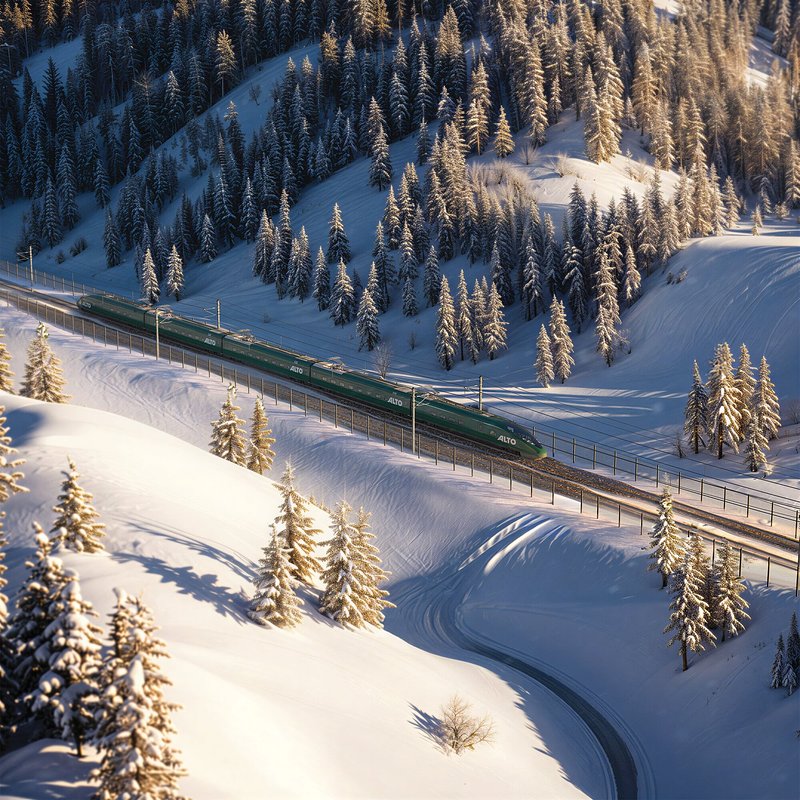
All Aboard? Canada's High-Speed Rail Project to Begin in Ottawa
OTTAWA, ON – January 09, 2026 – Canada's long-held dream of a high-speed rail network is shifting from blueprint to reality, with Crown corporation Alto announcing that the first tracks will be laid between Montréal and Ottawa. The major development will be detailed by Alto's President and CEO, Martin Imbleau, in a keynote address at the Ottawa Board of Trade on January 12, where he is expected to launch the project's next critical phase: public consultation.
This move marks a significant milestone for what is being billed as the largest public infrastructure project in the nation's recent history. The speech, followed by a discussion with Ottawa Board of Trade President Sueling Ching, will officially kickstart a multi-billion-dollar venture aimed at connecting half of Canada's population along the Toronto-Québec City corridor. For residents and businesses in the National Capital Region, the announcement signals the beginning of a transformative, yet complex, undertaking that could redefine regional travel.
The First Domino: Why Montréal to Ottawa?
The decision to prioritize the 200-kilometre stretch between Canada's capital and its second-largest city was a strategic one. According to Alto, this segment represents the “most logical option” for breaking ground. The route is described as relatively short, flat, and straight—ideal conditions for high-speed trains that, as one expert noted, “don’t like curves.”
By starting with a more geographically straightforward section, the project aims to build momentum and prove its concept. This approach allows construction teams in both Ontario and Québec to mobilize simultaneously, providing a “manageable distance to deliver it in a controlled, disciplined way,” as Mr. Imbleau previously stated. This strategy mirrors that of other large-scale rail projects, such as California's high-speed line, which began construction in the state's less mountainous Central Valley to build expertise before tackling more complex terrain.
The goal is to validate technical assumptions and develop a skilled workforce that can then be deployed for the more challenging expansions toward Toronto and Québec City. The immediate benefit is a drastic reduction in travel time, with projections suggesting a trip between Ottawa and Montréal could take under one hour, a significant improvement over the current five-and-a-half-hour journey by car or existing rail.
A Nation-Building Vision with a Colossal Price Tag
Alto, in partnership with the private consortium Cadence—which includes industry giants like CDPQ Infra and SNCF Voyageurs—is tasked with co-designing, building, financing, and operating the nearly 1,000-kilometre network. The federal government has already committed substantial capital, including a $3.9 billion contract for the design phase and hundreds of millions more allocated in recent budgets to accelerate development.
The project's total cost is staggering, with official estimates ranging from $60 billion to $90 billion, though some analyses suggest it could climb as high as $120 billion. Proponents, including Transport Minister Steven MacKinnon, frame it as a “generational investment” and “nation-building stuff.” They point to enormous potential returns: the creation of up to 51,000 jobs during construction, a boost to the national GDP of up to $35 billion, and the development of new housing and economic hubs around its stations.
Furthermore, the project is a cornerstone of Canada's climate strategy. By offering a fast, reliable, and electric-powered alternative to short-haul flights and car travel between major urban centres, the government hopes to significantly reduce transportation emissions. Advocacy groups like Environmental Defence have lauded the plan as “exactly the kind of nation-building investment Canada needs.”
Navigating Public Skepticism and Past Failures
Despite the government's optimistic vision, the project faces a landscape of public skepticism shaped by decades of failed high-speed rail proposals in Canada. The country remains the only G7 nation without a high-speed line, with at least 28 previous studies on the Toronto-Québec corridor alone never leaving the station due to economic downturns, shifting political priorities, and logistical hurdles.
The immense cost is the primary source of concern. One retired transportation consultant has voiced “alarming” doubts, predicting that the project could ultimately cost more than double the highest estimates, potentially exceeding $200 billion based on international precedents. He also questioned whether sufficient consumer demand exists, noting that most successful high-speed networks were built upon pre-existing, thriving intercity rail services—a condition not fully met in Canada.
There are also concerns about the ambitious timeline, which projects construction beginning around 2029 and the full network not being complete until 2041 at the earliest. The project's success hinges on sustained political will across multiple federal elections, a significant gamble in a country with a history of changing infrastructure priorities. The public-private partnership model also carries risk, with critics wary that taxpayers could be on the hook for cost overruns or if ridership fails to meet projections.
Building a New Path Forward
Alto and the federal government appear determined to learn from past mistakes. A key difference in this plan is the commitment to building a new, dedicated passenger rail line. This avoids the central problem that has plagued VIA Rail for decades: sharing tracks with freight trains, which own the lines and have priority, leading to frequent delays and service limitations. The new electrified tracks will be designed for speeds up to 300 km/h.
To expedite the process, the government is introducing legislative changes to streamline approvals and has established a new Major Projects Office to clear bureaucratic obstacles. This includes strengthening tools for securing the necessary land, a process that will be informed by the public consultations launching this month.
These consultations, which will include in-person and virtual sessions over the next three months, will give residents a chance to weigh in on crucial decisions like final route alignment and station locations. As Martin Imbleau prepares to take the stage, his address will not just be an update, but a call to action for a project that carries both immense promise and profound risk. The success of this first leg between Ottawa and Montréal will be the ultimate test of whether Canada can finally get its high-speed rail ambitions on track.
Topics & Related
Corporate Finance
Smart Manufacturing
Decarbonization
Railroads
Renewable Energy
Related Company Pulse