
- The access control market is projected to exceed $17 billion by 2030
- Over 220 member companies collaborated to develop Aliro 1.0
- Aliro supports multiple communication technologies including NFC, Bluetooth LE, and UWB
Experts view Aliro 1.0 as a transformative standard that will unify digital access control, reducing fragmentation and enhancing security across industries.
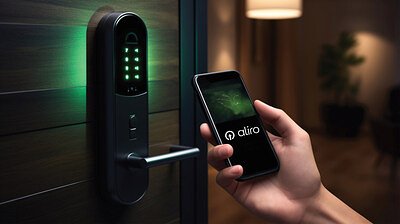
Aliro 1.0 Arrives to Unify Digital Access with a Single Standard
DAVIS, Calif. – February 26, 2026 – The era of fumbling for keycards and juggling multiple access apps may be coming to an end. The Connectivity Standards Alliance (Alliance) today announced the release of Aliro 1.0, a new communication protocol and credential standard poised to fundamentally reshape the digital access landscape. By creating a single, interoperable standard for using smartphones and wearables as keys, Aliro aims to dismantle the fragmented and proprietary systems that have long defined how we unlock doors at home, in the office, and everywhere in between.
For decades, the access control market, a sector projected to exceed $17 billion by 2030, has been a patchwork of incompatible technologies. This has created headaches for everyone: building managers face vendor lock-in and complex integrations, while employees and residents carry a confusing array of fobs, cards, and single-purpose apps. Aliro 1.0 is the Alliance’s ambitious answer to this chaos, promising a future where a single digital key stored securely on your device works seamlessly across different buildings, lock brands, and environments.
A Universal Key for a Fragmented World
The core mission of Aliro is to replace proprietary complexity with open simplicity. Instead of a lock from one brand requiring its own specific app and another system needing a physical fob, Aliro provides a common language for devices to communicate. This standard is designed for broad impact, moving beyond the popular smart home use case to address the complex needs of corporate offices, university campuses, hospitality venues, and multi-family residential buildings.
"Aliro is solving the fragmentation that has held back digital key adoption, replacing it with a single interoperability standard built through Alliance Member collaboration," said Tobin Richardson, President and CEO of the Connectivity Standards Alliance. He emphasized that the new standard will lower integration complexity, which in turn means "faster innovation and shorter time to market."
This unified approach benefits the entire value chain. For manufacturers, it reduces research and development costs by eliminating the need to support dozens of disparate systems. For integrators, it simplifies installation and troubleshooting. For property owners, it provides the flexibility to mix and match hardware from different vendors without fear of incompatibility, simplifying maintenance and future-proofing their investment.
The Power of the Wallet: Driving Widespread Adoption
Perhaps the most critical factor for Aliro's success is the confirmed commitment from the world's largest mobile wallet providers: Apple, Google, and Samsung. By integrating Aliro credentials directly into the native wallet apps on billions of smartphones and wearables, the standard bypasses a major hurdle for user adoption. There is no new app to download and no new interface to learn. The digital key for your office or apartment building will live alongside your credit cards and transit passes, accessible with a familiar tap or gesture.
This strategy mirrors the successful approach of Apple's HomeKey but expands its promise to a universal, cross-platform reality. It ensures that whether a user has an iPhone or an Android device, they can have the same secure and convenient access experience. This direct wallet integration is what transforms Aliro from a technical specification into a tangible, user-friendly solution that can achieve global scale.
"Aliro marks a turning point for mobile access," stated Haniel Lynn, CEO of Kastle. "By creating a common standard, it gives customers the flexibility and confidence to move beyond closed systems."
Secure by Design: Building Trust with Advanced Cryptography
Convenience cannot come at the expense of security, a principle at the heart of the Aliro 1.0 specification. The standard employs robust asymmetric cryptography to ensure that all interactions between a user's device and an access reader are secure, authenticated, and private. This modern cryptographic method is a significant step up from older systems, providing strong protection against cloning and unauthorized access.
To meet diverse real-world needs, Aliro supports a flexible range of communication technologies. It can use Near Field Communication (NFC) for simple tap-to-unlock scenarios, Bluetooth Low Energy (Bluetooth LE) for user-initiated access from a short distance, and a powerful combination of Bluetooth LE and Ultra-Wideband (UWB) for seamless, hands-free entry. UWB is particularly noteworthy for its security, using Time-of-Flight measurements to precisely gauge distance, which effectively thwarts relay attacks where a thief attempts to capture and re-transmit a signal to fool a lock.
To guarantee that products bearing the Aliro name meet these high standards, the Alliance has established a comprehensive certification program managed through Authorized Test Labs. This ensures that any Aliro-certified device, regardless of the manufacturer, will be both interoperable and secure.
An Industry United: The Coalition Behind the Standard
Aliro 1.0 is not the product of a single company but the result of a massive collaborative effort. The initiative brought together over 220 member companies from across the globe, including lock manufacturers, silicon vendors, and mobile platform leaders. Industry giants like ASSA ABLOY, Allegion, Google, Apple, HID, NXP Semiconductors, and Samsung pooled their expertise and technology to build the standard.
"Aliro is synonymous with interoperability -- and key to pushing our industry forward in the future of secure access," commented Ryan Kincaid, Director of Global Technology at Allegion. This sentiment is echoed throughout the industry.
Jack Ryan, CEO of Last Lock, Inc., noted that the open standard "makes mobile credentialing easier to implement and scale across diverse building environments." The company plans to support Aliro from day one in its Last Lock Core series.
This broad coalition is already translating into product announcements. Companies like Aqara have confirmed they will bring Aliro support to existing products like the Smart Lock U400, while Nuki Home Solutions has teased upcoming Aliro-enabled hardware. This diverse and immediate support from hardware, software, and silicon companies indicates strong market readiness and a shared vision for a unified future.
The Road Ahead: From Specification to Your Front Door
The release of Aliro 1.0 is a foundational milestone, not a final destination. The Alliance has designed it as a living standard, with a roadmap that includes future enhancements like secure and simple key sharing among users. Crucially, this evolution will maintain backward compatibility, ensuring that today's Aliro-certified products will continue to work seamlessly as the ecosystem matures.
As manufacturers now begin the certification and commercialization process, consumers and businesses can look forward to a new generation of access control products hitting the market. These devices will finally deliver on the long-held promise of a truly smart, secure, and effortless way to move through the physical world, all powered by the device that's already in your pocket.