
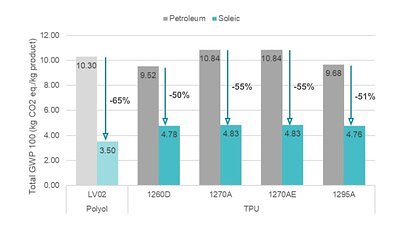
- 65% reduction in greenhouse gas emissions compared to petroleum-based materials
- 50-55% carbon reduction for Soleic® thermoplastic polyurethanes (TPUs)
- 100% bio-based carbon in Soleic® LV02, validated by third-party ASTM testing
Experts would likely conclude that Algenesis's Soleic® bio-based materials represent a significant advancement in sustainable material science, offering verified, high-performance alternatives to fossil fuel-derived plastics with substantial carbon footprint reductions.
Algenesis Bio-Material Cuts Carbon Footprint by 65%, Study Verifies
SAN DIEGO, CA – April 07, 2026 – Material science company Algenesis Labs has announced significant findings from a new study, revealing its flagship Soleic® bio-based materials can reduce greenhouse gas emissions by up to 65% compared to their petroleum-based counterparts. The preliminary Product Carbon Footprint (PCF) study, conducted with the independent sustainability firm TrueNorth Collective, provides robust data that could accelerate the shift away from fossil fuel-derived plastics in consumer and industrial goods.
The announcement positions Algenesis, a company spun out of the University of California, San Diego, as a key player in the race to develop viable, eco-friendly materials that don't force brands to choose between performance and sustainability. The findings are particularly relevant for industries like footwear, apparel, and automotive, which are under increasing pressure from consumers and regulators to reduce their environmental impact.
The Rigor of Verified Reduction
At the heart of the announcement is the independent verification by TrueNorth Collective, a consultancy specializing in Life Cycle Assessments (LCA). The study employed a "cradle-to-gate" analysis, a standard and rigorous method that scrutinizes the environmental impact of a product from raw material extraction through manufacturing. This scope ensures that the carbon reduction claims are not just theoretical but are grounded in the actual production process.
The results show that Soleic® polyols—a key component in polyurethanes—achieve a 65% carbon reduction, while its thermoplastic polyurethanes (TPUs) deliver a 50-55% reduction compared to fossil-based equivalents. This data provides a transparent foundation for sustainability reporting, a critical need for brands navigating complex Environmental, Social, and Governance (ESG) requirements.
Adding another layer of credibility, Algenesis highlighted that one of its key products, Soleic® LV02, is made from 100% bio-based carbon. This has been validated through third-party ASTM testing and, crucially, does not rely on mass-balance accounting—a system sometimes criticized for mixing renewable and fossil-fuel feedstocks while allocating sustainability credits. This commitment to pure bio-content strengthens the company's claims of offering a genuinely green alternative.
"With carbon reductions of up to 65%, these results show that Soleic® plant-based polyurethanes can significantly outperform petroleum-based materials in this area," said Nick Sandland, Chief Business Officer at Algenesis Labs, in the company's press release. "Brands can now reduce their footprint without sacrificing performance."
Benchmarking a Breakthrough in a Competitive Market
Algenesis's claim of a 65% reduction in greenhouse gases is particularly noteworthy when benchmarked against the broader bio-polymers industry. While many bio-based materials offer an inherent carbon advantage, published life cycle assessments often cite GHG emission reductions in the range of 30% to 42%. The figures from the Soleic® study place it at the high end of performance, suggesting a significant advancement in bio-polyurethane formulation.
The market for sustainable polyurethanes is not without competition. Chemical giants like BASF, Covestro, and Dow have invested heavily in their own eco-friendly solutions, including bio-based polyols derived from sources like castor oil. Simultaneously, innovative companies are exploring entirely new chemistries. Matereal's Polaris™, for instance, is a bio-based, non-isocyanate polyurethane (NIPU) that avoids the toxic precursors common in traditional PU production. Other emerging technologies even capture atmospheric CO2 to create polyols, potentially leading to carbon-negative materials.
In this crowded field, verified data and tangible product adoption become critical differentiators. By partnering with an independent firm and focusing on a cradle-to-gate analysis, Algenesis is aiming to cut through the noise of "greenwashing" and provide brands with the certifiable data they need to make supply chain decisions.
From Lab to Market: Driving Brand Adoption
The ultimate test for any new material is market adoption. Algenesis appears to be successfully transitioning from a research-focused startup to a commercial supplier, securing partnerships that embed Soleic® into consumer products. The material is already featured in items from a range of brands, including BLUEVIEW shoes, RHINOSHIELD phone cases, and NAMU's recovery slides. These collaborations demonstrate that Soleic® can meet the demanding performance and aesthetic requirements of modern consumer goods.
To scale its impact, Algenesis has forged key strategic alliances. A partnership with global specialty chemical distributor Safic-Alcan is set to introduce Soleic® technology to the European market, a region with stringent environmental regulations and high consumer demand for sustainable products. Another collaboration with P2 Science aims to develop and scale a supply chain for algae-derived chemicals, further solidifying the material's bio-based origins.
These moves indicate a clear strategy: empower brands to build greener supply chains. By offering a drop-in solution that is both high-performing and verifiably lower in carbon, Algenesis is providing a powerful tool for companies looking to meet their ESG goals, enhance brand reputation, and gain a competitive edge in a conscious marketplace.
Beyond Carbon: The Promise of a Circular Future
While the recent announcement focuses on carbon footprint, the foundational mission of Algenesis is to combat plastic pollution. The company consistently describes Soleic® as not only bio-based but also "fully biodegradable." This dual-pronged approach addresses both the beginning-of-life impact (carbon emissions) and the end-of-life problem (plastic waste and microplastic pollution).
The promise of a material that biodegrades under the right conditions—without leaving behind persistent microplastics—is a holy grail for the industry. It offers a path to a truly circular economy, where products can be returned to nature instead of accumulating in landfills and oceans. While the specific ASTM standards for biodegradability were not the focus of this carbon-centric announcement, the company's identity is deeply rooted in solving the plastic waste crisis.
This mission is reflected in its origins, founded by scientists dedicated to creating fully circular materials. By engineering polymers from plants that can be un-made at their end of life, Algenesis is challenging the very concept of permanent plastic. This broader vision is essential as the world grapples with the pervasive and long-lasting consequences of a century of fossil-fuel-based plastic production.
The global market for bio-based polyurethanes reflects this urgency, with some market reports projecting it to surpass $50 billion by 2032. This explosive growth is driven by the clear sustainability imperative facing all industries. However, challenges remain, including the higher cost of some bio-materials and volatility in agricultural feedstock supply. By demonstrating performance parity and providing clear, verified environmental benefits, innovations like Soleic® are paving the way for mainstream adoption and a future less reliant on petroleum.